

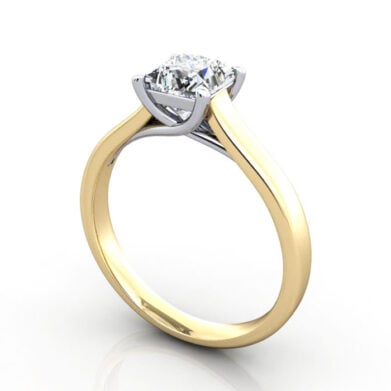
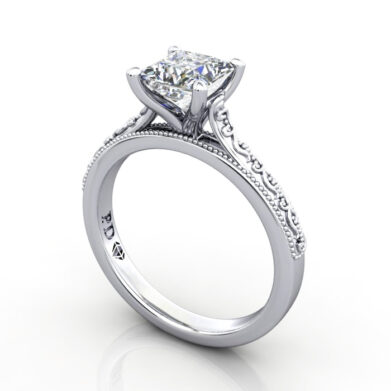
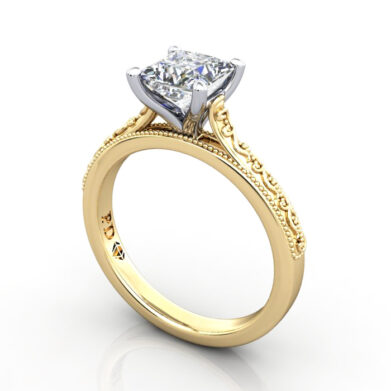
Princess Cut Solitaire Diamond Ring Yellow Gold RS12
$1,500Select options
This product has multiple variants. The options may be chosen on the product page
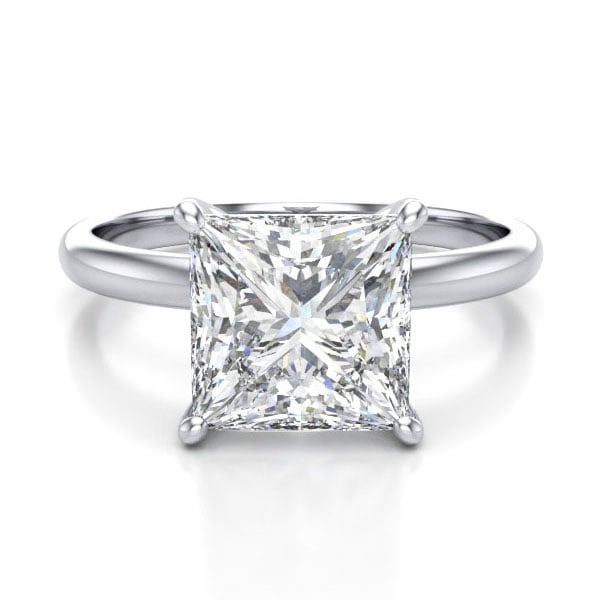
Princess cut diamond rings combine a strong geometric outline with brilliant-style faceting, giving the diamond a clean square appearance with lively light return. Unlike step-cut square shapes, the princess cut is a modified brilliant, so its facet pattern is designed to create brightness, fire and scintillation.
At Polished Diamonds, you can choose a certified natural or lab-grown princess cut diamond and pair it with platinum, white gold, yellow gold or rose gold. The shape works particularly well in solitaire diamond rings, halo diamond rings and trilogy diamond rings because its straight sides and defined corners create a precise architectural look.
A princess cut is also a shape where the diamond and setting should be considered together. Proportions, symmetry, face-up pattern and corner protection all influence how the finished ring looks and wears. Browse our princess cut diamond rings below, compare settings and diamond options, or personalise a design around your preferred size, proportions and budget.
Showing 1–16 of 96 results
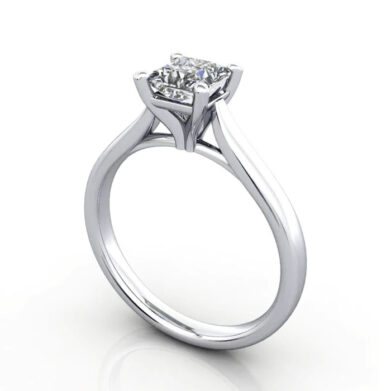
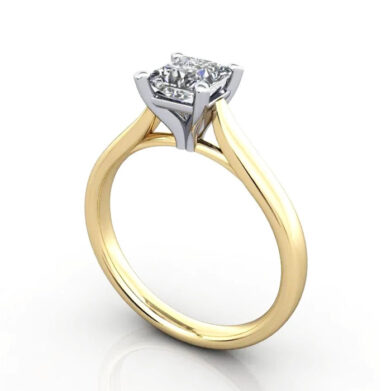
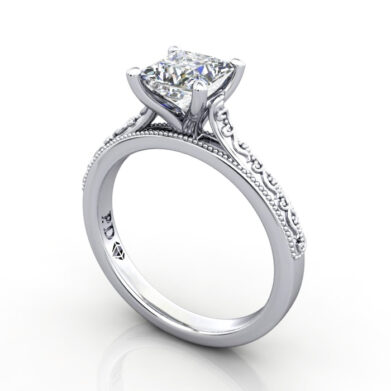
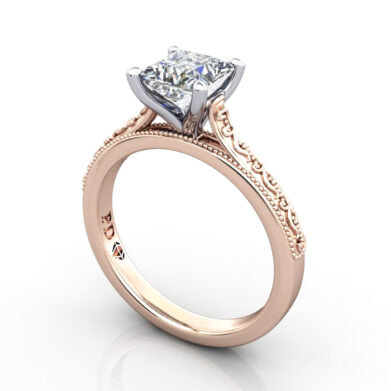
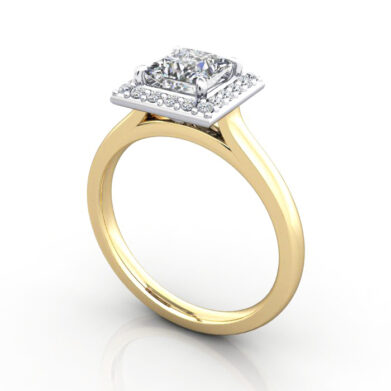
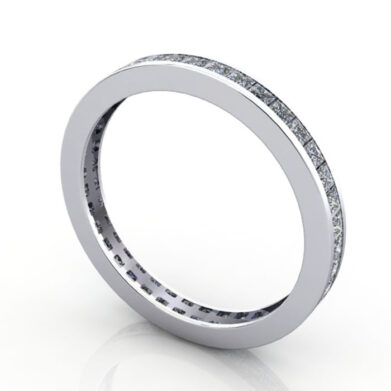
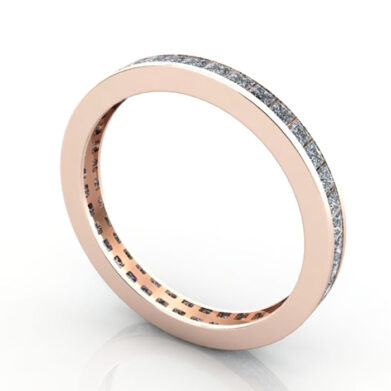
Princess cuts are classed as fancy-shape diamonds, so a GIA grading report does not currently provide the same overall cut grade used for a standard round brilliant. This makes visual assessment and the diamond’s individual proportions especially important. Compare the length and width measurements, symmetry, polish and face-up appearance rather than relying on carat weight alone.
For a distinctly square princess cut, look for a balanced outline close to a 1:1 length-to-width ratio. GIA notes that a square princess cut does not exceed approximately 1.05:1. Also check that the facet pattern and outline appear balanced across both axes. Two princess diamonds with the same carat weight and colour/clarity grades can still look noticeably different face-up.
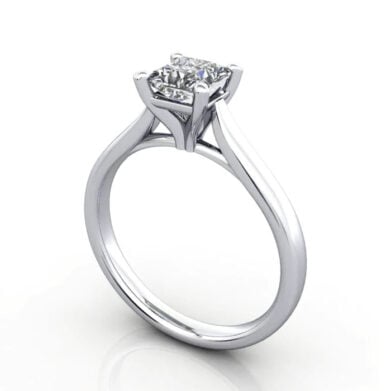
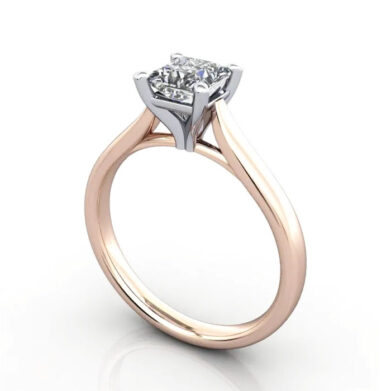
The four pointed corners are part of the princess cut’s distinctive appearance, but they also need protection. A well-designed setting should secure those corners with suitable claws, split claws, V-shaped prongs or another protective structure rather than leaving the points unnecessarily exposed.
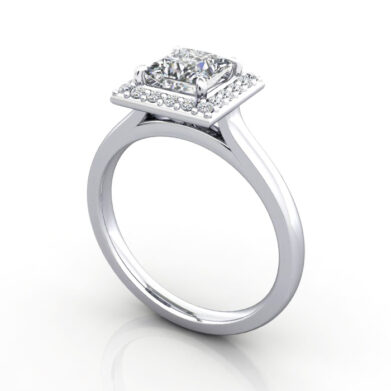
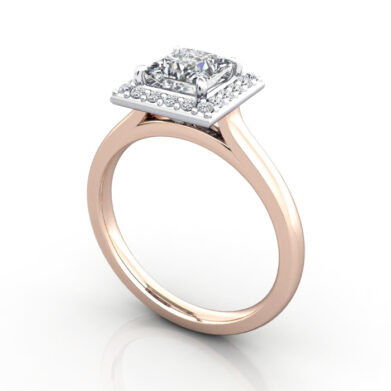
A solitaire can emphasise the square outline, while a halo can extend the geometric shape and a trilogy setting can create a broader composition. Consider claw placement, setting height, and wedding-ring clearance based on the centre diamond’s actual dimensions.
A princess cut should not be confused with every square-looking diamond. An Asscher cut uses step facets and produces broader flashes of light with a more open pattern. A radiant cut uses brilliant-style faceting but has cropped corners, giving it a different outline and setting requirement.
If you want crisp square corners combined with brilliant-style sparkle, the princess cut is the clearest expression of that combination.
Princess cut diamonds are available in both natural diamonds and lab-grown diamonds. Once a diamond is selected, Polished Diamonds can use its actual measurements in the CAD model so the corner protection, claw position, setting proportions, band width and overall profile are developed around that individual stone.
Choose an existing design to personalise or design your own diamond ring with our team. Your ring is then crafted through our New Zealand workshop, with design studios in Auckland, Wellington and Christchurch for clients who want to compare diamonds and settings in person.
In-store and virtual appointments with our jewellery specialists
Every piece is backed by our comprehensive lifetime guarantee
Flexible finance available — speak with us in studio to find the right option
GIA and IGI certified stones with full quality documentation
No products in the cart.


