How Are Diamonds Cut? The Diamond Cutting Process Explained
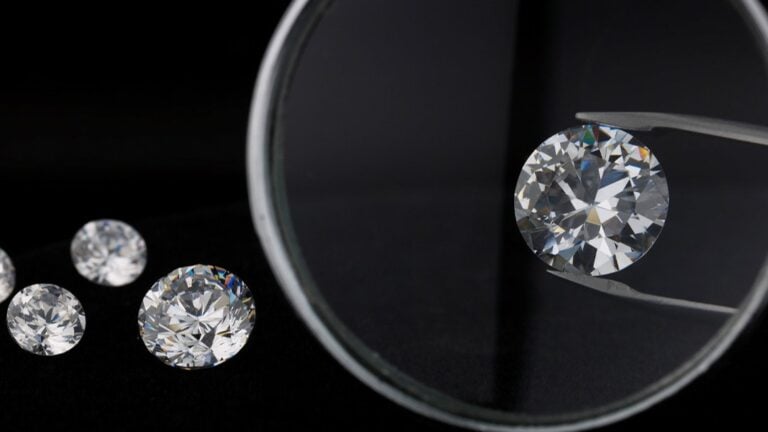
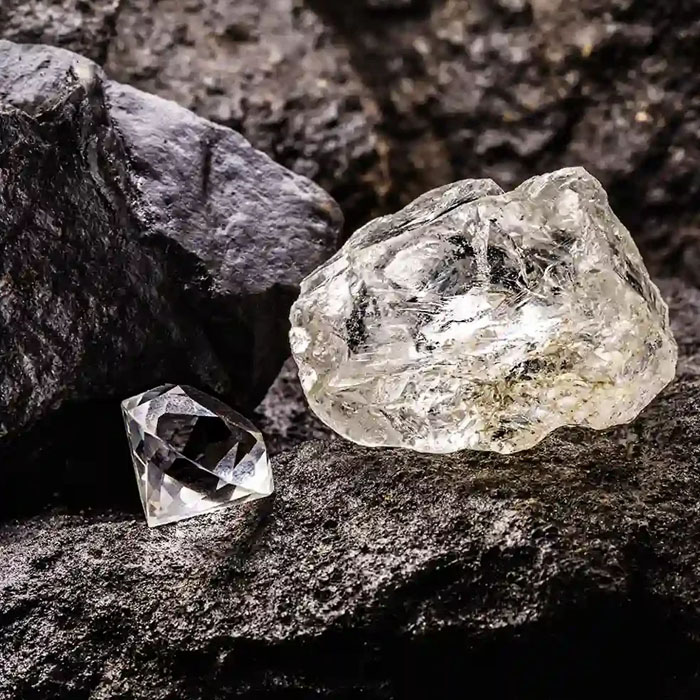
A rough diamond looks very different from the finished gemstone seen in an engagement ring. Diamond cutting is the precise process of planning, shaping, faceting and polishing rough diamond so it reflects light effectively while balancing beauty, carat weight and value.
The process generally involves five main stages: planning, cleaving or sawing, bruting, faceting and polishing, and final inspection. Modern cutters use advanced scanning, modelling and laser technology, but skilled judgement remains essential.
Understanding this process also explains why cut is one of the most important of the 4Cs when choosing a diamond.
What Is Diamond Cutting?
Diamond cutting transforms a natural or laboratory-grown rough diamond into a polished gemstone. Because diamond is exceptionally hard, specialist diamond-coated tools, lasers and polishing equipment are used to shape it.
The cutter must balance two competing goals: retaining useful carat weight and creating proportions that produce attractive light performance. A heavier diamond is not necessarily better if poor proportions reduce its brightness and sparkle.
The Five Main Stages of Cutting a Diamond
1. Planning the Rough Diamond
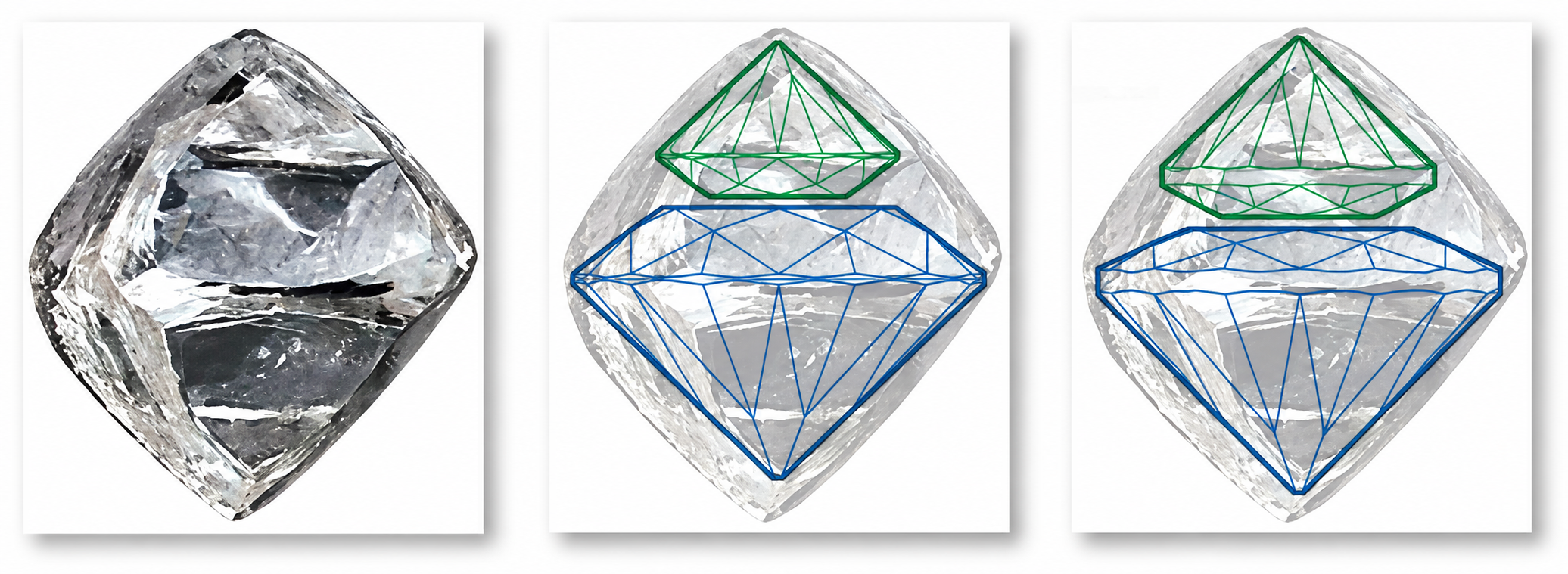
Before cutting begins, the rough crystal is analysed to determine the best shape, orientation and finished size. Modern scanning systems can create a 3D model that helps identify the crystal’s shape and internal inclusions.
The cutter then plans how to obtain the strongest combination of finished beauty and yield. One rough crystal may sometimes produce more than one polished diamond.
2. Cleaving or Sawing
The rough diamond may then be divided into smaller sections.
Cleaving separates a diamond along a natural plane in its crystal structure. Sawing allows the rough to be divided in other directions, with precision laser sawing now commonly used in modern diamond manufacturing.
The aim is to separate the rough safely while preserving the sections identified during planning.
3. Bruting: Creating the Diamond Shape
Bruting creates the basic outline of the diamond. For a round diamond, this stage forms the circular girdle that defines its diameter. Other diamonds are shaped according to their intended outline and proportions.
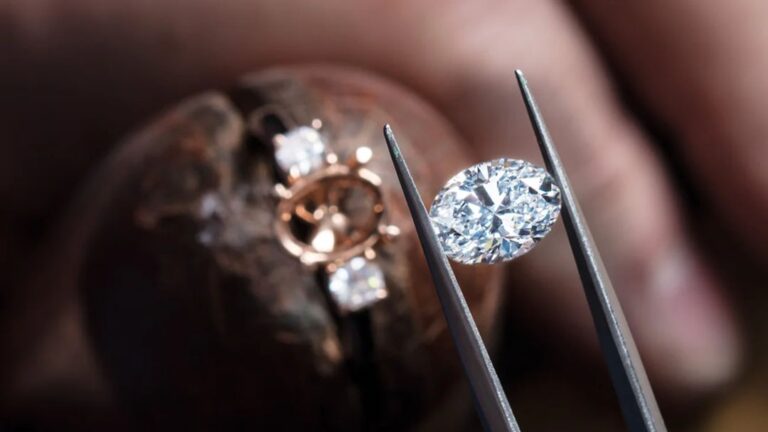
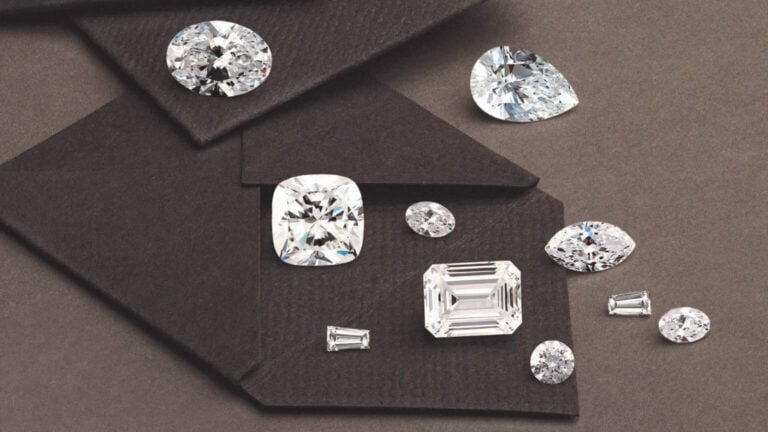
This is when the rough begins to resemble familiar shapes such as round, oval, emerald, pear, radiant or cushion. You can compare these shapes in our Diamond Rings collection.
4. Faceting and Polishing
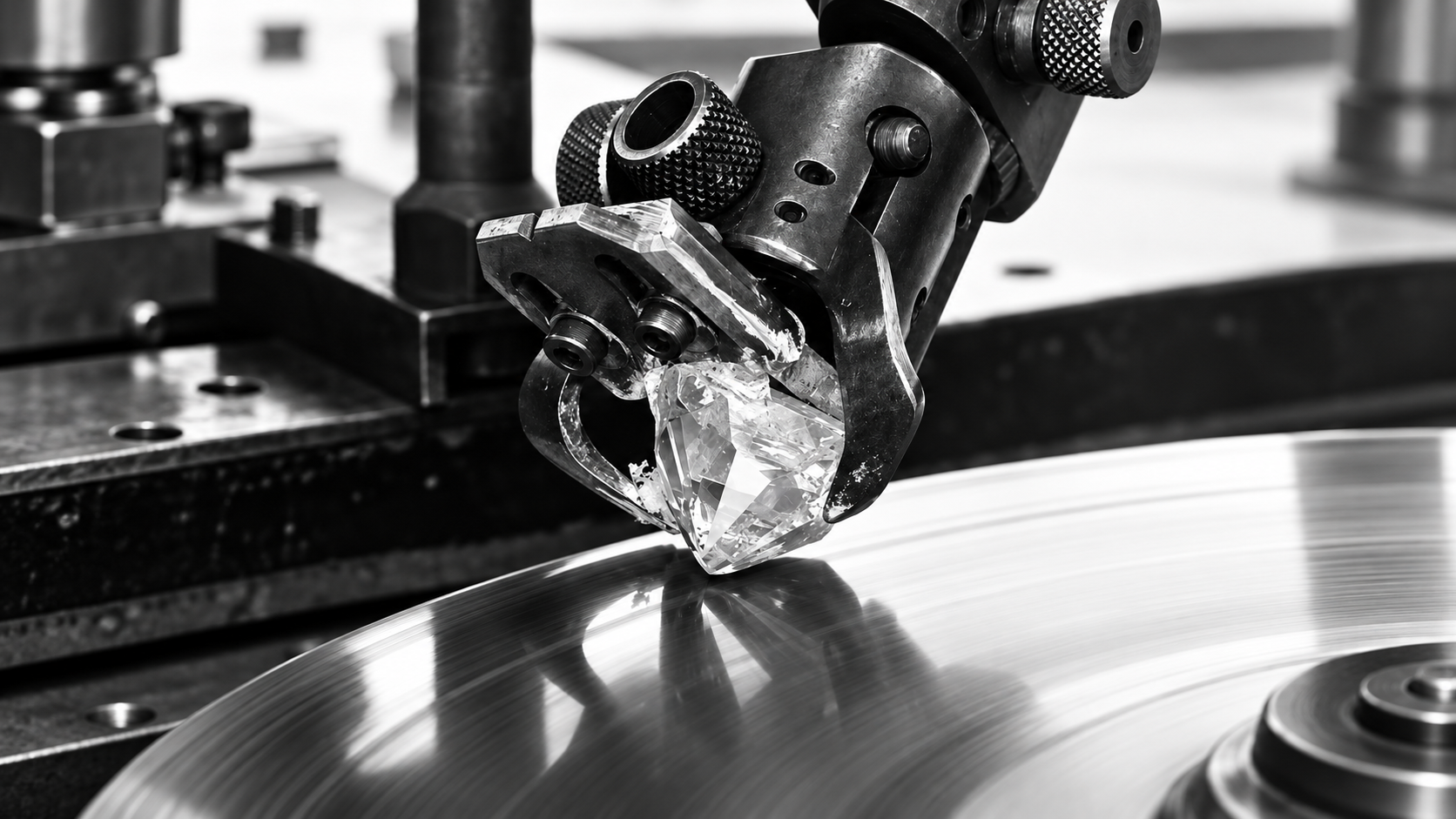
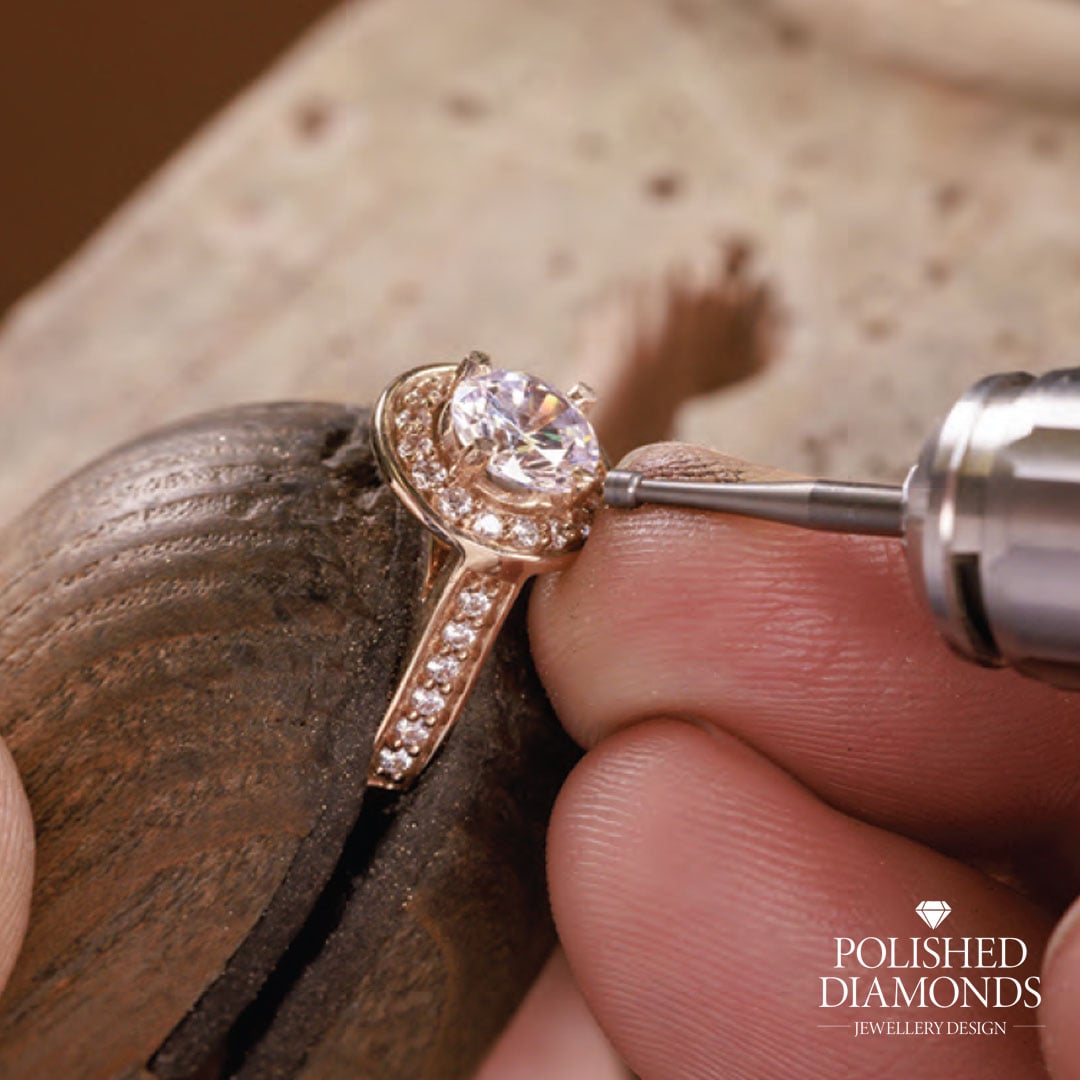
Faceting creates the flat polished surfaces that control how light enters, travels through and exits the diamond.
The table, crown, pavilion and surrounding facets are cut and polished at carefully controlled angles. A standard round brilliant usually has 57 facets, or 58 if a culet facet is present.
Precision matters. Small differences in proportions, symmetry and polish can affect:
- Brightness – the return of white light.
- Fire – flashes of spectral colour.
- Scintillation – sparkle and the pattern of light and dark seen as the diamond moves.
This is why cut quality can have such a dramatic effect on how lively a diamond appears.
5. Final Inspection and Grading
Once polishing is complete, the finished diamond is inspected for proportions, symmetry, polish and overall finish. Certified diamonds may then be submitted to an independent gemmological laboratory for grading.
For standard round brilliant diamonds in the D–Z colour range, the Gemological Institute of America (GIA) provides an overall cut grade from Excellent to Poor. Fancy shapes such as oval, pear, emerald and cushion do not receive the same GIA overall cut grade.
Learn more about related grading factors in our guides to diamond carat and diamond colour.
Diamond Cut vs Diamond Shape
The terms cut and shape are often confused.
Diamond shape describes the outline of the stone, such as round, oval, emerald, radiant or pear. Diamond cut quality describes how effectively its proportions, facet arrangement, symmetry and polish work together to control its interaction with light.
Two diamonds can therefore have the same shape and carat weight yet look very different because one has been cut more effectively.
Are Natural and Lab-Grown Diamonds Cut Differently?
Natural and lab-grown diamonds are cut and polished using essentially the same principles. Both are diamonds and both require accurate planning, shaping, faceting and polishing.
Their main difference is origin rather than the objective of the cutting process. Read our guide to lab-grown diamonds for more on how they compare with natural diamonds.
Why Diamond Cutting Matters When Choosing a Ring
Cut affects much more than shape. It influences a diamond’s sparkle, visual size, balance and appearance in the finished setting.
Avoid choosing by carat weight alone. A slightly smaller diamond with strong proportions and attractive light performance can look more impressive than a heavier stone carrying excess weight where it cannot be seen.
At Polished Diamonds, we help clients compare natural and lab-grown diamonds before designing the setting around the selected stone. Explore our Diamond Education guides, browse our Diamond Rings, or design your own diamond ring in New Zealand.
Diamond Cutting FAQs
A standard round brilliant usually has 57 facets, or 58 when a culet facet is present.
Yes. Rough material must be removed to create the final shape, facets and proportions, so the polished diamond weighs less than the original rough crystal.
Sometimes. Recutting may improve proportions, symmetry or polish, but it also reduces carat weight, so the potential improvement must be balanced against the loss of material.
No. Modern diamond cutting uses scanning, lasers and precision equipment, but skilled human judgement remains important throughout planning, shaping and finishing.