Peridot Gemstone Guide: Colour, Quality, Meaning & Jewellery
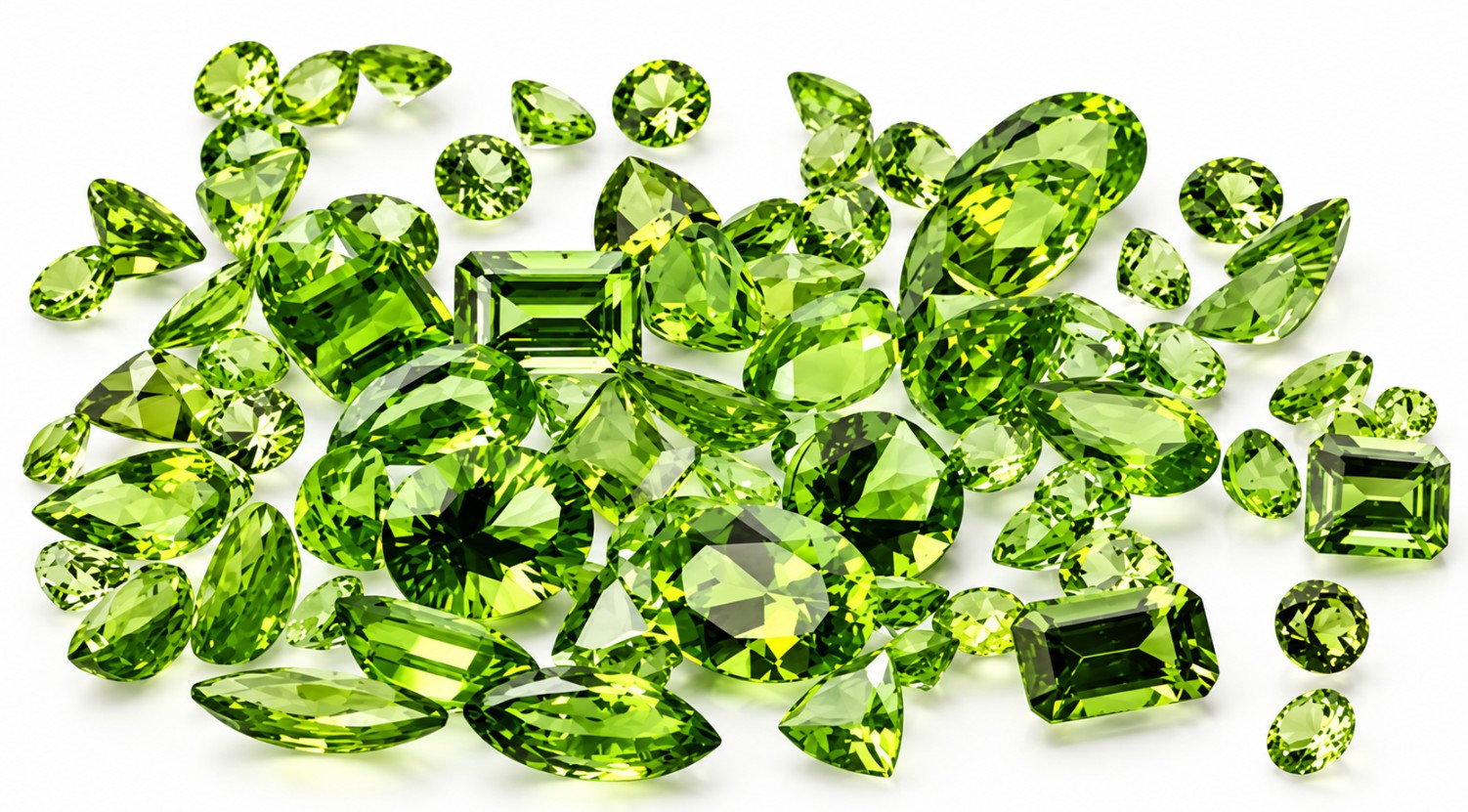
With its fresh yellow-green to rich olive-green colour, peridot is one of the most distinctive natural gemstones used in fine jewellery. Unlike gemstones that occur in many different colours, peridot is always green, although its exact shade varies according to its composition.
Peridot is also the traditional August birthstone, making it a meaningful choice for birthday jewellery, pendants, earrings and custom rings.
At Polished Diamonds, we source coloured gemstones individually and design jewellery around the dimensions and characteristics of each stone. If you are considering something beyond traditional diamonds, explore our Coloured Gemstone Guides for more information about sapphire, ruby, emerald, garnet, tourmaline and other gemstones.
Peridot at a glance
Colour: Yellow-green to rich olive green
Mineral: Gem-quality olivine
Birthstone: August
Hardness: 6.5–7 on the Mohs scale
Popular cuts: Oval, round, cushion, pear and emerald-style cuts
Best suited to: Pendants, earrings, dress rings and carefully designed gemstone rings
Key quality factors: Colour, clarity, cut, size and overall appearance
What Is Peridot?
Peridot is the gem-quality variety of olivine, a mineral formed under geological conditions very different from many other coloured gemstones.
Its characteristic green colour comes primarily from iron within the mineral itself. Gemologists describe gemstones whose colour originates from an essential part of their chemical composition as idiochromatic.
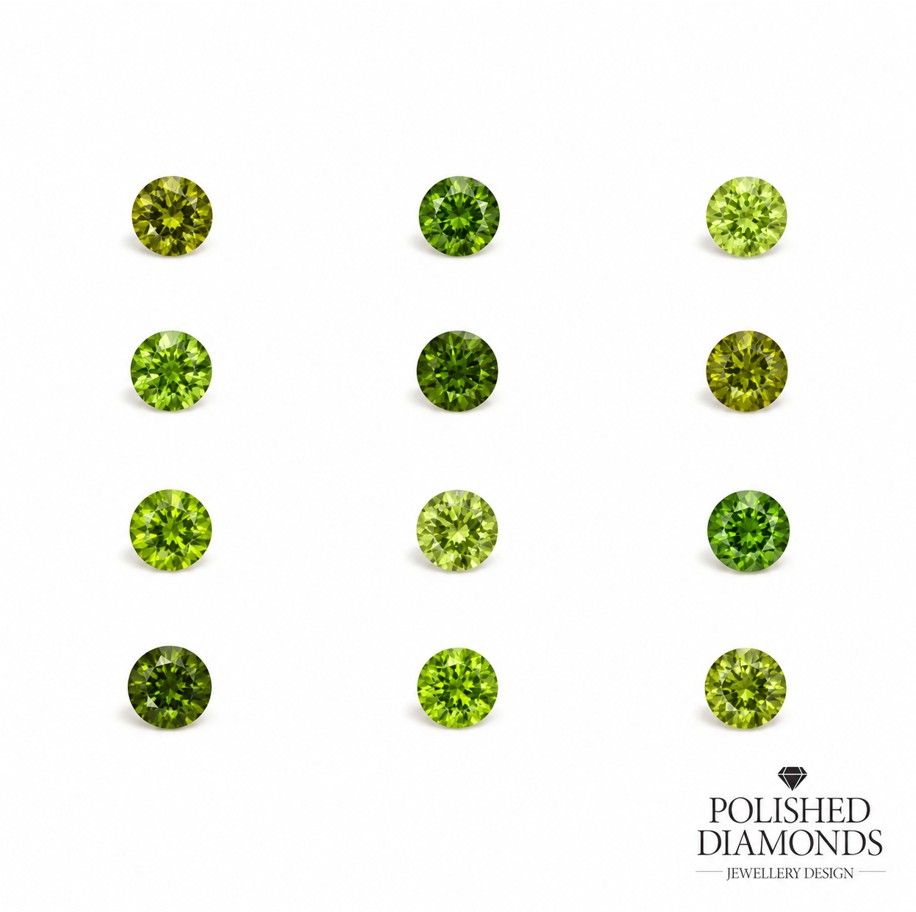
This helps explain one of peridot’s most recognisable characteristics: while the depth and tone of its colour vary, natural peridot remains within the green spectrum.
Colours can range from:
- Pale yellow-green
- Bright lime or grass green
- Rich green
- Olive green
- Green with noticeable golden or brownish undertones
For jewellery, stones displaying an attractive, lively green without excessive brown tones are generally particularly desirable.
Why Is Peridot Green?
Many gemstones receive their colour from small amounts of trace elements entering otherwise colourless crystals. Peridot is different because iron is an inherent part of its mineral composition.
Variations in iron content influence the precise shade of green.
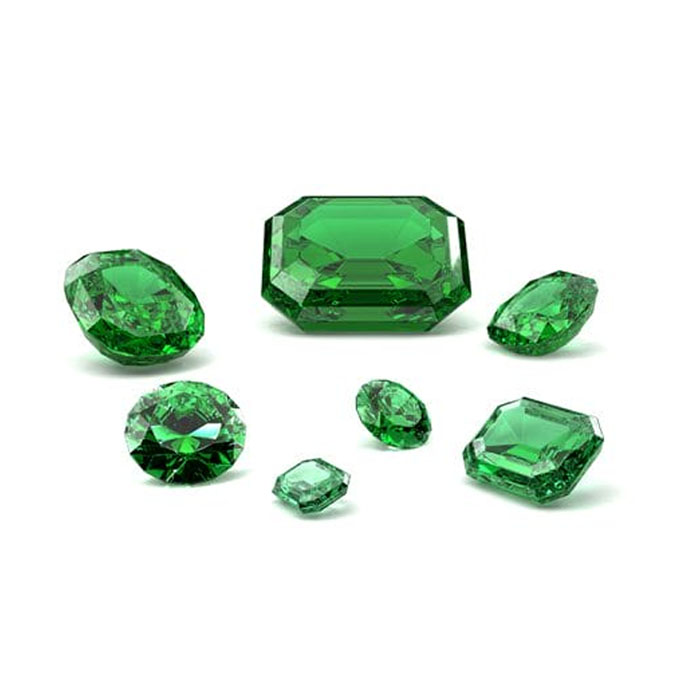
This makes peridot interesting when compared with other green gemstones. For example, emerald belongs to the beryl family and receives its celebrated green colour from elements such as chromium or vanadium.
Although both gemstones are green, their colour, optical appearance, crystal structure and jewellery characteristics are distinctly different.
Is Peridot the August Birthstone?
Yes. Peridot is traditionally recognised as the birthstone for August.
Its bright green colour has also led to long-standing associations with renewal, vitality, prosperity and protection. These symbolic meanings are part of gemstone history and folklore rather than scientifically demonstrated properties, but they continue to make peridot jewellery a thoughtful personalised gift.
An August birthstone can be incorporated into a pendant, earrings, dress ring, bracelet or a piece combining several family birthstones.
For an especially personal design, our custom jewellery design service allows a piece to be created specifically around your chosen gemstone.
How Do You Judge Peridot Quality?
Unlike diamonds, coloured gemstones are not purchased using a universal grading system equivalent to the diamond 4Cs. Peridot should instead be assessed individually according to its colour, clarity, cut, size and overall beauty.
Colour
Colour is one of the most important considerations.
Look for a lively, attractive green that appeals to you personally. Some peridots show strong yellow tones, and others show a deeper olive green. An attractive medium green with good saturation and limited brown colouring is often particularly desirable.
Clarity
Fine-quality peridot can be relatively transparent and eye-clean.
Some stones contain visible internal characteristics or inclusions. These are natural features of gemstone formation, although heavy inclusions can reduce transparency and affect appearance.
Cut
Good cutting helps a peridot return light attractively and showcase its colour.
Popular shapes include oval, cushion, round, pear and emerald-style cuts. When designing jewellery, the physical dimensions of the gemstone matter just as much as its carat weight.
Carat Weight
Larger peridots are available, although fine-quality stones become progressively less common as size increases.
Two peridots of identical carat weight may also appear different in size because carat measures weight rather than visible dimensions.
Where Does Peridot Come From?
Peridot has been found in several parts of the world.
Important sources have included Pakistan, Myanmar, China and the United States, particularly Arizona. As with most coloured gemstones, geographic origin alone does not determine whether one peridot is better than another; colour, clarity, cutting and overall appearance are more useful buying considerations.
Peridot also has an extraordinary geological story. Olivine forms deep within the Earth, and some material reaches the surface through volcanic geological processes.
Rather than purchasing a gemstone solely because of a particular country of origin, we recommend considering the beauty, quality and suitability of the individual stone.
Is Peridot Suitable for Rings?
Peridot measures approximately 6.5–7 on the Mohs hardness scale.
This means it can certainly be used in rings, but it requires more consideration than highly scratch-resistant gemstones such as sapphire and ruby, which measure 9 on the Mohs scale.
For a ring that will be worn frequently, the design can help protect the gemstone. A bezel, surrounding halo or setting that reduces exposure to knocks may be appropriate depending on the stone and the wearer’s lifestyle.
If you are choosing a gemstone specifically for an engagement ring, our guide to coloured gemstone engagement rings compares several popular gemstones and their suitability for everyday wear.
How Should You Care for Peridot Jewellery?
Peridot should be treated with sensible care.
Clean it gently using warm water, mild soap and a soft brush or cloth. Avoid harsh chemicals, sudden temperature changes and unnecessary knocks against hard surfaces.
Because gemstone treatments, inclusions and settings can vary, professional cleaning methods should always be selected according to the individual piece rather than assuming every coloured gemstone can be cleaned in the same way.
Regularly worn gemstone rings should also have their settings inspected periodically to ensure claws and other components remain secure.
Designing Peridot Jewellery in New Zealand
Because coloured gemstones can vary considerably in dimensions, depth and proportions, the jewellery setting should ideally be designed around the individual peridot rather than forcing the stone into a predetermined setting.
Yellow gold can emphasise the warmer tones within peridot, while platinum or white gold can produce a crisp contrast against its fresh green colour. Small diamonds can also complement peridot beautifully without overwhelming its distinctive colour.
At Polished Diamonds, we can create a detailed 3D CAD model around the precise dimensions of your selected gemstone before your jewellery is manufactured. This allows gemstone positioning, proportions, setting style and metal thickness to be considered before production.
Our custom jewellery is designed in New Zealand through our Auckland, Wellington and Christchurch design studios.
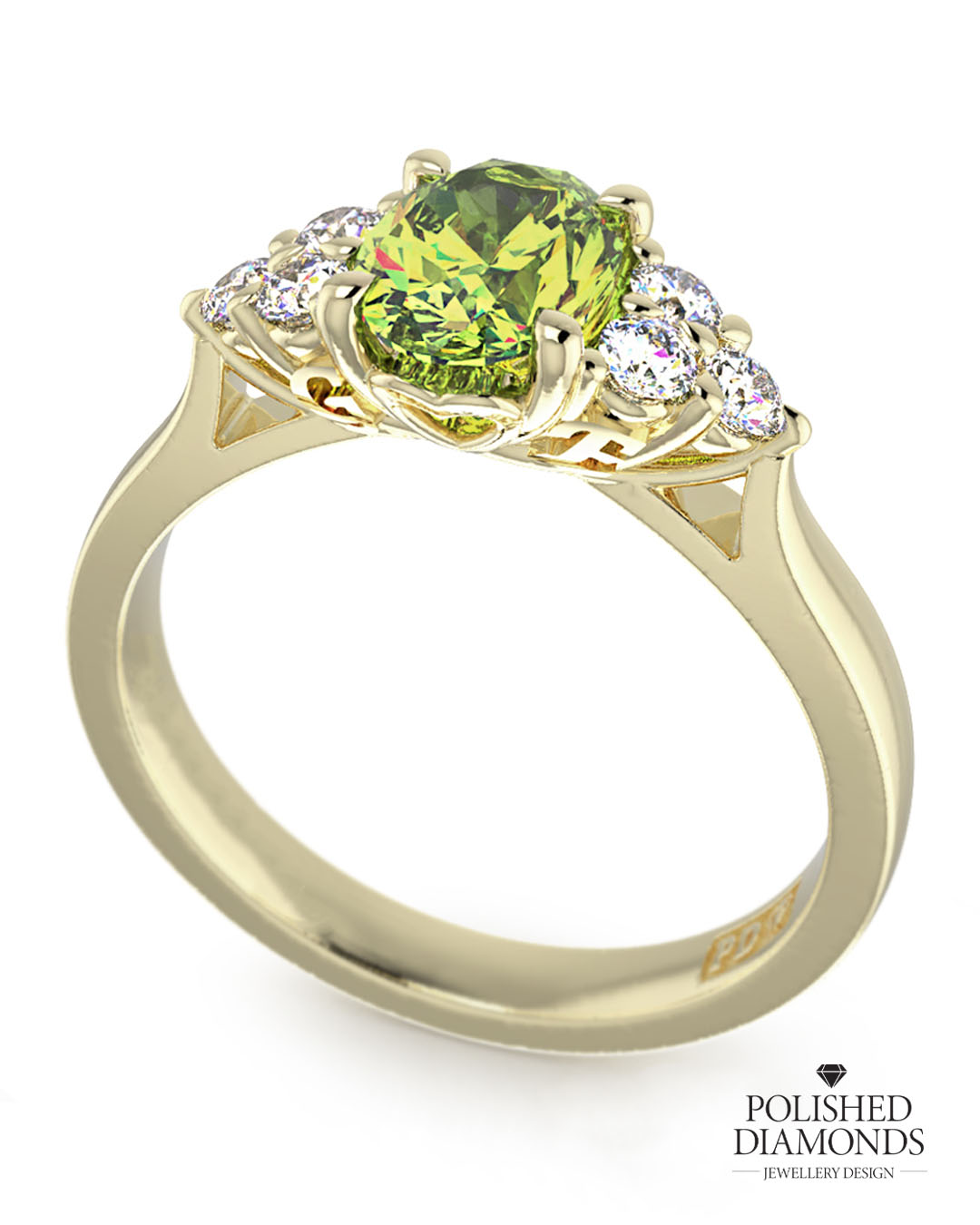
Pieces created through Polished Diamonds are manufactured through our New Zealand jewellery workshop and supported by our lifetime workmanship guarantee.
Peridot FAQs
Natural peridot is always green, although shades range from yellow-green and lime through to deeper olive green.
Yes. Peridot is the traditional birthstone for August and is frequently chosen for personalised birthday jewellery.
No. They are completely different gemstones. Peridot is the gem variety of olivine, while emerald is a variety of beryl. Their colour, chemistry, hardness and optical properties differ considerably.
Peridot is suitable for pendants, earrings and many rings, although it requires more care than harder gemstones such as sapphire or ruby. Protective ring settings can reduce its exposure to accidental knocks.
Peridot can range considerably in value depending on colour, clarity, cut and size. Fine stones with an attractive saturated green, good transparency and skilful cutting are generally more desirable, while stones with strong brown tones or heavy inclusions may be less valuable. Carat weight alone does not determine quality.
Yes. We can source peridot and design a custom ring, pendant, earrings or other piece around the selected gemstone. Visit one of our Auckland, Wellington or Christchurch jewellery design studios, or work with our designers remotely from anywhere in New Zealand.