Pearl Gemstone Guide: Types, Colours, Quality & Jewellery
Pearls are among the world’s most distinctive gemstones, admired for their natural lustre, soft colours and timeless elegance. Unlike diamonds, sapphires, and other Earth-mined gemstones, living molluscs create organic pearls within their shells. Their beauty comes from layers of nacre, giving them a luminous appearance that requires no faceting.
Traditionally associated with purity, wisdom and elegance, pearls are the birthstone for June and a popular choice for necklaces, earrings, pendants and special-occasion jewellery.
At Polished Diamonds, we help New Zealand customers select pearls and create personalised jewellery that celebrates the natural character of each gem.
Pearl at a Glance
- Colour: White, cream, pink, silver, gold, black, grey and lavender, with various natural overtones
- Mineral: Organic gemstone composed primarily of aragonite (calcium carbonate) and conchiolin
- Birthstone: June
- Hardness: 2.5–4.5 on the Mohs scale
- Popular shapes: Round, oval, button, drop and baroque
- Best suited to: Earrings, necklaces, pendants, bracelets and occasional-wear rings
- Key quality factors: Lustre, surface quality, shape, size, colour, nacre quality and matching
What Is a Pearl and How Does It Form?
A pearl forms when a mollusc, such as an oyster or mussel, deposits layers of nacre around an irritant or introduced nucleus within its body.
Nacre consists of microscopic calcium carbonate crystals held together by organic material. As these layers accumulate, they build the smooth surface and distinctive lustre that defines fine pearls.
Natural pearls form without human intervention and are exceptionally rare. Most modern jewellery features cultured pearls, which skilled technicians cultivate by initiating pearl formation inside living molluscs.
Cultured pearls are real pearls, possessing the same essential nacre structure as natural pearls. Clients should not confuse these with imitation pearls crafted from glass or plastic.
Natural Pearls vs Cultured Pearls
Understanding the distinction between natural and cultured pearls is important when purchasing pearl jewellery.
Natural pearls form entirely without human assistance. Their rarity, historical significance and limited availability can make exceptional examples highly valuable.
Cultured pearls develop within molluscs following human intervention. They are the dominant choice in modern fine jewellery and offer a wider selection of sizes, colours and shapes.
Both are genuine organic gemstones. Their value depends on quality, rarity and appearance rather than simply whether they are natural or cultured.
Types of Pearls: Freshwater and Saltwater
Fine jewellery incorporates several distinct pearl varieties, each offering unique characteristics.
Freshwater Pearls
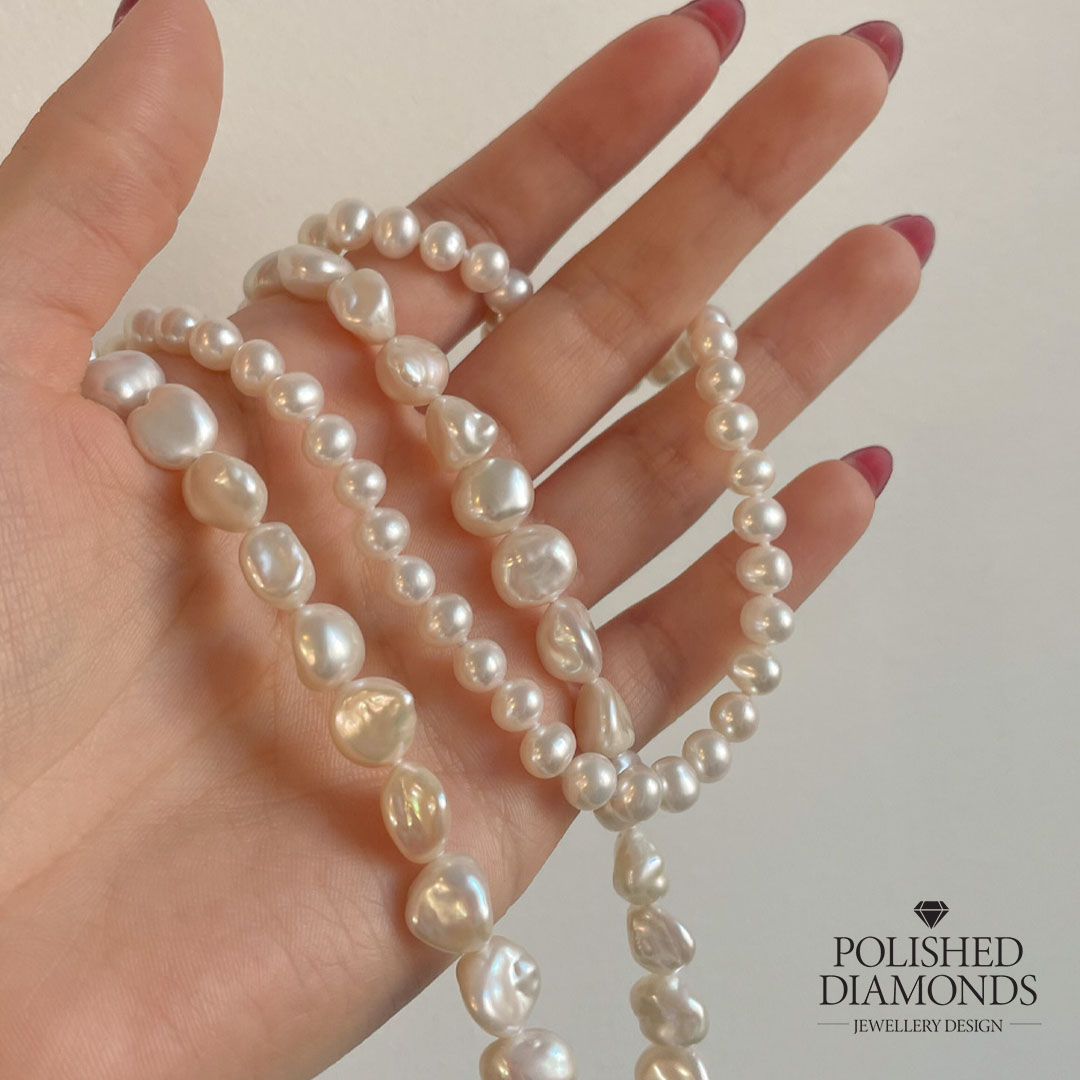
China primarily cultivates freshwater pearls in living mussels. They are available in white, cream, pink, peach and lavender tones, along with numerous shapes.
Their variety and accessible pricing make them popular for pearl earrings, necklaces and contemporary jewellery designs.
Akoya Pearls
Japan and China primarily cultivate Akoya saltwater pearls.
Revered for their bright, mirror-like lustre, master jewellers frequently choose Akoya pearls for traditional strands and elegant stud earrings.
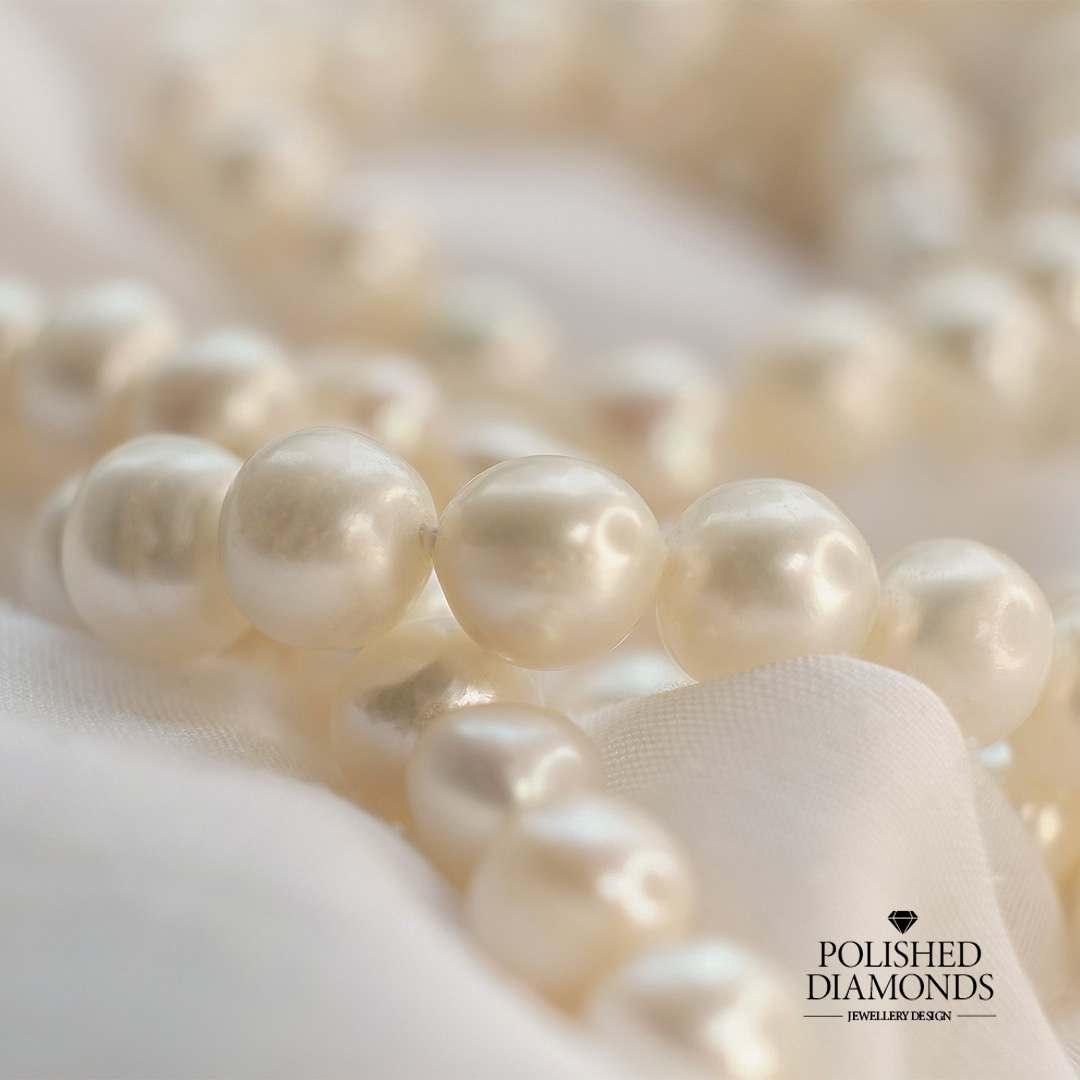
White and cream colours with subtle rose or silver overtones are especially desirable.
South Sea Pearls
Australia, Indonesia, and the Philippines primarily cultivate South Sea pearls. Growing significantly larger than Akoya varieties, these gems captivate collectors with their luxurious appearance, rich white, silver, or golden hues, and soft, satin-like lustre.
Tahitian Pearls
French Polynesia predominantly produces Tahitian cultured pearls.
Although commonly described as black pearls, their colours include charcoal, silver, peacock green, aubergine and blue-green. Their unusual natural body colours make them particularly appealing for distinctive fine jewellery.
Pearl Colours: More Than Classic White
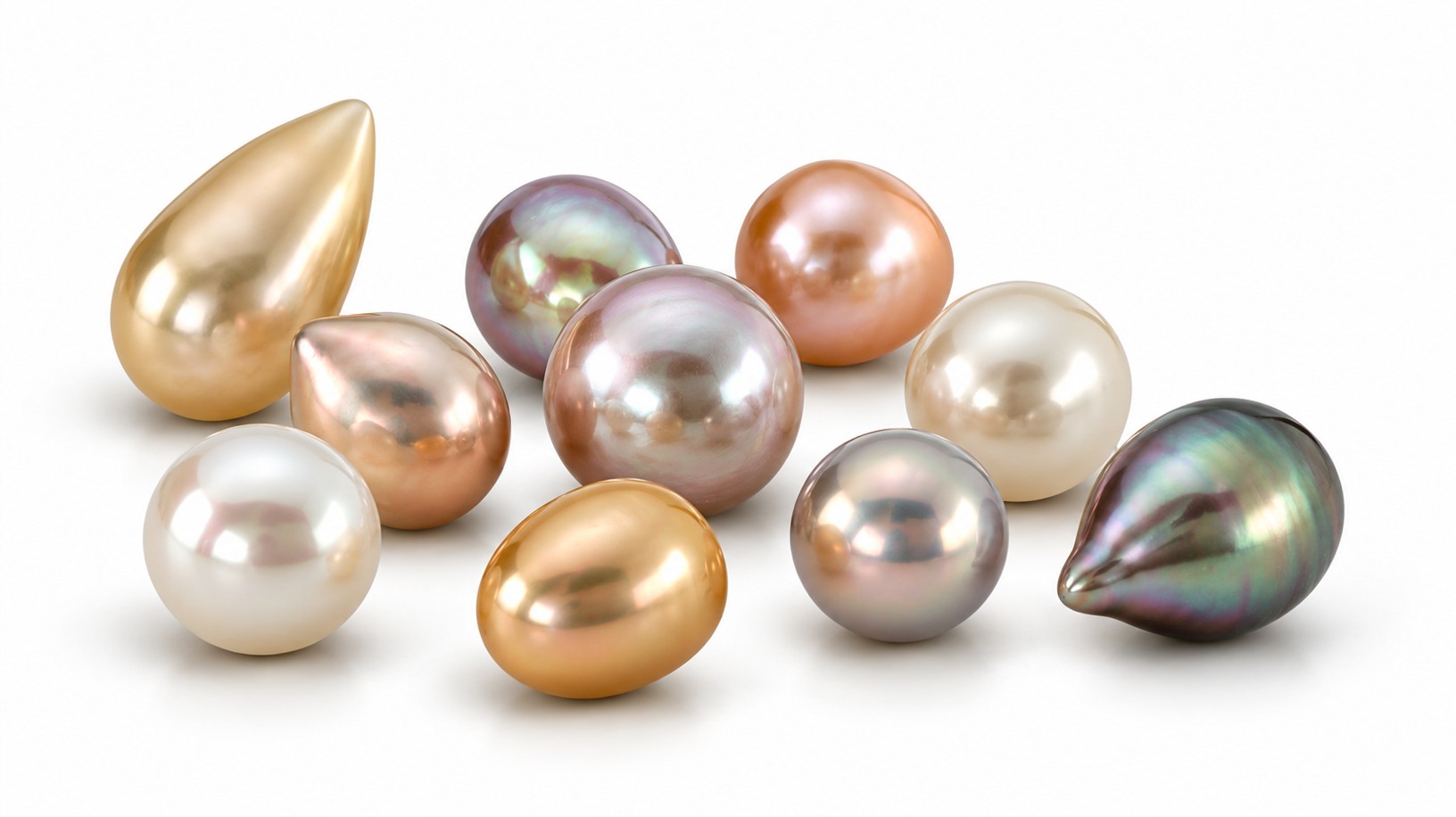
While white pearls remain a traditional favourite, pearls occur in an extraordinary range of colours.
A mollusc’s species, genetics, environment, and nacre structure directly shape a pearl’s appearance. Its rich body colour often features delicate overtones or a shimmering iridescent effect known as orient.
White and cream pearls offer understated elegance, while golden South Sea pearls create a warmer, luxurious appearance. Dark Tahitian pearls provide a dramatic alternative for contemporary jewellery.
Some commercial suppliers dye or colour-treat pearls, so discerning buyers should always verify natural colour origin.
For more gemstone inspiration, explore our Coloured Gemstone Guides.
What Determines Pearl Quality and Value?
Unlike diamond grading, gemmologists do not evaluate pearls using the traditional Four Cs. Jewellers consider several characteristics together.
Lustre: The intensity and sharpness of light reflected from the pearl’s surface. Excellent lustre is one of the most important quality indicators.
Surface quality: Fewer visible blemishes generally increase desirability, although small imperfections are common in genuine pearls.
Shape: Perfectly round pearls are particularly prized, but symmetrical drops and unusual baroque shapes also have significant design appeal.
Size: Larger pearls are generally rarer and more valuable when other quality characteristics are comparable.
Nacre quality: Good nacre development contributes to beauty and durability.
Colour and matching: Desirable colours and well-matched pearls can increase the value of earrings and necklaces.
A pearl’s true value rests in the seamless balance of these qualities rather than size alone.
Pearl Jewellery: Timeless and Contemporary Designs
Pearls are remarkably versatile, complementing classic and modern jewellery styles.
Pearl stud earrings remain a timeless choice, while drop earrings combining pearls with diamonds create additional sparkle.
Pearl pendants are elegant gifts for birthdays, anniversaries and weddings. Contemporary designs increasingly incorporate irregular baroque pearls, sculptural gold settings and contrasting gemstones.
Although pearls can be incorporated into rings, their relatively low hardness makes them more vulnerable to damage during everyday wear. Protective settings and occasional wear are recommended.
At Polished Diamonds, our custom jewellery design service allows clients to explore personalised pearl pendants, earrings and other fine jewellery creations.
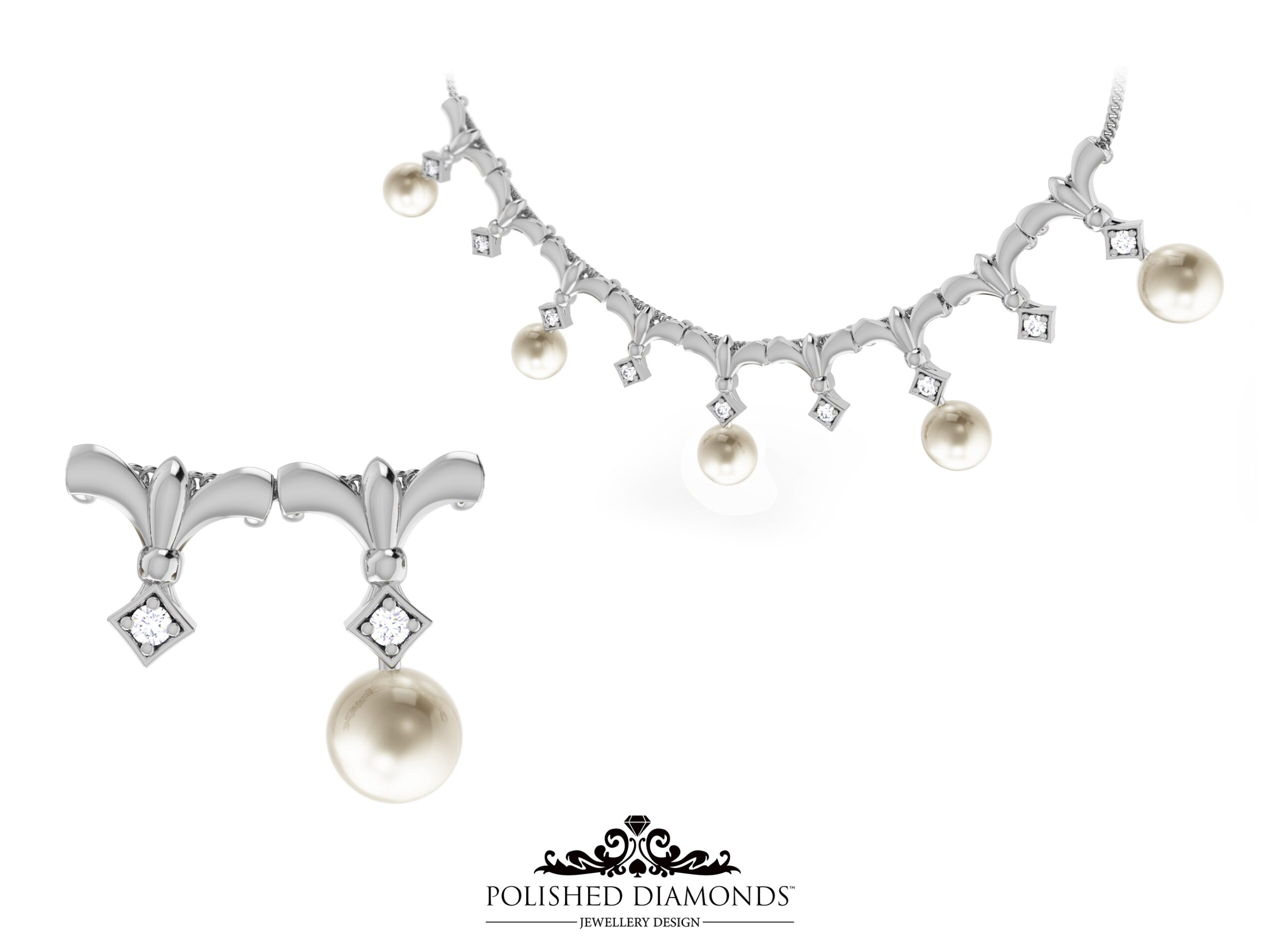
Pearls can also be paired with diamonds for an elegant contrast between soft lustre and brilliant sparkle.
How to Care for Pearl Jewellery
Pearls require more careful treatment than harder gemstones because their surfaces can be damaged by chemicals, abrasion and excessive heat.
To preserve their appearance:
- Put pearls on after applying perfume, cosmetics and hairspray.
- Wipe gently with a soft, slightly damp cloth after wearing.
- Avoid ultrasonic cleaners, steam cleaning and harsh detergents.
- Store separately from diamonds and metal jewellery to prevent scratching.
- Keep pearl strands away from prolonged moisture and have worn or stretched strings professionally inspected.
Pearls should be stored in a soft pouch or lined jewellery box, avoiding excessively dry or hot conditions.
With appropriate care, quality pearl jewellery can remain beautiful for generations.
Pearl Jewellery at Polished Diamonds
Whether you prefer classic white pearls, golden South Sea pearls or distinctive Tahitian pearls, choosing the right gemstone comes down to lustre, colour, quality and personal style.
At Polished Diamonds, we combine modern design technology with traditional craftsmanship to create exceptional fine jewellery in New Zealand. Our team can help source beautiful pearls and incorporate them into bespoke earrings, pendants and other personalised jewellery designs.
Explore our custom jewellery design service or visit our design studios in Auckland, Wellington and Christchurch.
Pearl Gemstone FAQs
Yes. Cultured pearls are genuine pearls produced by living molluscs following human intervention. They have the same essential nacre composition as natural pearls.
Neither is automatically better. High-quality freshwater pearls can be beautiful, while saltwater varieties such as Akoya and South Sea pearls are often prized for particular lustre, size and rarity characteristics.
Pearl earrings and pendants can be worn regularly with appropriate care. Pearl rings and bracelets are more exposed to impacts and scratching, making them less suitable for demanding daily activities.
There is no single universally rarest colour. Rarity depends on pearl variety, natural colour, size and quality. Exceptional naturally coloured golden South Sea and Tahitian pearls can be particularly desirable.
Yes. Polished Diamonds can source pearls and develop bespoke jewellery designs through our New Zealand jewellery design and manufacturing service.