Emerald Engagement Rings: A New Zealand Guide to Colour, Quality & Design
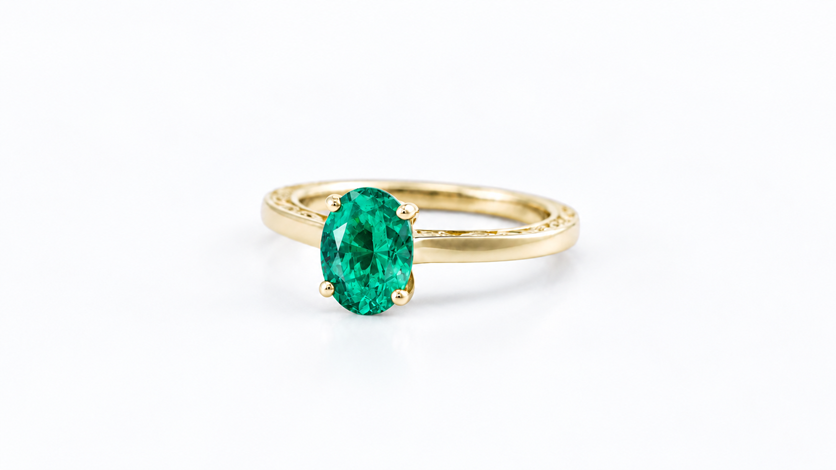
Emerald engagement rings offer a distinctive alternative to the traditional diamond ring, combining rich green colour with a gemstone prized for its individuality . For couples looking beyond traditional diamonds, emeralds are one of several coloured gemstones for engagement rings that can be incorporated into a custom design.
At Polished Diamonds, an emerald engagement ring can be designed around the gemstone itself. Its dimensions, colour, inclusions and intended everyday wear can all influence the final setting and proportions.
What Is an Emerald?
Emerald is the green variety of the mineral beryl, the same mineral family as aquamarine. Its green colour is produced by trace elements within the crystal, most commonly chromium and sometimes vanadium.
Natural emeralds commonly contain visible internal characteristics. Unlike diamonds, where high clarity is usually desirable, these inclusions are expected and can give each emerald an individual appearance. The network of inclusions sometimes seen within an emerald is often called its jardin, from the French word for garden.
Are Emeralds Good for Engagement Rings?
Yes. Emeralds can make beautiful engagement rings, but they require more considered design and care than diamonds or sapphires.
Emerald measures approximately 7.5 to 8 on the Mohs hardness scale, giving it good resistance to scratching. Hardness, however, is different from toughness. Because many emeralds contain natural fractures and inclusions, they can be more vulnerable to chipping if subjected to a hard impact.
For a ring intended for regular wear, the setting should protect vulnerable areas of the gemstone while allowing the colour to remain the focus.
How Is Emerald Quality Assessed?
Emerald quality is judged differently from diamond quality. Buyers should consider colour, transparency, inclusions, cut, treatment and overall visual appeal.
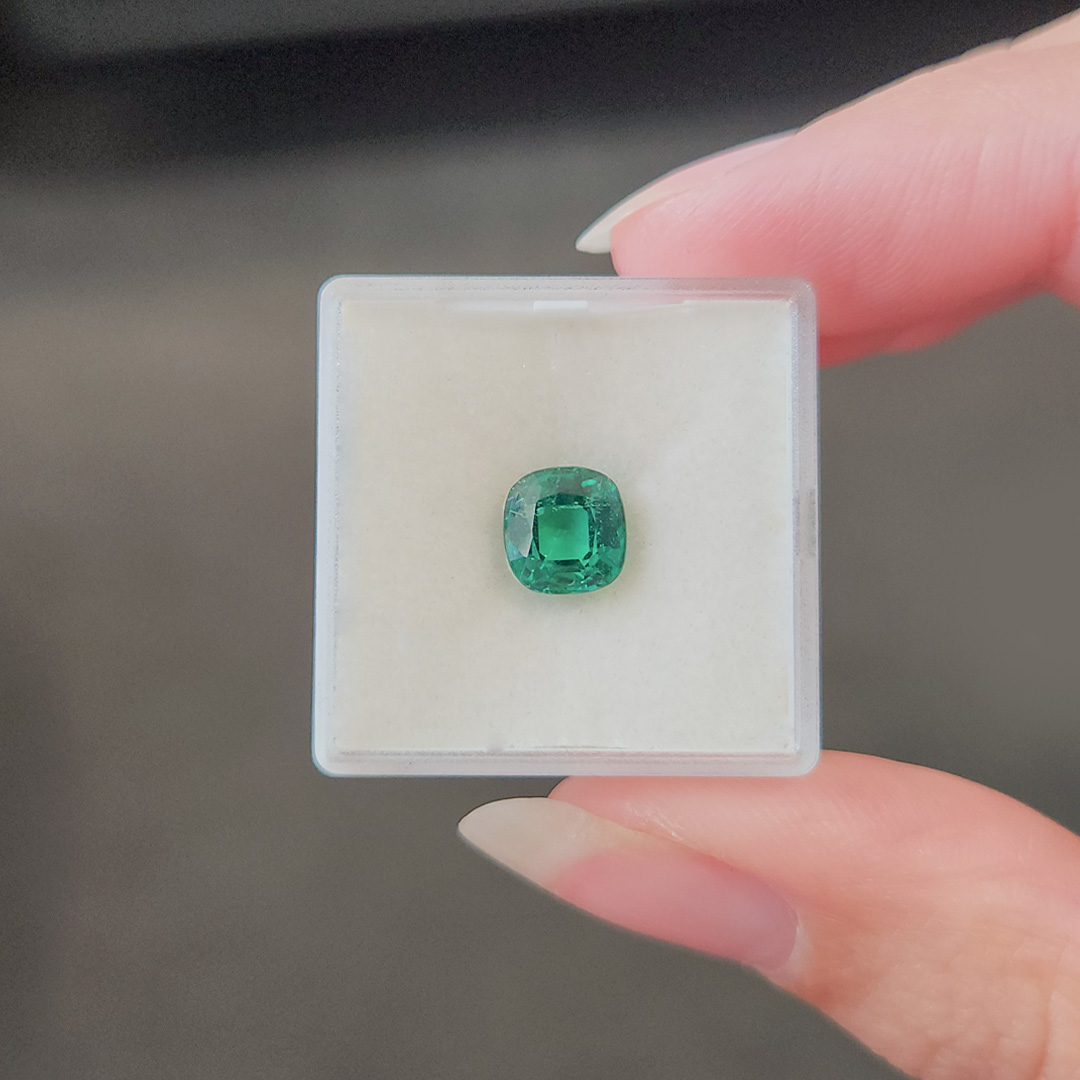
Colour is usually the most important factor. Fine emeralds are valued for attractive green to bluish-green colour with good saturation. The tone should be rich enough to appear unmistakably green without becoming so dark that the stone loses life.
Clarity also matters, but inclusions are expected in natural emeralds. Look for a stone where they do not overwhelm the colour, transparency or structural integrity of the gem.
Cut influences appearance and durability. A well-proportioned emerald should show attractive colour across the face of the stone without obvious dead or excessively dark areas.
Why Do Emeralds Have Inclusions?
Emeralds form under geological conditions that commonly create fissures, crystals and other internal features. An included emerald is therefore not automatically a poor-quality emerald.
The position and nature of the inclusions matter. Some mainly affect appearance, while significant surface-reaching fractures can affect durability. This is why an emerald should be assessed as a complete gemstone rather than judged on clarity alone.
Are Emeralds Treated?
Many natural emeralds are treated with colourless oil, resin or another filler to reduce the visibility of surface-reaching fractures and improve apparent clarity. This type of enhancement is common in the gemstone trade, but treatment can influence value and care requirements.
When comparing important or higher-value emeralds, ask what treatment has been identified and whether a gemmological report is available. A jeweller should be able to explain what is known about the gemstone and its treatment.
What Are the Best Cuts for an Emerald Engagement Ring?
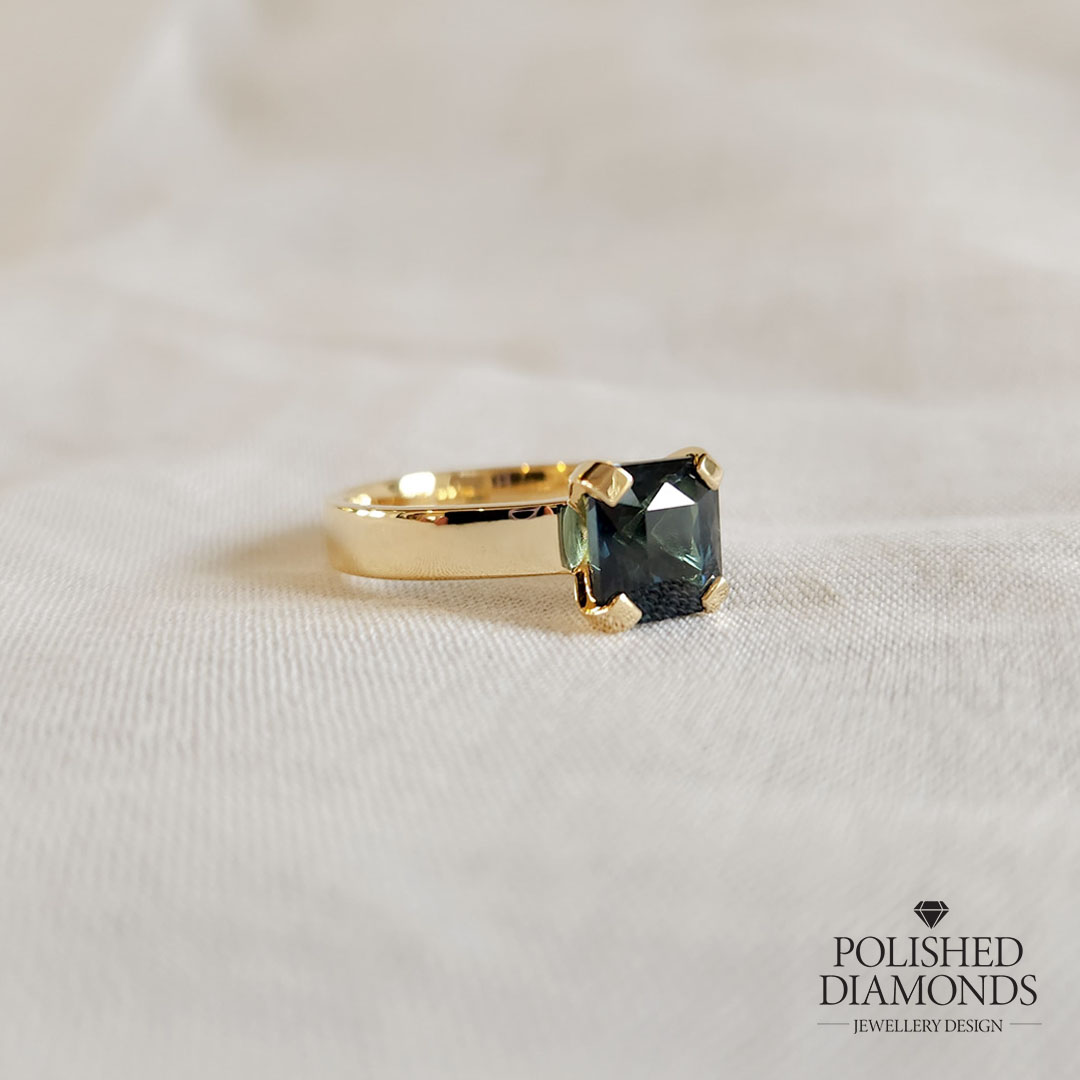
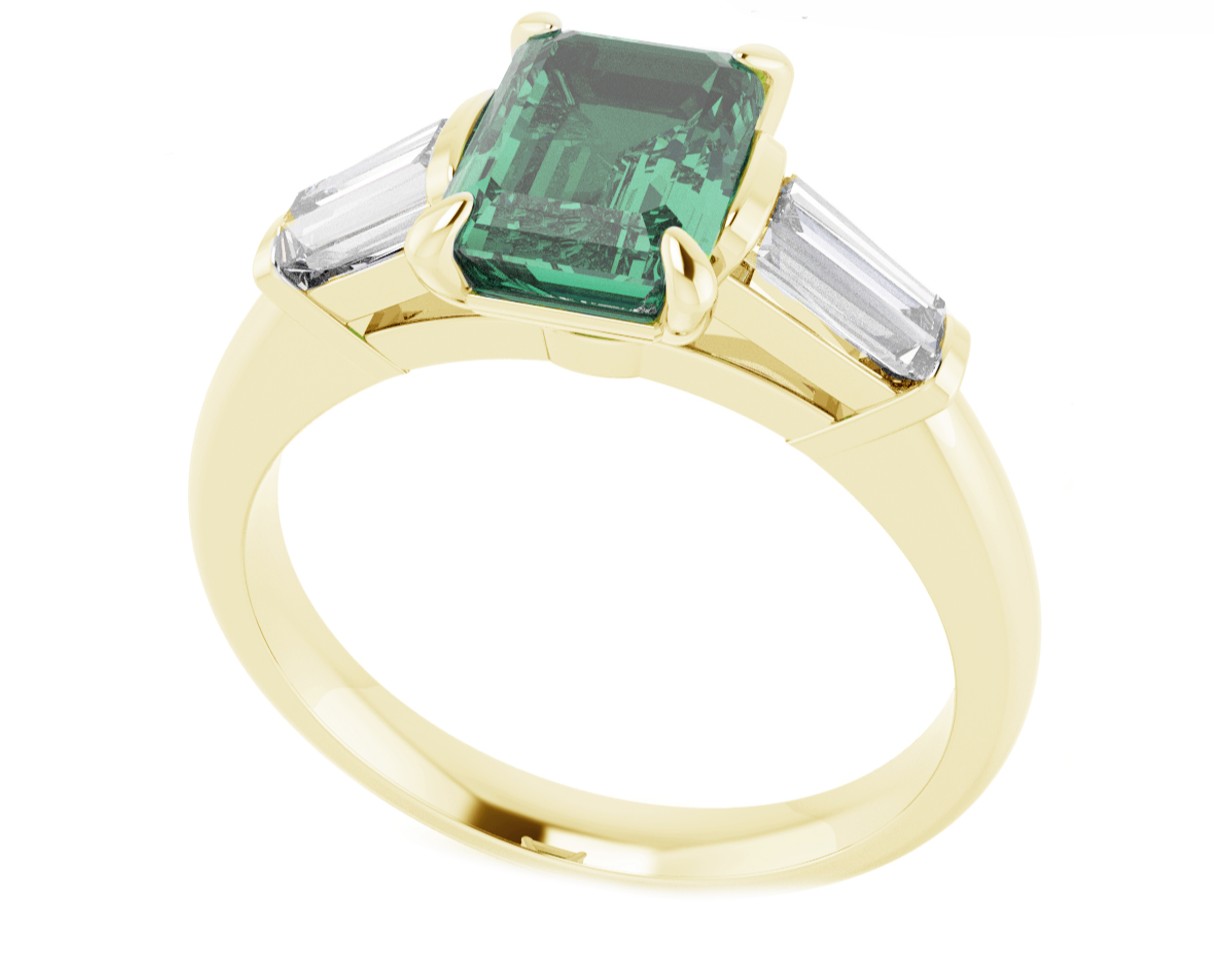
The classic emerald cut is an obvious choice. Its rectangular outline, stepped facets and cropped corners can help protect vulnerable corners while showcasing the gemstone’s colour.
Emeralds are also available in oval, cushion, pear, round and other shapes. The best option depends on the individual stone because colour distribution, inclusions and proportions vary.
It is also worth distinguishing an emerald gemstone from an emerald-cut diamond. “Emerald” describes the green beryl gemstone, while “emerald cut” describes a rectangular step-cut shape that can be used for diamonds and coloured gemstones.
Which Engagement Ring Settings Suit Emeralds?
A secure setting is particularly important for an emerald. Well-positioned claws can hold the gemstone securely while keeping the design open and elegant, while bezel-style settings, halos and other protective design elements can provide greater protection around vulnerable edges.
Diamond side stones create a strong contrast against a green centre stone. Popular combinations include an emerald solitaire with diamond shoulders, a three-stone ring with an emerald centre and diamond sides, or a diamond halo.
Ring height and exposure should also reflect the wearer’s lifestyle. Someone very active may benefit from a lower, more protective setting.
What Metal Looks Best with an Emerald?
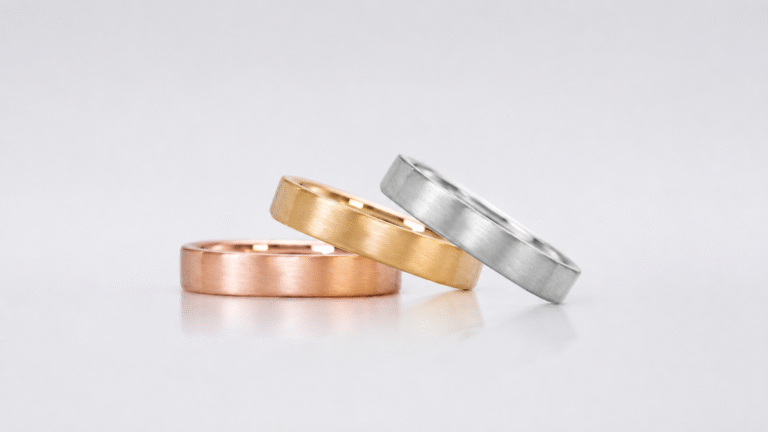
Emeralds work beautifully with several precious metals. Platinum and white gold create a cool contrast that emphasises the green gemstone, while yellow gold gives a warmer, more traditional appearance. Rose gold can create a softer and more unusual combination.
The best choice depends on personal style, the tone of the emerald, any surrounding diamonds and how the engagement ring will sit beside a future wedding ring.
How Should You Care for an Emerald Engagement Ring?
Emerald engagement rings should be treated more gently than diamond rings. Avoid hard knocks, harsh chemicals and sudden temperature changes, and remove the ring before activities where the stone could be struck.
Warm water, mild soap and a soft brush are generally the safest cleaning method. Ultrasonic and steam cleaners should be avoided because they can affect fracture-filled stones or existing fissures.
Periodic professional inspections are also sensible so the setting, claws and gemstone can be checked.
Custom Emerald Engagement Rings in New Zealand
Because every emerald is different, custom design can be particularly useful for an emerald engagement ring. At Polished Diamonds, we use CAD jewellery design to refine the proportions, stone placement and setting before the ring is made in our New Zealand workshop.
Choose an emerald centre stone, combine it with natural or lab-grown diamonds, and select platinum, white gold, yellow gold or rose gold to create a ring around your preferred style and budget.
Visit our jewellery design studios in Auckland, Wellington or Christchurch, or work with our team remotely from anywhere in New Zealand. We can help you compare emeralds and design options to create an engagement ring that balances colour, character, protection and everyday wear.
Emerald Engagement Rings FAQs
Yes. Emeralds can make beautiful engagement rings and are suitable for regular wear when correctly set and cared for. Because natural emeralds often contain inclusions and fractures, a protective setting is particularly important.
The cost of an emerald engagement ring in New Zealand depends on the emerald’s size, colour, clarity, origin and treatment, as well as the precious metal, diamonds and complexity of the ring design. Fine natural emeralds can be highly valuable, while other emeralds can provide greater size and colour at a lower price than an equivalent high-quality natural diamond.
The most desirable emeralds generally display a rich, evenly distributed green to slightly bluish-green colour with good saturation. Personal preference also matters, as emeralds can range from lighter vibrant greens to deeper, more intense shades.
Yes. Most natural emeralds contain visible internal characteristics and inclusions. These are a normal part of the gemstone and are sometimes referred to collectively as the emerald’s jardin. The location and severity of inclusions are more important than simply whether they are present.
Secure settings that protect the edges and corners of the emerald are generally best. Claw settings, halos and bezel-style designs can all work well, depending on the gemstone shape, ring design and wearer’s lifestyle.
Yes. Polished Diamonds designs and makes custom emerald engagement rings in New Zealand. The emerald, precious metal, surrounding diamonds and setting can all be selected and refined using CAD jewellery design before the ring is manufactured in our New Zealand workshop.
Emerald Engagement Rings: Key Takeaways
- Emeralds are green beryl gemstones valued primarily for their colour and individual characteristics.
- Emeralds measure 7.5–8 on the Mohs scale but require protection from hard impacts.
- Natural inclusions are common and do not automatically indicate a poor-quality emerald.
- Colour, transparency, cut, treatment and overall appearance should all be considered when choosing an emerald.
- Custom design allows the setting to be created around the proportions and characteristics of the individual gemstone.