

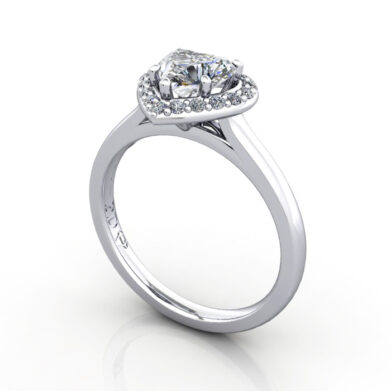
Heart Shaped Halo Diamond Ring Platinum RH1
$3,100Select options
This product has multiple variants. The options may be chosen on the product page
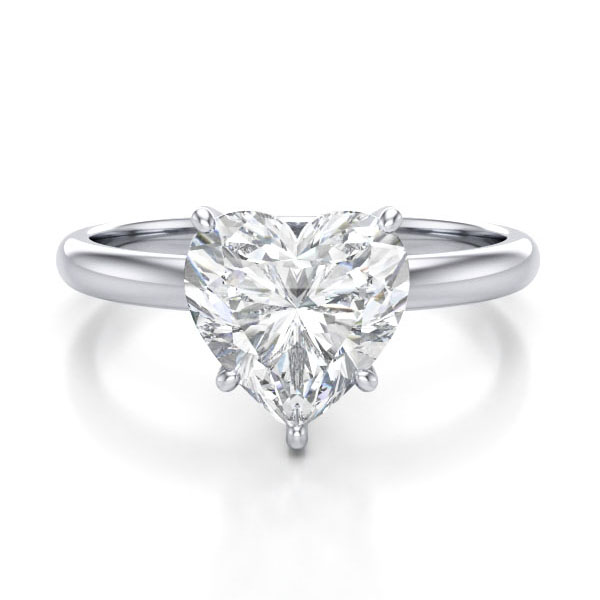
Heart shaped diamond rings combine brilliant-style sparkle with one of jewellery’s most recognisable symbols of love. A well-proportioned heart diamond has two balanced rounded lobes, a clearly defined central cleft and a distinct point, creating a shape that works particularly well for engagement rings and meaningful anniversary jewellery.
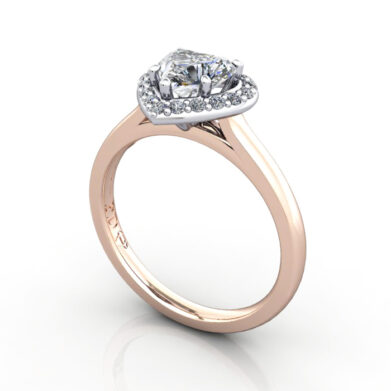
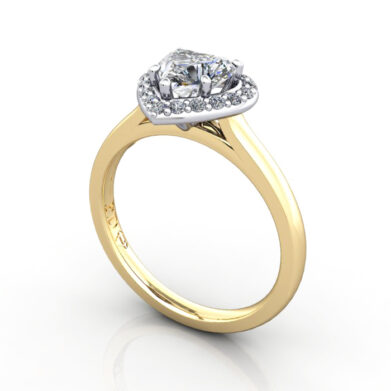
At Polished Diamonds, you can choose a certified natural or lab-grown heart shaped diamond and have it set in platinum, white gold, yellow gold or rose gold. Heart diamonds work beautifully in Solitaire Diamond Rings, where the outline remains the focus, or in Halo Diamond Rings, where smaller diamonds can follow and emphasise the heart shape.
Because heart diamonds vary considerably in symmetry, proportions and facet appearance, selecting the individual diamond is particularly important. We can compare its actual measurements and appearance before incorporating those dimensions into CAD and designing the setting around the stone.
Explore our heart shaped diamond rings below or create a custom design specifically around your preferred diamond, metal, style and budget.
Showing all 8 results
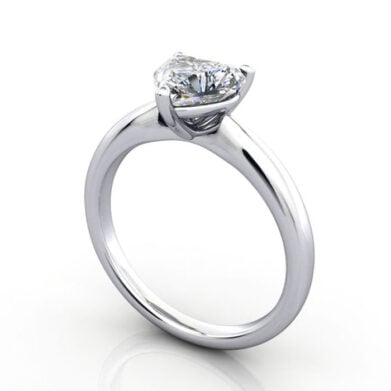
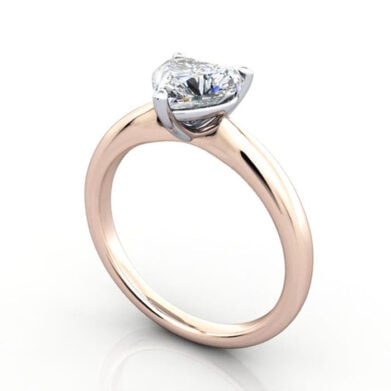
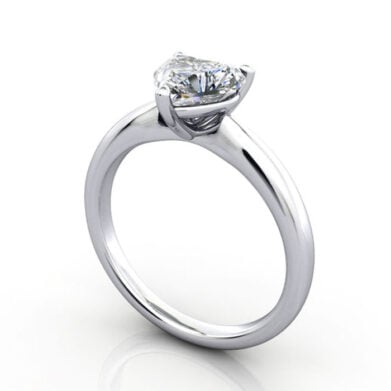
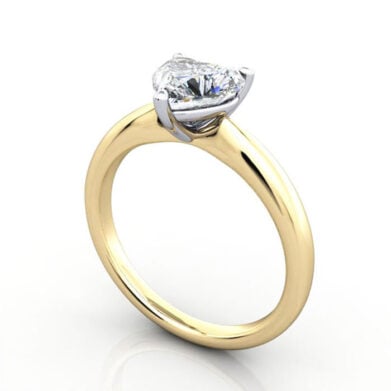
A heart diamond is a fancy brilliant shape, and choosing a beautiful example involves more than comparing carat, colour and clarity on a grading report.
Unlike the standard round brilliant, fancy-shaped diamonds such as hearts do not currently receive an overall GIA cut grade. This makes the actual outline, symmetry, polish, proportions and face-up appearance particularly important when comparing diamonds.
The heart shape should also remain immediately recognisable when viewed from above. Carat weight alone does not determine this: two diamonds of the same weight can have noticeably different dimensions and proportions.
Symmetry is particularly important in a heart shaped diamond because the left and right sides should visually balance one another.
The two rounded upper sections, known as the lobes, should have similar size and curvature. Between them, the cleft should be sufficiently defined to make the heart outline obvious. At the opposite end, the diamond should taper into a clear point.
If the lobes are uneven, the cleft is poorly defined or the outline is too wide or narrow, the diamond can lose some of its characteristic heart appearance.
We therefore recommend assessing the complete face-up shape rather than selecting a heart diamond solely from its certificate specifications.
Length-to-width ratio describes the relationship between the length and width of a heart shaped diamond.
A ratio closer to equal length and width creates a fuller, more traditional heart appearance. Slightly elongated proportions can produce a slimmer silhouette. Neither is automatically better—the preferred shape depends on the individual diamond and personal taste.
The diamond also needs enough visual presence for its cleft, lobes and point to remain clearly identifiable once set into the ring. This makes the actual millimetre measurements particularly useful when comparing heart diamonds.
Like pear, oval and marquise diamonds, some heart shaped diamonds can display a darker area across their centre known as a bow-tie effect.
A subtle bow-tie can simply form part of the diamond’s normal pattern of light and dark contrast. A very prominent dark bow-tie, however, can distract from the diamond’s brilliance and overall appearance.
Because the effect cannot be judged reliably from carat, colour and clarity grades alone, visual assessment of the individual heart diamond is valuable.
If you like elongated brilliant shapes but want something less overtly symbolic, you may also want to compare our Pear Diamond Rings.
The setting should enhance the heart outline while also protecting its pointed end.
A Solitaire Diamond Ring gives the heart shaped diamond maximum visual emphasis and allows its symmetry and outline to remain clearly visible.
A Halo Diamond Ring can follow the lobes, cleft and point of the centre diamond, increasing sparkle and creating greater visual presence across the finger.
Claw positioning is particularly important. The point is one of the more vulnerable areas of a heart shaped diamond, so the setting should be designed to provide suitable support without disguising the shape.
This is an area where designing the setting around the measurements of the actual diamond can make a significant difference.
Polished Diamonds can source both natural diamonds and lab-grown diamonds in heart shapes.
Both can be compared using carat weight, colour, clarity, measurements, polish and symmetry, together with the visual balance of the lobes, cleft, point and overall outline.
Your choice between natural and lab-grown diamonds can therefore be based on your preferences around origin, rarity, diamond size, quality and budget rather than the ring design itself.
Heart shaped diamonds are particularly well suited to custom jewellery design because small changes in claw placement, setting height and surrounding diamonds can affect how clearly the heart outline is seen.
Through our Design Your Own Diamond Ring service, we can incorporate the actual measurements of your selected heart diamond into a detailed CAD model. Our jewellery designers can refine the claw positions, band width, setting height, halo proportions, side profile and wedding-ring clearance before your ring is manufactured.
You can review detailed digital renders of the design before production, with a 3D-printed resin model also available where required.
Once approved, your heart shaped diamond ring is crafted through our dedicated New Zealand jewellery workshop and finished by our jewellery team.
Visit Polished Diamonds in Auckland, Wellington or Christchurch to compare heart shaped diamonds and ring designs in person, or work with us remotely from anywhere in New Zealand.
In-store and virtual appointments with our jewellery specialists
Every piece is backed by our comprehensive lifetime guarantee
Flexible finance available — speak with us in studio to find the right option
GIA and IGI certified stones with full quality documentation
No products in the cart.


