Tanzanite Gemstone Guide: Colour, Quality & Jewellery
Tanzanite is one of the most distinctive blue gemstones used in fine jewellery, prized for its extraordinary combination of blue, violet and purple tones. Unlike many gemstones that occur in several parts of the world, commercially mined tanzanite comes from just one small area of northern Tanzania, making its origin as remarkable as its colour.
Discovered during the 1960s, tanzanite is the blue-to-violet variety of the mineral zoisite. Its relatively recent discovery, limited geographical source and intense colour have made it a sought-after choice for collectors and for distinctive custom jewellery.
If you are comparing coloured stones for jewellery, explore our complete Coloured Gemstone Guides for information about sapphire, emerald, ruby, garnet and other gemstones.
Where Does Tanzanite Come From?
Miners extract tanzanite from a single location on Earth: the Merelani Hills in northern Tanzania, near Mount Kilimanjaro. Prospectors discovered the gemstone in the 1960s, and the trade later named it tanzanite to honour its rare origin.
This single geographic origin makes tanzanite one of the world’s most extraordinarily rare gemstones. Unlike diamonds, sapphires or garnets, which occur in multiple countries, all commercial tanzanite production originates from the same region.
However, collectors should not confuse this natural scarcity with a guarantee that every tanzanite holds exceptional value. As with most coloured gemstones, colour, clarity, cut, and size have a major influence on quality and price.
What Colour Is Tanzanite?
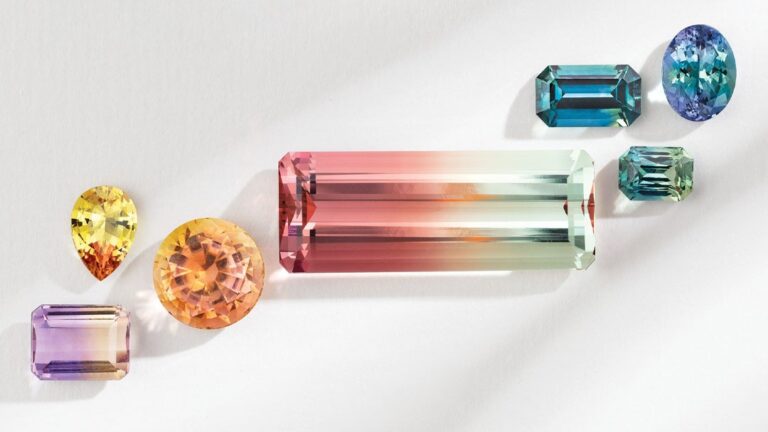
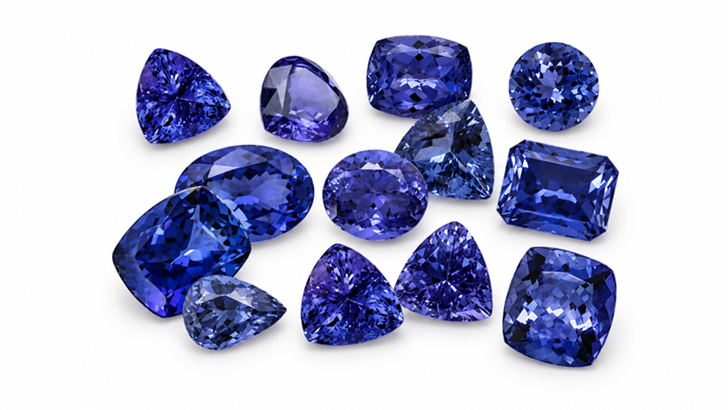
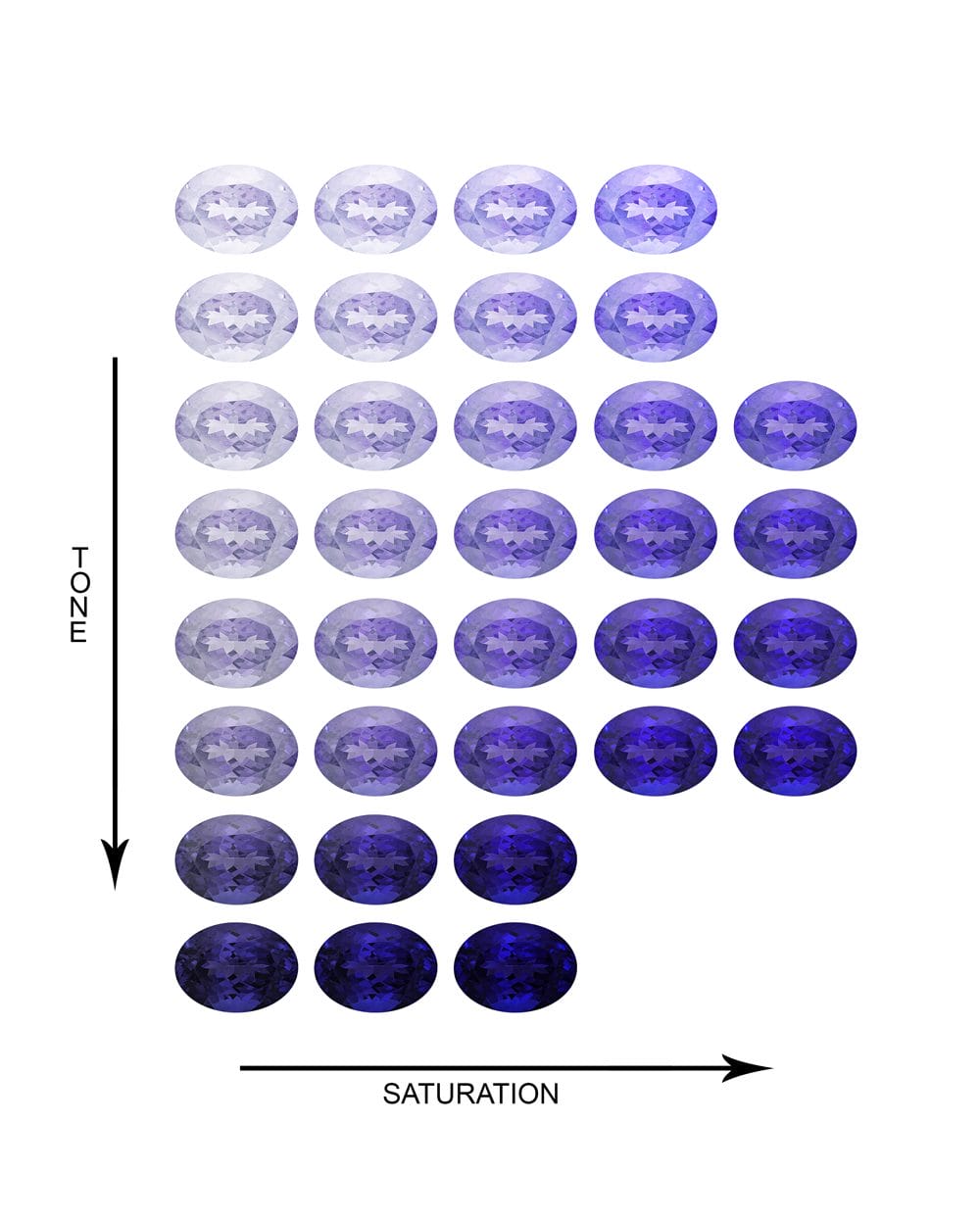
Fine tanzanite ranges from violet-blue through blue-violet to violet-purple. Strongly saturated stones with an attractive deep blue or violet-blue appearance are generally the most desirable, while paler stones are more widely available.
One of tanzanite’s most interesting optical properties is pleochroism. This means the gemstone can display different colours when viewed from different directions. A tanzanite may appear predominantly blue from one angle and more violet or purple from another.
Lighting also affects its appearance. Cooler daylight can emphasise blue, while warmer indoor lighting may bring out more violet and purple.
If you enjoy learning how minerals create different gemstone colours, our guide to Gemstone Colours explains the science behind many popular coloured stones.
Is Tanzanite Heat Treated?
Yes. Heat treatment is common and accepted for tanzanite.
Much natural zoisite displays brownish, yellow-green or mixed tones when it comes from the ground. Our gemmologists routinely apply controlled heating to minimise undertones and expose the rich blue and violet hues that define fine tanzanite. This process produces a stable, enduring colour that easily withstands everyday wear.
Heat treatment is therefore not necessarily an indication of poor quality. It is a normal part of bringing most tanzanite to market.
How Is Tanzanite Quality Assessed?
Unlike diamonds, tanzanite does not have a universally recognised grading system equivalent to the diamond 4Cs.
When comparing stones, concentrate on:
Colour: Gemstone enthusiasts generally favour a rich, evenly distributed blue-violet or violet-blue hue.
Clarity: Fine tanzanite is often relatively clean to the eye. Obvious inclusions can reduce beauty and value.
Cut: Good cutting helps maximise colour, brilliance and symmetry. Oval and cushion shapes are particularly common, although tanzanite can be cut into many forms.
Carat weight: Larger stones can display stronger colour because small tanzanites often appear lighter.
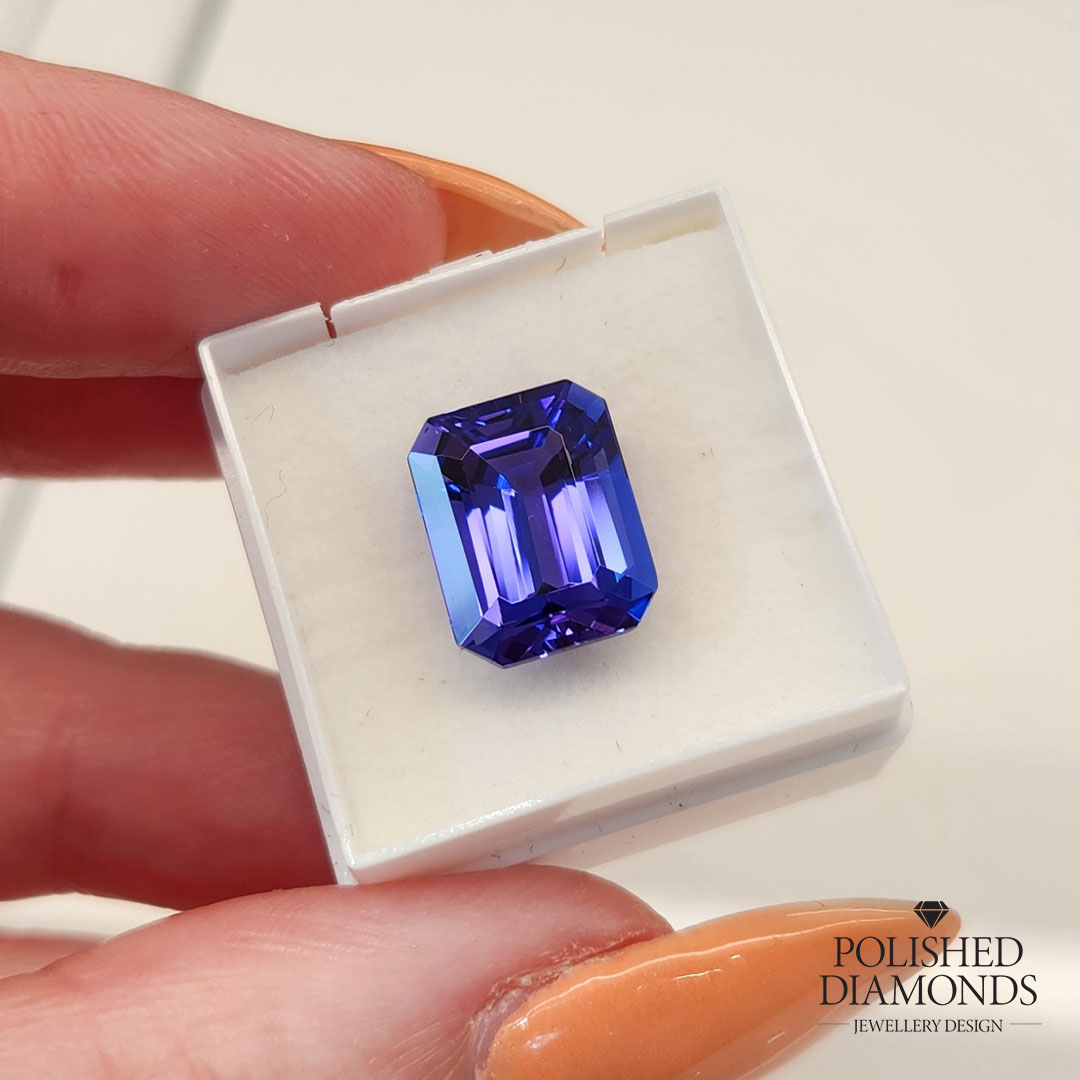
For most buyers, the most desirable tanzanite displays a strong, saturated blue to violet-blue colour with good transparency and an attractive balance of brilliance and depth.
Be cautious about descriptions such as AAA, AA or A tanzanite. These are commercial grading terms rather than a universal gemmological standard.
Is Tanzanite Suitable for an Engagement Ring?
Tanzanite measures approximately 6 to 7 on the Mohs hardness scale, making it considerably softer than sapphire or diamond. It can also be vulnerable to knocks and sudden temperature changes.
You can use Tanzanite in an engagement ring, but because it is softer than sapphire or diamond, the setting should be designed to protect the gemstone from knocks and everyday wear. Bezel settings, halos and designs that provide additional protection around the stone can be particularly suitable.
For someone wanting a coloured stone for an engagement ring that will be worn continuously, sapphire may be worth comparing because of its greater durability. Read our Sapphire Gemstone Guide or our guide to Coloured Gemstone Engagement Rings.
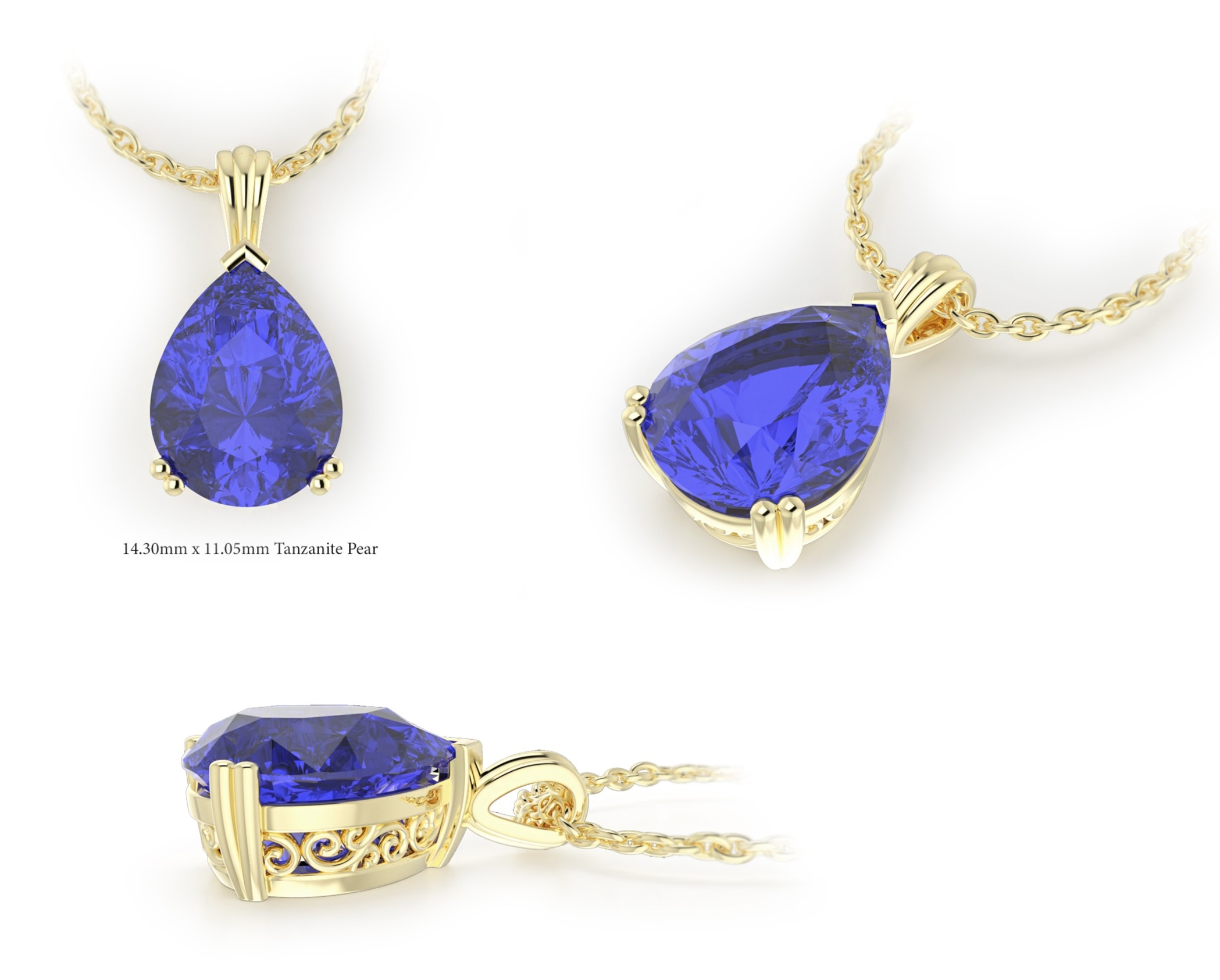
This gemstone is particularly beautiful in pendants, earrings, dress rings and special-occasion jewellery, where it can be enjoyed with less exposure to impact.
Tanzanite as a December Birthstone
Tanzanite is one of the recognised December birthstones, alongside turquoise, zircon and blue topaz. It is also traditionally associated with the 24th wedding anniversary.
Its rich blue-violet colour makes it an attractive option for personalised jewellery celebrating a December birthday or anniversary.
How Should You Clean Tanzanite Jewellery?
Tanzanite requires gentler care than harder gemstones.
Clean it using warm water, mild soap and a soft cloth or soft brush. Avoid ultrasonic cleaners and steam cleaners, which are not recommended for tanzanite. Sudden temperature changes and hard impacts should also be avoided.
Store tanzanite jewellery separately from harder gemstones such as diamonds and sapphires to reduce the chance of scratching.
Create Custom Tanzanite Jewellery in New Zealand
Tanzanite’s changing blue and violet colour makes it particularly suited to jewellery designed around the individual gemstone.
Polished Diamonds can source tanzanite and other coloured gemstones and design jewellery around the individual stone using advanced CAD technology. From a tanzanite dress ring or pendant to a completely bespoke piece, our jewellery designers can create the setting to suit the gemstone’s proportions, colour and intended use.
Explore our custom jewellery design service, or visit our jewellery designers in Auckland, Wellington or Christchurch to view gemstones, discuss ideas and create a piece of New Zealand-made jewellery designed specifically for you.
Tanzanite FAQs
Yes. Tanzanite is the blue-to-violet variety of the natural mineral zoisite and is commercially mined in northern Tanzania.
Tanzanite has a far more geographically restricted source than diamond because commercial production comes from only one area of Tanzania. However, broad claims such as “1,000 times rarer than diamond” are difficult to use as a meaningful measure of gemstone value.
Tanzanite is pleochroic, so it can appear more blue, violet or purple depending on viewing direction and lighting.
It can be worn in jewellery, but rings require more care because tanzanite is softer and less resistant to impact than sapphire or diamond.
Yes. Tanzanite is one of the recognised birthstones for December.
The most sought-after tanzanite generally displays a rich, saturated blue or violet-blue colour. Personal preference also matters, and some people prefer stones showing stronger violet or purple tones.