Emerald Gemstone Guide: Colour, Quality, Origins & Care
Emerald is one of the world’s most recognisable coloured gemstones. Its distinctive green colour has been admired for thousands of years, but there is much more to an emerald than colour alone.
Natural emeralds often contain visible internal features, transparency can vary considerably, and treatments are common. For this reason, emeralds should not be judged by exactly the same standards as diamonds.
This guide explains what emerald is, what creates its colour, how quality is assessed, where emeralds come from and how to care for emerald jewellery.
Emerald at a Glance
- Mineral: Beryl
- Colour: Green to bluish green
- Mohs hardness: 7.5–8
- Birthstone: May
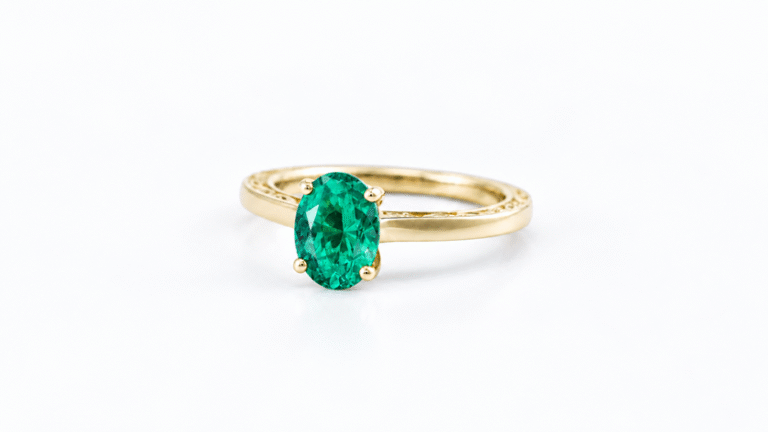
- Popular cuts: Emerald, oval, cushion, pear and round
- Major sources: Colombia, Zambia, Brazil, Afghanistan and Pakistan
- Typical inclusions: Natural features often called jardin
- Common treatments: Oil or resin used to reduce the visibility of surface-reaching fissures
Explore more stones in our Coloured Gemstone Guides.
What Is an Emerald?
Emerald is the green to bluish-green variety of the mineral beryl, the same mineral family as aquamarine.
Its green colour is caused primarily by trace amounts of chromium and vanadium, while iron can also influence the exact tone.
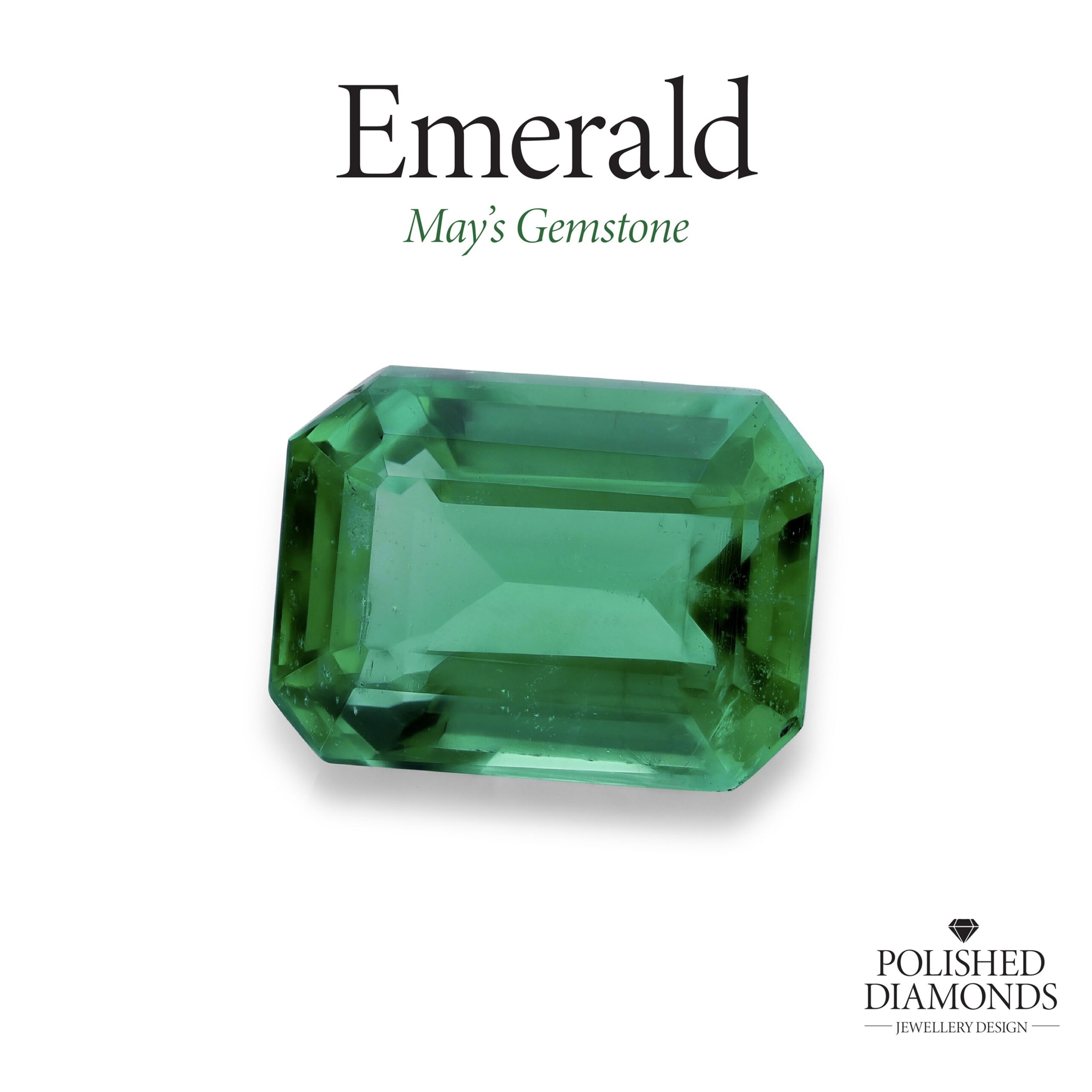
Fine emeralds are generally prized for rich green or slightly bluish-green colour, good saturation and enough brightness to remain lively rather than appearing overly dark.
Emerald measures around 7.5–8 on the Mohs hardness scale, giving it good resistance to scratching. However, hardness is not the same as toughness. Natural emeralds commonly contain fissures and inclusions, which means they require more careful handling than diamonds or sapphires.
Why Are Emeralds Green?
Colour is usually the most important factor when assessing an emerald.
The most desirable stones tend to display a strong, even green to bluish-green hue. A very dark emerald can lose brightness, while a very pale green beryl may lack the intensity traditionally associated with emerald.
Colour can also vary within a crystal. A skilled gemstone cutter considers colour distribution, transparency and inclusions before deciding how to orient and facet the stone.
When possible, compare emeralds in person. Different lighting conditions, cameras and computer screens can significantly change how green gemstones appear.
What Is Emerald “Jardin”?
Natural emeralds are famous for their inclusions.
The fractures, crystals and growth features visible inside many stones are often called jardin, the French word for “garden”. Under magnification, these natural features can sometimes resemble branches, foliage or tiny landscapes.
Inclusions should not automatically be considered faults. They are part of the character of many natural emeralds and help make each stone individual.
What matters is how those inclusions affect the emerald’s beauty, transparency and structural condition.
A beautiful emerald may contain obvious inclusions while still displaying excellent colour and life. More extensive inclusions can make another stone appear cloudy or structurally weaker.
How Is Emerald Quality Assessed?
Unlike diamonds, emeralds do not have one simple grading system that describes the complete stone. Four factors are particularly important.
Colour
Colour normally has the greatest influence on an emerald’s appearance and value.
Look at hue, tone, saturation and colour distribution. Rich green and slightly bluish-green stones with attractive brightness are especially desirable.
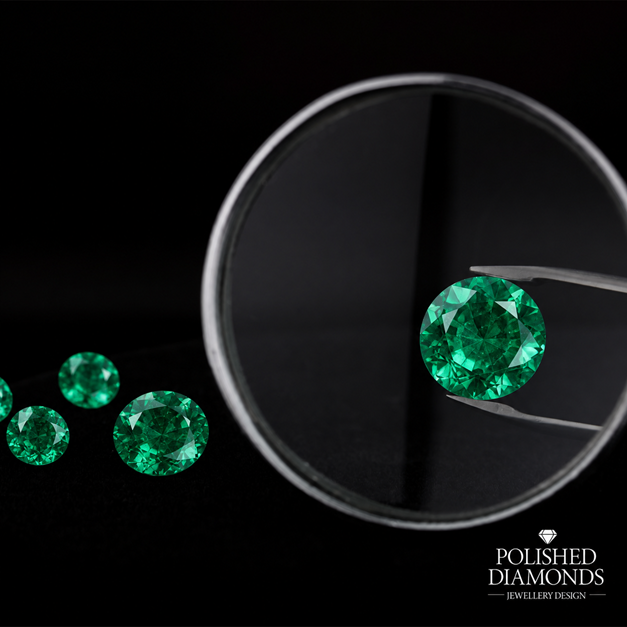
Transparency and Inclusions
Visible inclusions are normal in natural emeralds. The important question is whether they interfere with transparency, beauty or durability.
Rather than simply asking whether an emerald contains inclusions, consider where they are located and how much they affect the overall gemstone
Cut
Cut influences colour, brightness and durability.
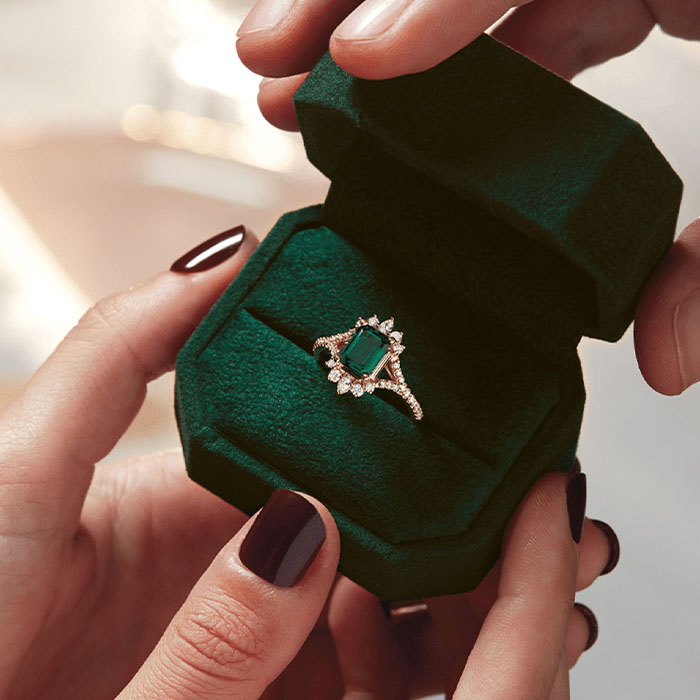
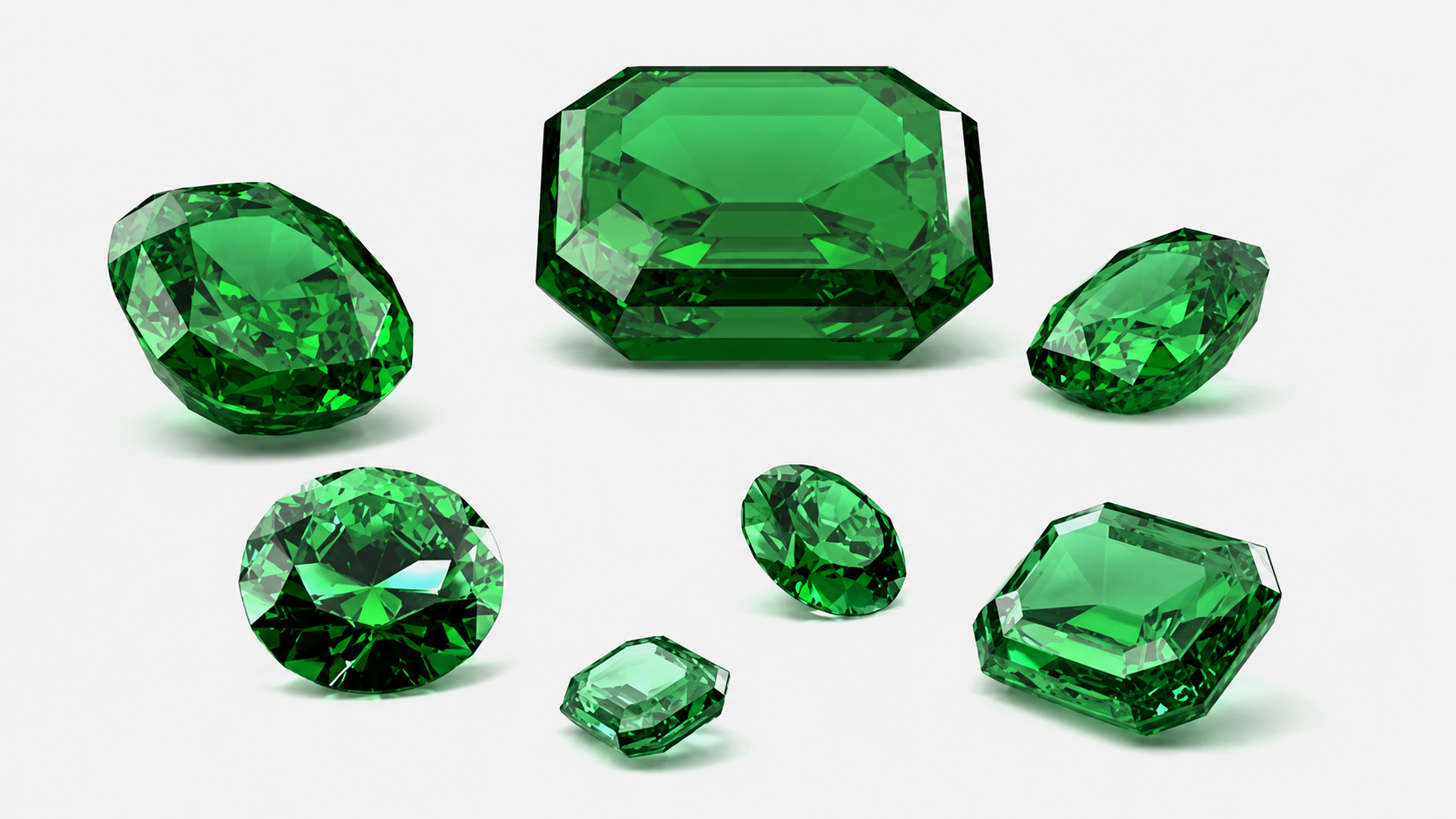
The classic rectangular emerald cut is particularly suitable because its broad step facets showcase colour while its cropped corners remove potentially vulnerable points.
Emeralds can also be cut into oval, cushion, pear and round shapes.
Carat Weight
Larger fine-quality emeralds can command substantial premiums because attractive material becomes increasingly rare at larger sizes.
However, size alone does not determine quality. A smaller emerald with excellent colour and transparency can be far more appealing than a larger stone that is overly dark or heavily included.
Are Natural Emeralds Treated?
Yes. Clarity enhancement is common because natural emeralds frequently contain surface-reaching fissures.
Colourless oils, resins or similar fillers may be introduced into these fissures to make them less visible and improve apparent clarity.
Treatment does not automatically make an emerald undesirable, but the type and extent of treatment should be understood because it can affect value and future care.
For significant or higher-value emeralds, ask whether laboratory documentation is available confirming whether the stone is natural and describing any detected treatment.
Where Do Emeralds Come From?
Emeralds are found in several regions around the world.
Colombia has one of the longest and most famous associations with fine emeralds and is particularly known for richly coloured material.
Zambia is another major source and produces many attractive emeralds, often including cooler bluish-green tones.
Emeralds are also found in Brazil, Afghanistan, Pakistan and other producing regions.
Origin alone does not determine quality. A Colombian emerald is not automatically better than a Zambian emerald. Individual stones should still be judged on their colour, transparency, inclusions, cut and treatment.
Emerald: The May Birthstone
Emerald is the traditional birthstone for May and has historically been associated with renewal, growth, love and prosperity.
Its connection with May makes emerald particularly popular for birthstone jewellery, milestone birthdays and personalised family jewellery.
Emeralds can also be combined with other birthstones to represent children, partners or significant dates within a custom jewellery design.
Natural, Laboratory-Grown and Imitation Emeralds
A natural emerald formed naturally within the earth.
A laboratory-grown emerald has essentially the same mineral composition and many of the same physical properties as natural emerald but is created under controlled laboratory conditions.
An imitation emerald may be glass or another material selected because it resembles the appearance of emerald.
These distinctions can significantly affect value, so correct identification is important when buying significant emerald jewellery.
Emerald Jewellery
Emerald’s rich colour makes it suitable for a wide range of fine jewellery, including earrings, pendants, dress rings, bracelets and custom pieces.
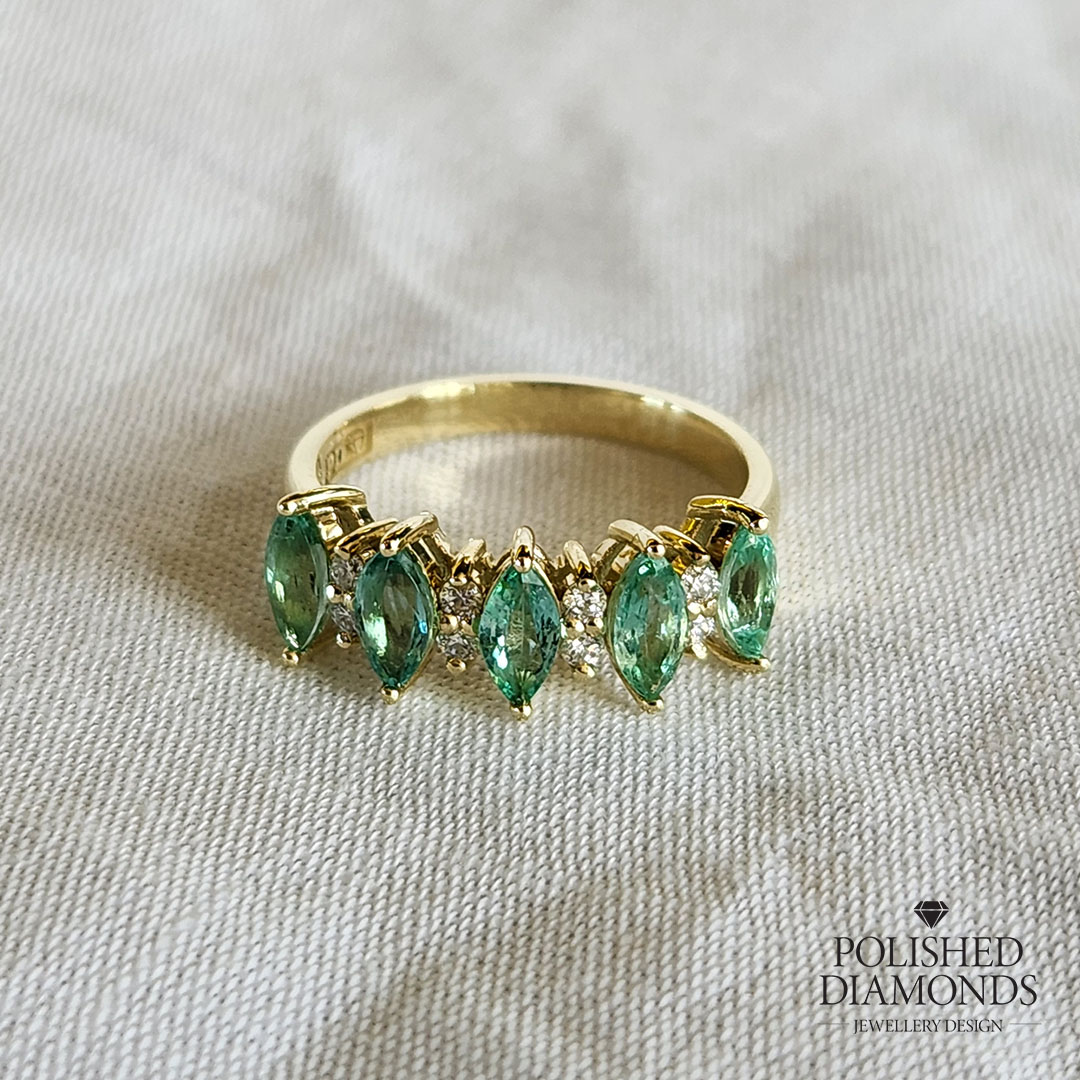
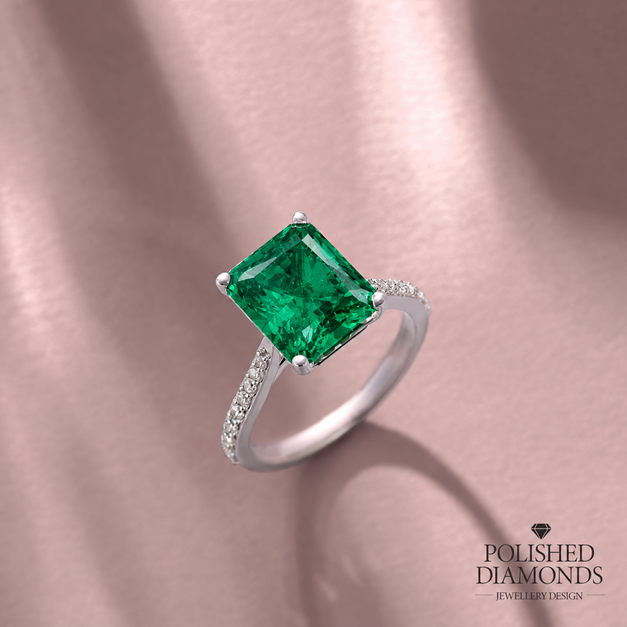
Yellow gold creates a warm, traditional contrast with emerald, while platinum and white gold create a cooler contemporary look. Diamonds are also frequently paired with emerald because their neutral brilliance highlights the green colour.
If you are specifically considering an emerald for an engagement ring, our separate Emerald Engagement Rings guide covers settings, precious metals, everyday wear and ring design in detail.
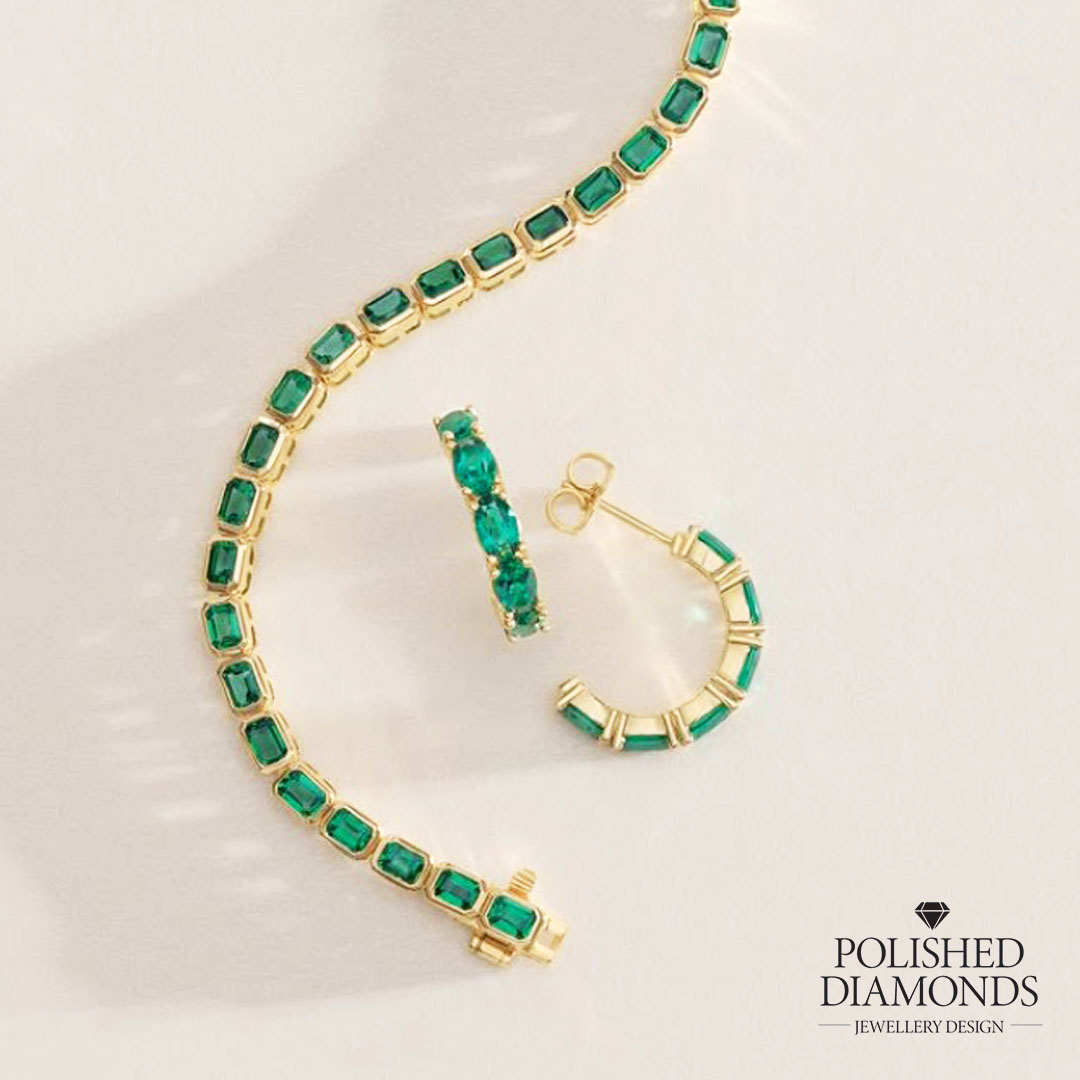
For other emerald jewellery, our custom jewellery design service allows a piece to be designed around the proportions of an individually selected gemstone using CAD before manufacture in New Zealand.
How to Care for Emerald Jewellery
Emeralds generally require gentler cleaning than diamond jewellery because natural fissures and clarity treatments may be affected by aggressive cleaning.
For routine care:
- Clean with lukewarm water, mild soap and a soft brush or cloth.
- Avoid harsh household chemicals and solvents.
- Avoid sudden temperature changes.
- Do not steam-clean emerald jewellery.
- Ultrasonic cleaning is generally best avoided.
- Remove emerald jewellery before heavy physical work or activities where it may receive an impact.
Store emerald jewellery separately from harder gemstones such as diamonds and sapphires to reduce the risk of scratching.
If an emerald receives a hard knock or the setting becomes loose, have the jewellery professionally inspected before wearing it again.
Choosing an Emerald in New Zealand
The best emerald is not necessarily the largest, darkest or clearest stone.
Look for a balance of:
- attractive green colour
- good transparency
- pleasing cutting
- acceptable inclusions
- appropriate treatment
- suitability for the intended jewellery design
Whenever possible, compare emeralds in person and view them under different lighting conditions.
Polished Diamonds can source emeralds and other coloured gemstones and design jewellery around the dimensions and character of the individual stone. Clients can work with our designers in Auckland, Wellington or Christchurch, with jewellery manufactured through our New Zealand workshop.
Emerald FAQs
Yes. Emerald is the traditional birthstone for May.
Emerald measures approximately 7.5–8 on the Mohs hardness scale, although internal fissures can make some stones more vulnerable to impact.
Natural emeralds commonly develop crystals, fissures and other internal features during formation. These are often called jardin.
Many natural emeralds are clarity-enhanced using colourless oil or resin to reduce the appearance of surface-reaching fissures.
Fine emeralds are generally prized for vivid green to bluish-green colour with attractive saturation and good brightness.
Ultrasonic cleaning is generally not recommended for emeralds, particularly stones that contain fractures or clarity enhancement.
Emerald is a green variety of beryl. Emerald cut describes a rectangular step-cut gemstone shape that can also be used for diamonds and other gemstones.
Yes. Synthetic emerald and lab-grown emerald generally mean the same thing: an emerald created in a laboratory with essentially the same chemical composition as those formed naturally in the earth. They should not be confused with emerald imitations, such as green glass or other gemstones made to look like emerald.