Pink Diamonds: Natural, Argyle & Lab-Grown Guide
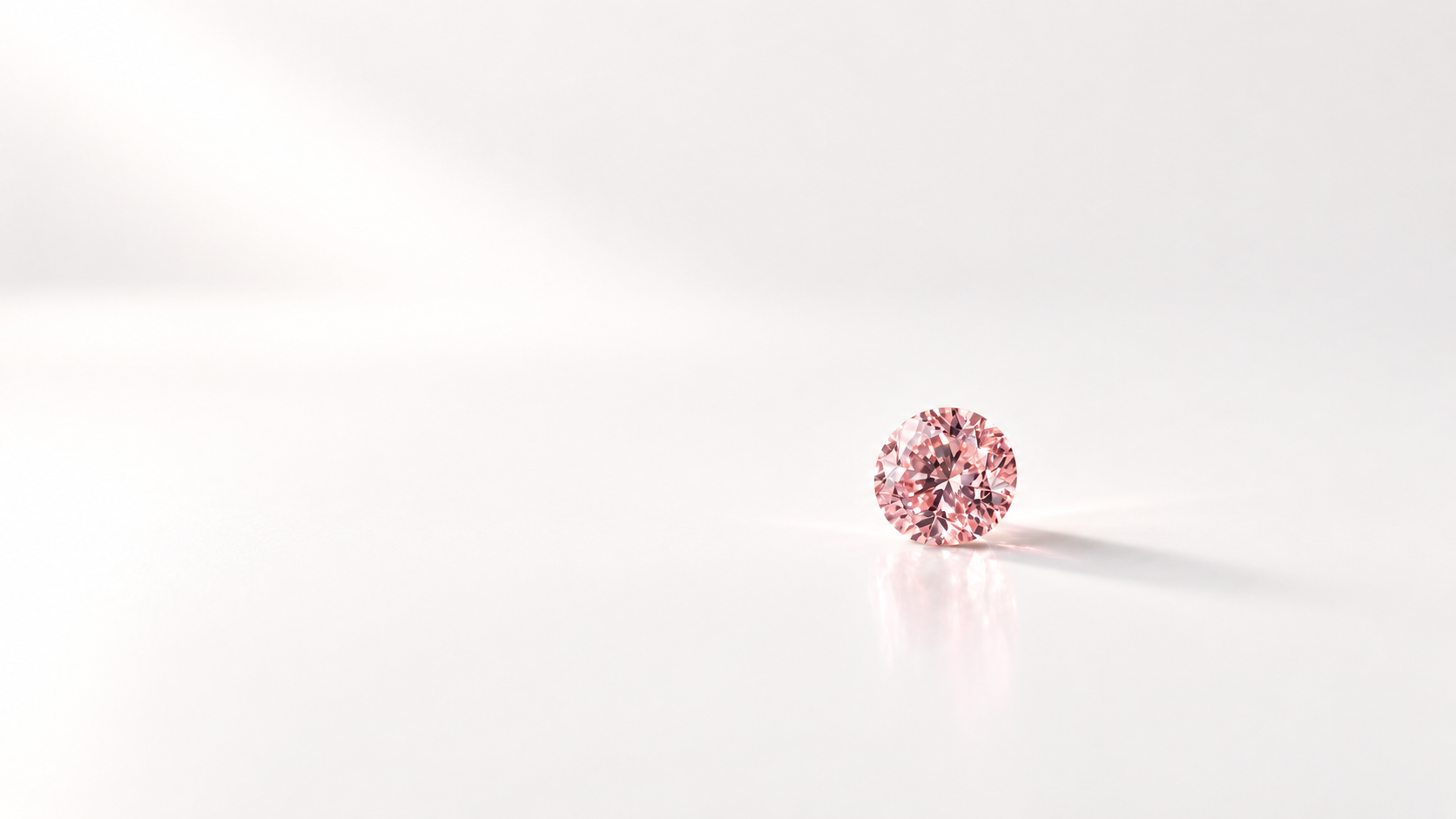
Pink diamonds are among the rarest and most distinctive coloured diamonds in the world. Their colour can range from a delicate blush through to highly saturated purplish-pink, and exceptional natural examples can command extraordinary prices.
For New Zealand buyers considering a pink diamond engagement ring, there are now two very different options. These are rare natural pink diamonds and more accessible lab-grown pink diamonds. Understanding the difference in origin, grading and value is important before choosing either.
At Polished Diamonds, we can source coloured diamonds and create custom diamond rings around the individual dimensions and colour of your chosen stone.
What Makes a Natural Pink Diamond Pink?
Unlike many coloured diamonds, pink diamonds do not normally gain their colour from a trace chemical element.
Research by the Gemological Institute of America (GIA) has found that the colour in the overwhelming majority of natural pink diamonds is associated with distortion within the diamond’s crystal structure. Extreme geological forces deep within the Earth can deform the crystal lattice. As a result, this changes the way the diamond absorbs and transmits visible light, producing its pink appearance.
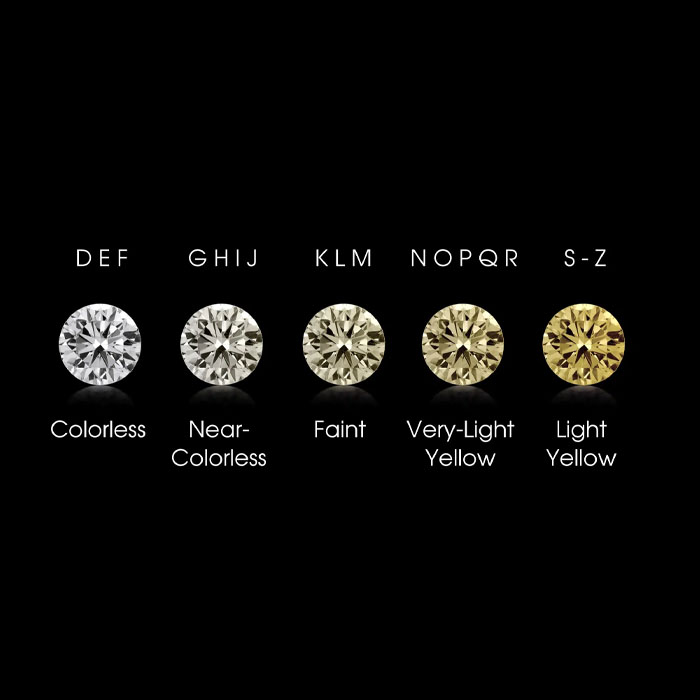
This unusual combination of geological conditions helps explain why attractive natural pink diamonds are so scarce. If you are comparing pink diamonds with conventional colourless stones, our guide to diamond colour explains how the grading systems differ.
How Are Pink Diamonds Graded?
Natural pink diamonds are graded differently from conventional white diamonds.
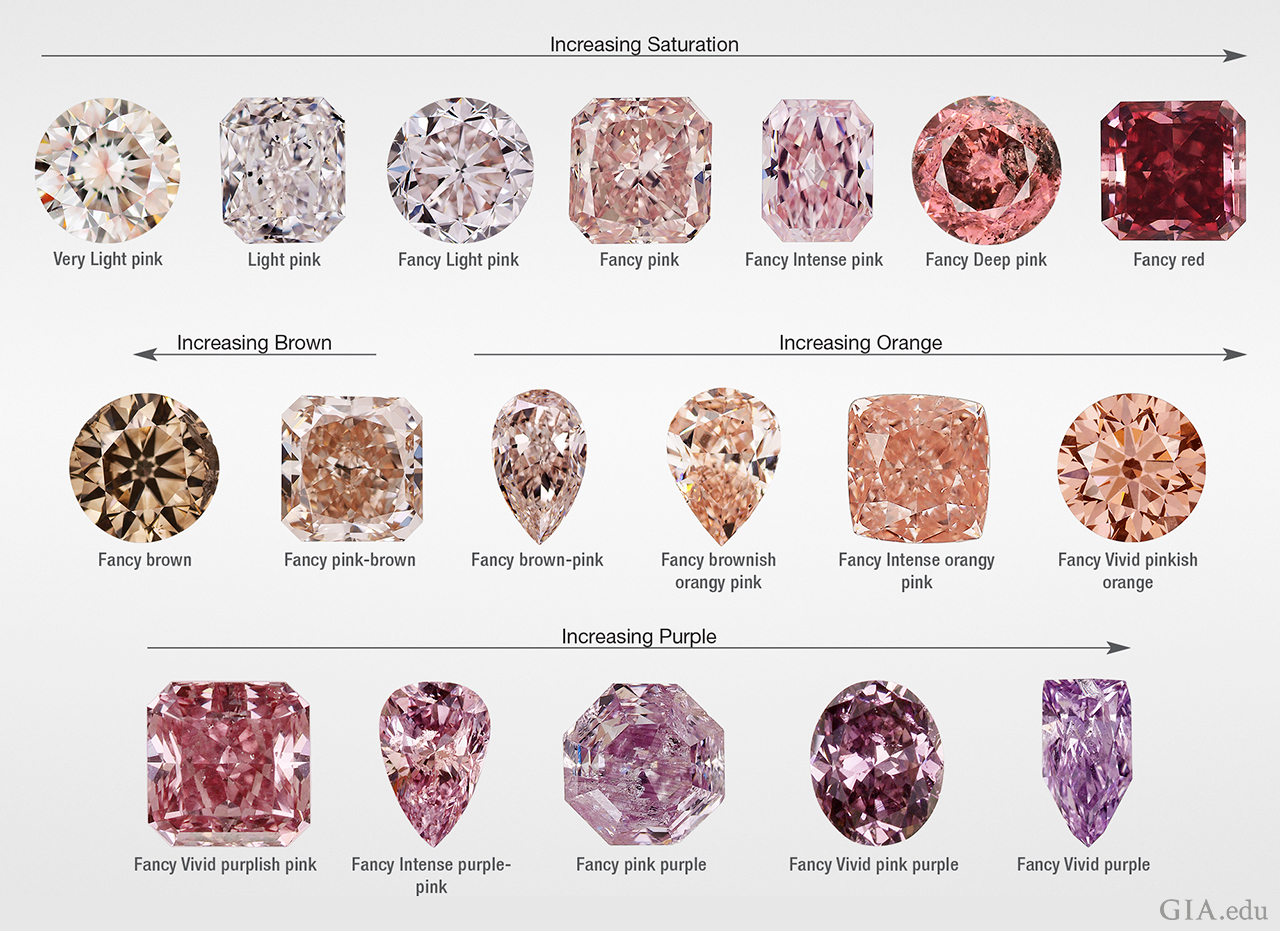
While white diamonds use the familiar D–Z colour scale, fancy-coloured diamonds are assessed primarily according to hue, tone and saturation. GIA colour grades include:
- Faint
- Very Light
- Light
- Fancy Light
- Fancy
- Fancy Intense
- Fancy Deep
- Fancy Vivid
A diamond may also receive descriptions such as purplish pink, orangy pink or brownish pink, depending on secondary colours present.
With Argyle pink diamonds, you may also see the 1P–9P colour scale:
- P = Pink
- PP = Purplish Pink
- PR = Pink Rosé
- 1 = strongest colour intensity
- 9 = lightest colour intensity
- 1P–3P = stronger, more saturated pink
- 6P = softer pink
- 8P–9P = pale blush-pink
The Argyle and GIA systems are different, so there is no exact one-to-one conversion between them.
What Are Argyle Pink Diamonds?
Australia’s Argyle mine became famous for producing some of the world’s most recognisable intensely coloured pink, purplish-pink and red diamonds.
The mine ceased production on 3 November 2020 after 37 years of operation, making existing Argyle pink diamonds a finite part of diamond history.
Importantly, a pink diamond is not automatically an Argyle diamond. Natural pink diamonds have also been discovered in countries including Russia, Tanzania, South Africa and Brazil. Argyle is significant because of the exceptional concentration and saturation of many of the pink diamonds it produced.
When purchasing a significant natural pink diamond, independent documentation confirming that the colour is natural rather than treated is particularly important.
Natural vs Lab-Grown Pink Diamonds
Lab-grown pink diamonds provide a very different proposition.
They are genuine diamonds with essentially the same fundamental crystal structure as mined diamonds. However, they are created in controlled laboratory conditions. Pink colour in lab-grown diamonds can be produced through several processes, including treatment after diamond growth.
The distinction is therefore significant:
Natural pink diamonds offer geological rarity, scarcity and potential collector appeal.
Lab-grown pink diamonds allow buyers to achieve a stronger pink colour and potentially a much larger diamond for considerably less money.
Neither is necessarily the right choice for everyone. The decision depends on whether rarity and natural origin or colour, appearance and budget are your priorities.
Pink Diamond Engagement Rings
Pink diamonds work particularly well when the setting is designed specifically to enhance their colour.
A pink centre diamond can be surrounded by colourless diamonds to create contrast, while rose gold can reinforce warmer pink tones. Platinum or white gold can instead create a cleaner contrast between the diamond and the surrounding metal.
For examples of how warmer metal tones work with diamonds, you can browse our rose gold diamond ring collection.
Because natural fancy-coloured diamonds can vary considerably in physical dimensions, hue and saturation, designing the setting around the actual gemstone can produce a better-balanced result. This is a better approach than adapting a generic mounting.
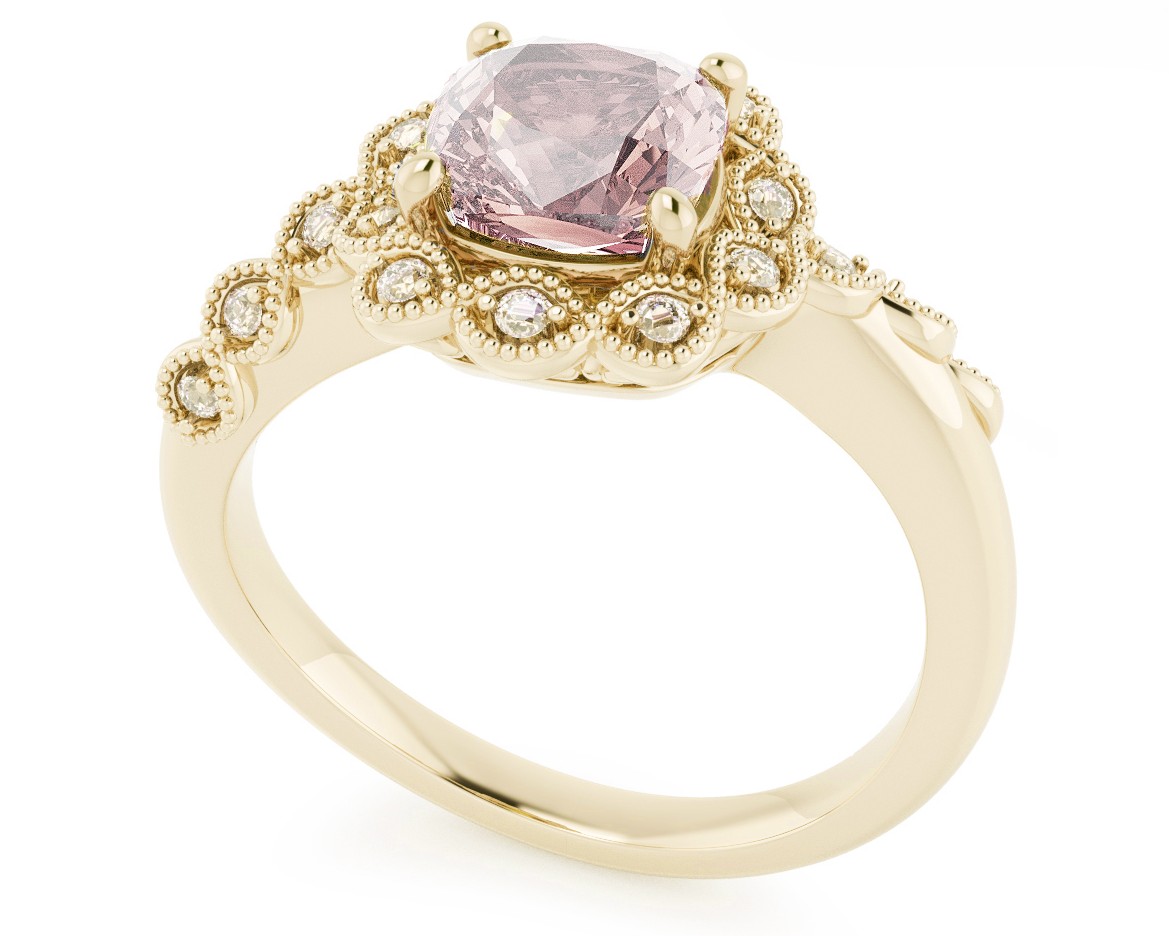
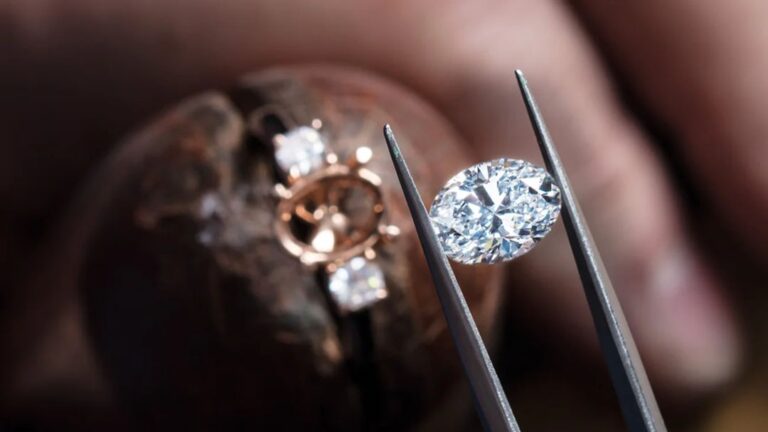
For clients wanting something made specifically around their chosen stone, our custom diamond ring design service uses CAD to develop the ring around the exact dimensions of the diamond. This takes place before manufacture begins.
Finding a Pink Diamond in New Zealand
Polished Diamonds can help New Zealand clients source natural or lab-grown pink diamonds according to preferred colour, size, certification and budget.
Our jewellery designers can then develop a custom ring around the chosen diamond using CAD before it is crafted through our New Zealand workshop.
Visit our jewellery design studios in Auckland, Wellington or Christchurch. Alternatively, work with us remotely from anywhere in New Zealand to discuss sourcing a pink diamond and creating a ring specifically around it.
Frequently Asked Questions About Pink Diamonds
Yes. Natural pink diamonds form within the Earth and are exceptionally rare. Their colour is usually associated with deformation within the diamond’s crystal structure rather than the trace elements that create colour in some other fancy diamonds.
Natural pink diamonds are expensive because of their extreme rarity, particularly in larger sizes and stronger colour grades such as Fancy Intense and Fancy Vivid. Origin, colour saturation, clarity, carat weight and certification can all influence value.
An Argyle pink diamond is a natural pink diamond originating from the Argyle mine in Western Australia. The mine closed in November 2020, meaning no new Argyle diamonds are being produced. Existing stones are therefore part of a finite supply.
Yes. Lab-grown pink diamonds are genuine diamonds with essentially the same crystal structure as natural diamonds. The main difference is their origin: they are created in controlled laboratory conditions rather than forming naturally underground.
Absolutely. Pink diamonds can make distinctive engagement-ring centre stones or accent diamonds. Rose gold can complement warmer pink tones, while platinum or white gold can create stronger contrast. A custom setting can be designed around the exact size and proportions of the diamond.
Pink Diamond Guide: Key Takeaways
- Pink diamonds can be natural or lab-grown, with significant differences in origin, rarity and price.
- Most natural pink diamonds gain their colour from deformation within their crystal structure.
- Australia’s Argyle mine ceased production in 2020, making its pink-diamond supply finite.
- Ring metal and setting design can influence how strongly a pink diamond’s colour appears.
- Polished Diamonds can source natural or lab-grown pink diamonds and design a custom ring around the individual stone.