

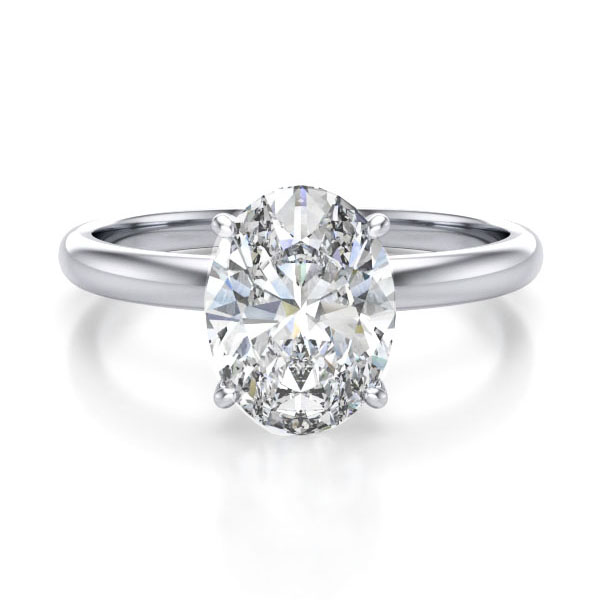
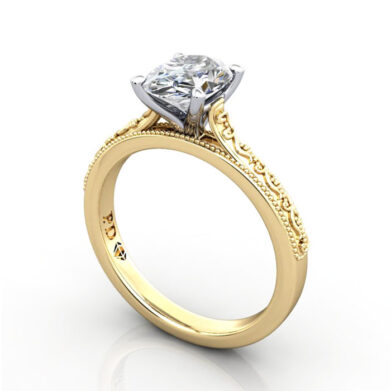
Oval Cut Solitaire Diamond Ring Platinum RS48
$2,100Select options
This product has multiple variants. The options may be chosen on the product page
Oval cut diamond rings combine brilliant-style sparkle with an elegant elongated outline. Their curved shape offers much of the brightness associated with a round brilliant diamond while creating greater visual length across the finger, making oval diamonds a popular choice for engagement rings and contemporary fine jewellery.
At Polished Diamonds, you can choose a certified natural or lab-grown oval diamond and pair it with platinum, white gold, yellow gold or rose gold. Oval diamonds work beautifully with Solitaire Diamond Rings, Solitaire Accent Diamond Rings, Halo Diamond Rings and Trilogy Diamond Rings.
Because oval diamonds vary in length, width, symmetry, shoulder shape and bow-tie appearance, we recommend comparing the actual dimensions and face-up appearance of individual stones rather than selecting by carat weight alone. Our jewellery designers can then incorporate the precise measurements of your selected diamond into CAD and create the setting around it.
Explore our oval cut diamond rings below or customise a design around your preferred diamond, metal, proportions and budget.
Showing 81–96 of 128 results
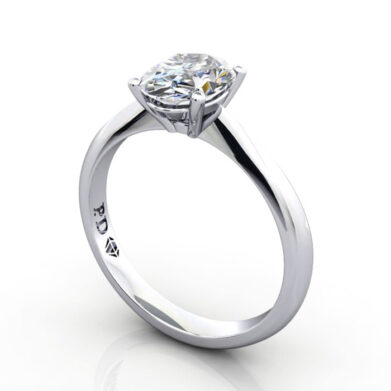
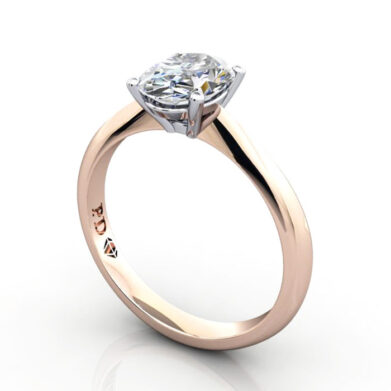
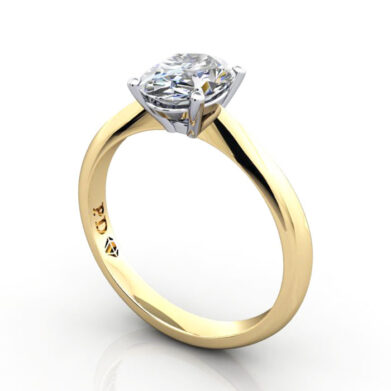
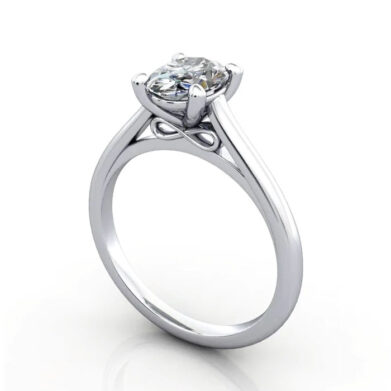
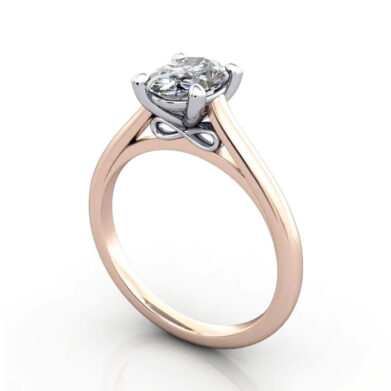
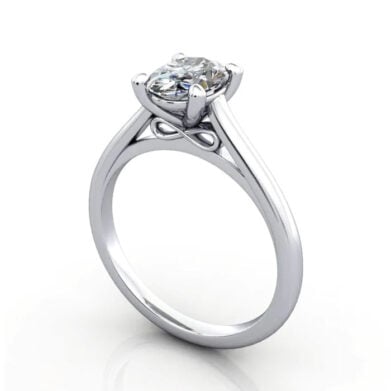
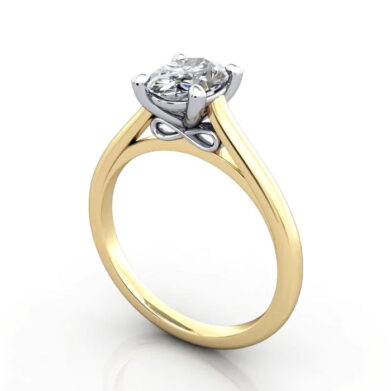
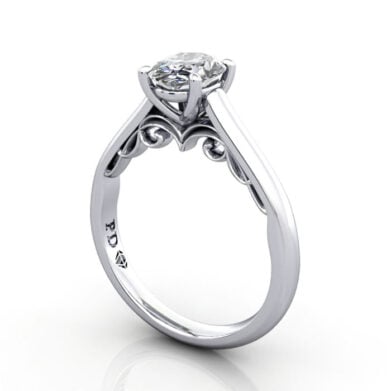
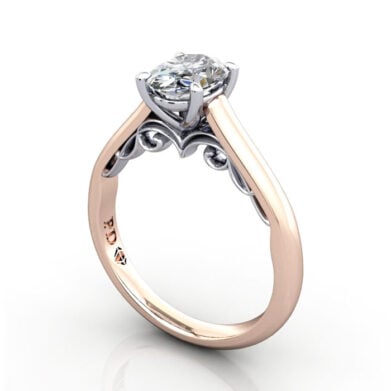
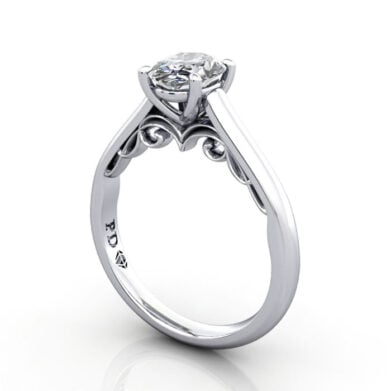
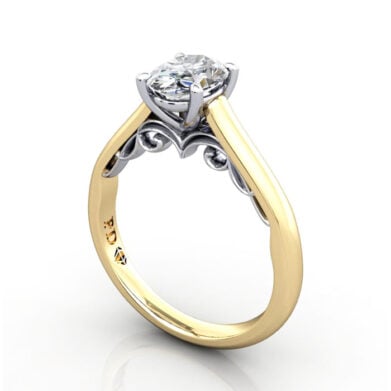
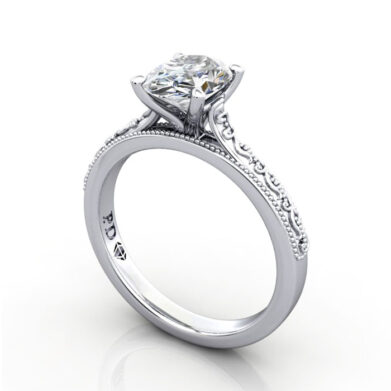
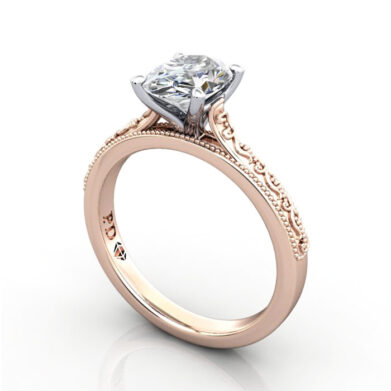
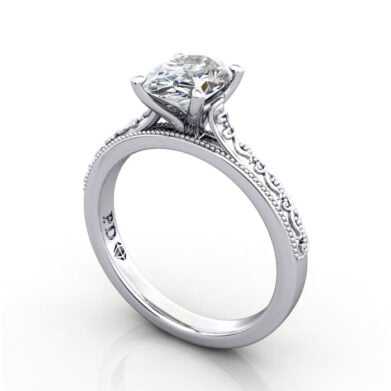
An oval diamond is a fancy brilliant shape, so choosing a beautiful stone involves more than comparing carat, colour and clarity.
Unlike the standard round brilliant, oval diamonds do not currently receive an overall GIA cut grade. Polish and symmetry are graded, but the proportions and visual appearance of the individual diamond also deserve careful consideration.
Two oval diamonds of the same carat weight can have noticeably different lengths, widths and depths. Looking at the actual millimetre measurements therefore gives a better indication of how much diamond will be visible from above once it is set into a ring.
The elongated outline can also give an oval diamond considerable face-up presence, making measurements particularly useful when comparing value between individual stones.
Length-to-width ratio describes how elongated or rounded an oval diamond appears.
It is calculated by dividing the diamond’s length by its width. Oval diamonds around 1.30 to 1.40 have a fuller, rounder appearance, while approximately 1.40 to 1.50 produces the more traditional elongated oval shape. Longer ratios create a slimmer silhouette.
These ranges are useful guides rather than rules. There is no single ideal oval ratio for every ring or every hand.
We recommend considering the ratio alongside the actual millimetre dimensions, diamond outline, finger size and setting design. A visually balanced oval is more important than choosing a diamond simply because its ratio reaches a particular number.
A high-quality oval should appear balanced when viewed from above.
Imagine a line running lengthways through the centre of the diamond: the two sides should closely mirror one another. The same principle applies across its width, with both ends creating a balanced outline.
The curved areas along the sides of an oval are often referred to as its shoulders. Very flat shoulders can make the stone appear closer to a marquise shape, while excessively rounded or bulging shoulders can create a heavier, less graceful outline.
A smooth, symmetrical curve from one end of the diamond to the other is therefore an important part of assessing the overall oval shape.
Many oval diamonds show an area of darker contrast through the centre known as the bow-tie effect.
Some bow-tie contrast is normal in elongated brilliant-cut diamonds and can contribute to their pattern of light and dark reflections. The issue is not whether a bow-tie exists at all, but whether it becomes so dark or dominant that it distracts from the diamond’s brilliance.
The effect cannot be reliably predicted from carat, colour and clarity grades alone. Two oval diamonds with similar certificate specifications can show noticeably different bow-tie patterns.
This is one reason we recommend assessing the individual diamond visually rather than selecting an oval solely from its grading report.
The soft, elongated outline of an oval diamond works across a wide range of ring styles.
A solitaire setting keeps the oval centre diamond as the principal feature and clearly displays its proportions. Diamond-set bands can add brilliance while maintaining the elongated centre stone as the focus.
A halo can follow the oval outline and create additional visual presence, while a trilogy design allows an oval centre diamond to be combined with complementary side stones.
Oval diamonds are normally positioned lengthways along the finger in a north-south orientation. They can also be positioned horizontally in an east-west setting, creating a more contemporary interpretation of the shape.
When designing an oval ring, the setting height, claw placement, band width and wedding-ring clearance can all be adjusted around the proportions of the selected diamond.
Oval diamonds are related visually to several other brilliant-cut shapes, but each creates a different effect on the hand.
A Round Brilliant Diamond Ring offers a symmetrical circular outline and is the diamond shape for which GIA provides an overall cut grade.
A Marquise Cut Diamond Ring is also elongated but tapers to two distinctive points, giving it a sharper and more dramatic silhouette.
A Pear Diamond Ring combines a rounded end with a single point, creating an asymmetrical teardrop shape.
An oval is a strong choice if you prefer an elongated diamond but want smooth curves and balanced symmetry without pointed ends.
Polished Diamonds offers both natural diamonds and lab-grown diamonds in oval shapes.
Both can be assessed using carat weight, colour, clarity, measurements, polish and symmetry together with the proportions, shoulder shape and bow-tie appearance of the individual diamond.
Your choice between natural and lab-grown diamonds can therefore be based on your preferences around origin, rarity, diamond size, quality and budget.
Oval diamonds can differ considerably in their physical measurements, which makes designing the setting around the actual stone particularly valuable.
Through our Design Your Own Diamond Ring service, Polished Diamonds can incorporate the precise dimensions of your chosen oval diamond into a detailed CAD model.
Our jewellery designers can refine claw placement, band width, setting height, halo proportions, side-diamond placement, orientation and wedding-ring clearance before manufacture. Detailed CAD renders allow you to review these proportions before the ring is made, with a 3D-printed resin model also available where required.
Once approved, your oval diamond ring is crafted through our dedicated New Zealand jewellery workshop and finished by our jewellery team.
Visit Polished Diamonds in Auckland, Wellington or Christchurch to compare oval diamonds and ring designs in person, or work with our team remotely from anywhere in New Zealand.
In-store and virtual appointments with our jewellery specialists
Every piece is backed by our comprehensive lifetime guarantee
Flexible finance available — speak with us in studio to find the right option
GIA and IGI certified stones with full quality documentation
No products in the cart.


