How to Choose the Perfect Wedding Ring: An Expert New Zealand Guide
A wedding ring is one of the few pieces of jewellery intended to be worn every day for a lifetime. It should feel comfortable, complement your personal style and be crafted strongly enough to remain beautiful through years of everyday wear.
The right wedding ring is not necessarily the most elaborate or expensive. It is the ring that suits your hand, lifestyle, engagement ring and individual story.
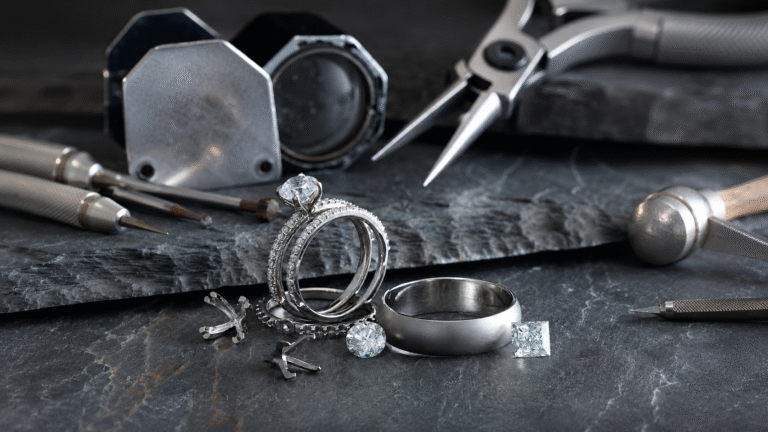
At Polished Diamonds, we design and create wedding rings in New Zealand using precise CAD technology and traditional hand craftsmanship. This guide explains the details we recommend considering before selecting or designing your wedding ring.
What should you consider when choosing a wedding ring?
When comparing wedding rings, consider five important elements:
- How the ring fits with your engagement ring
- The metal and its long-term care requirements
- The width, thickness and profile of the band
- Whether you prefer a plain, diamond-set or individually designed ring
A wedding ring may look beautiful in isolation but feel quite different when worn throughout the day or placed beside an engagement ring. Whenever possible, try several widths and profiles before making your final decision.
Should your wedding ring match your engagement ring?
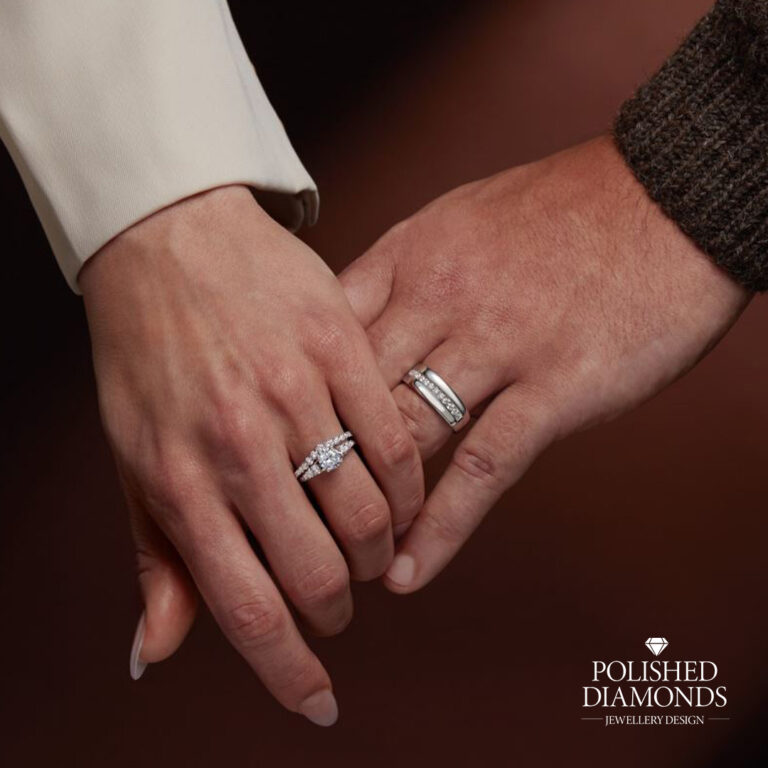
Your wedding ring does not need to be identical to your engagement ring, but the two should look considered when worn together.
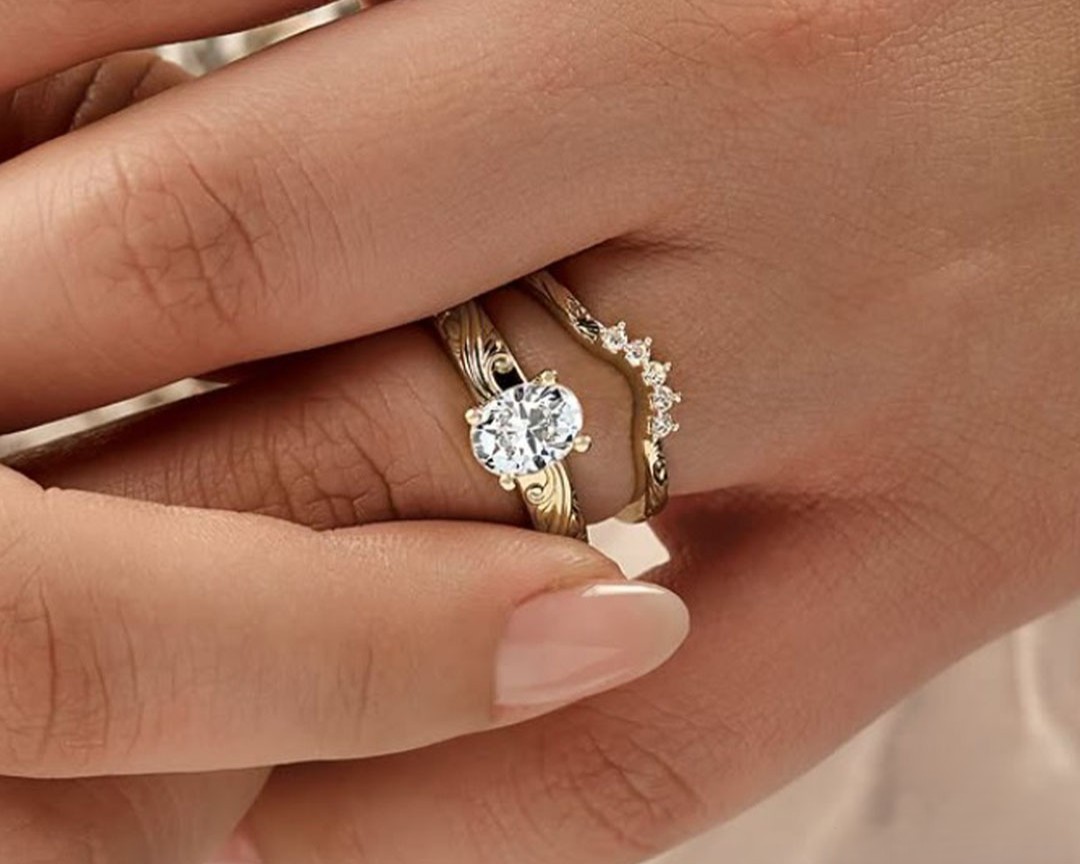
Begin by looking at the engagement ring’s:
- Metal colour
- Band width
- Setting height
- Diamond or gemstone arrangement
- Overall shape and proportions
A straight wedding band may sit neatly beneath an engagement ring with a raised setting. A low-set engagement ring, halo design or ring with detailed shoulders may require a curved or contoured wedding band.
The objective is not only to remove an unwanted gap. The rings should also sit together without their settings, claws or decorative edges rubbing against one another.
Why the space between the rings matters
Two rings that constantly touch at unsuitable points can gradually mark or wear each other. This is particularly important when a diamond-set band sits beside delicate claws or an intricate engagement-ring setting.
A qualified jeweller should examine both rings from above and from the side. In some designs, a small and deliberate space between the rings is preferable to forcing them tightly together.
Custom-fitted wedding rings
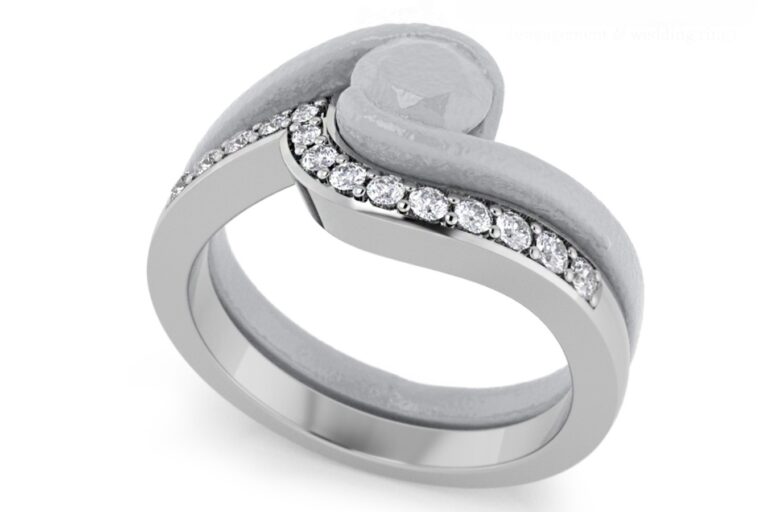
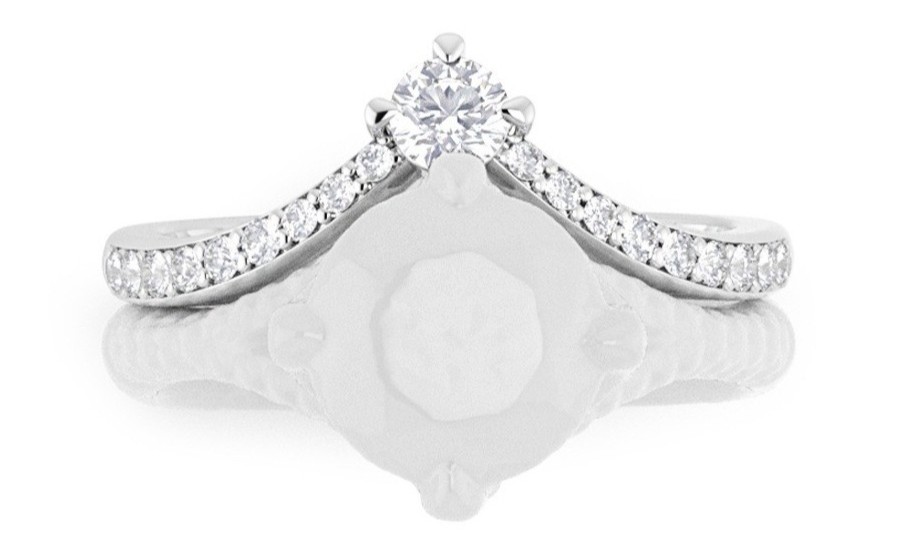
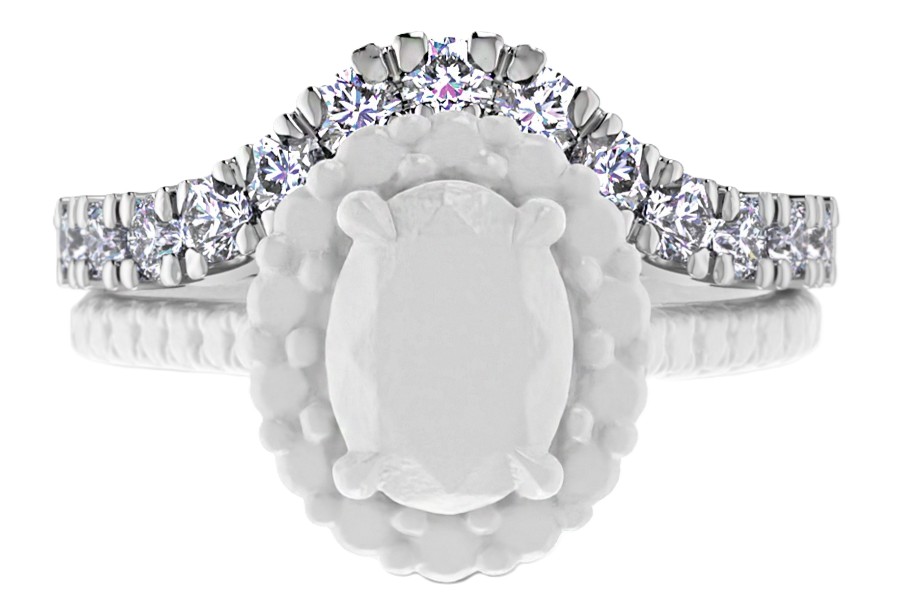
When a standard band does not follow the shape of an engagement ring, a custom wedding ring can provide a more balanced result.
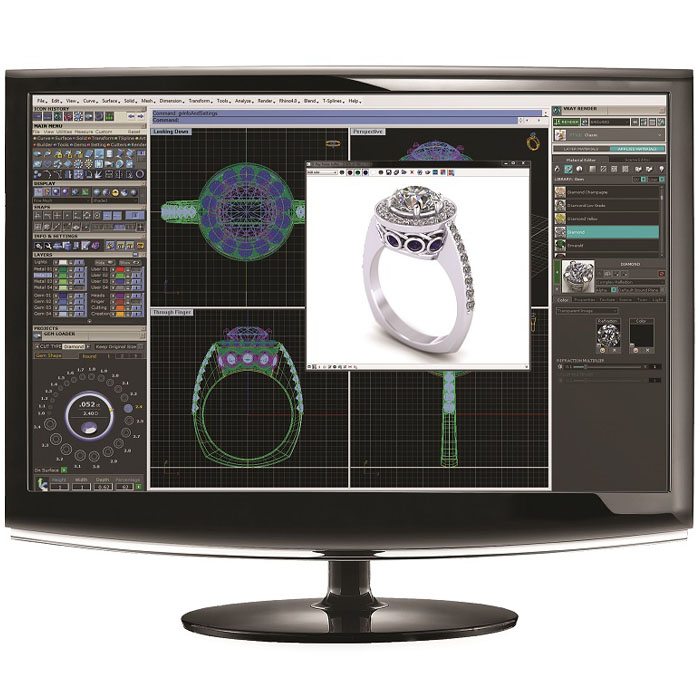
At Polished Diamonds, an existing engagement ring can be measured and digitally modelled so that its wedding band is designed around the ring’s precise contours. A CAD image allows you to review the proportions before production, and a physical model may also be created where appropriate.
This approach is particularly valuable for halo rings, trilogy rings, low-set solitaires and engagement rings with unique shoulder details.
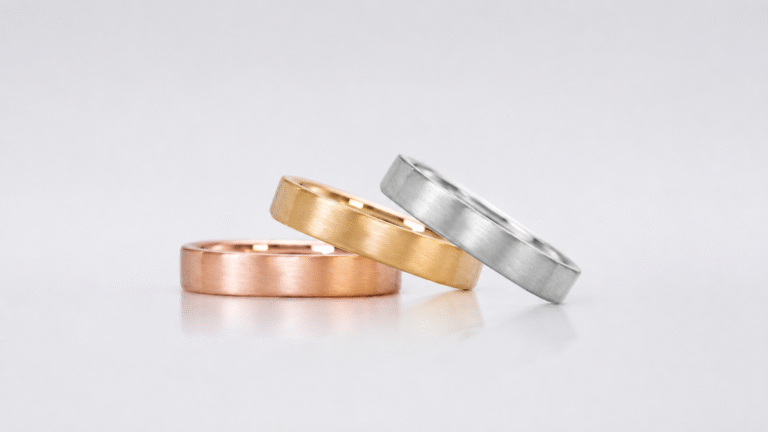
Which wedding-ring metal is best?
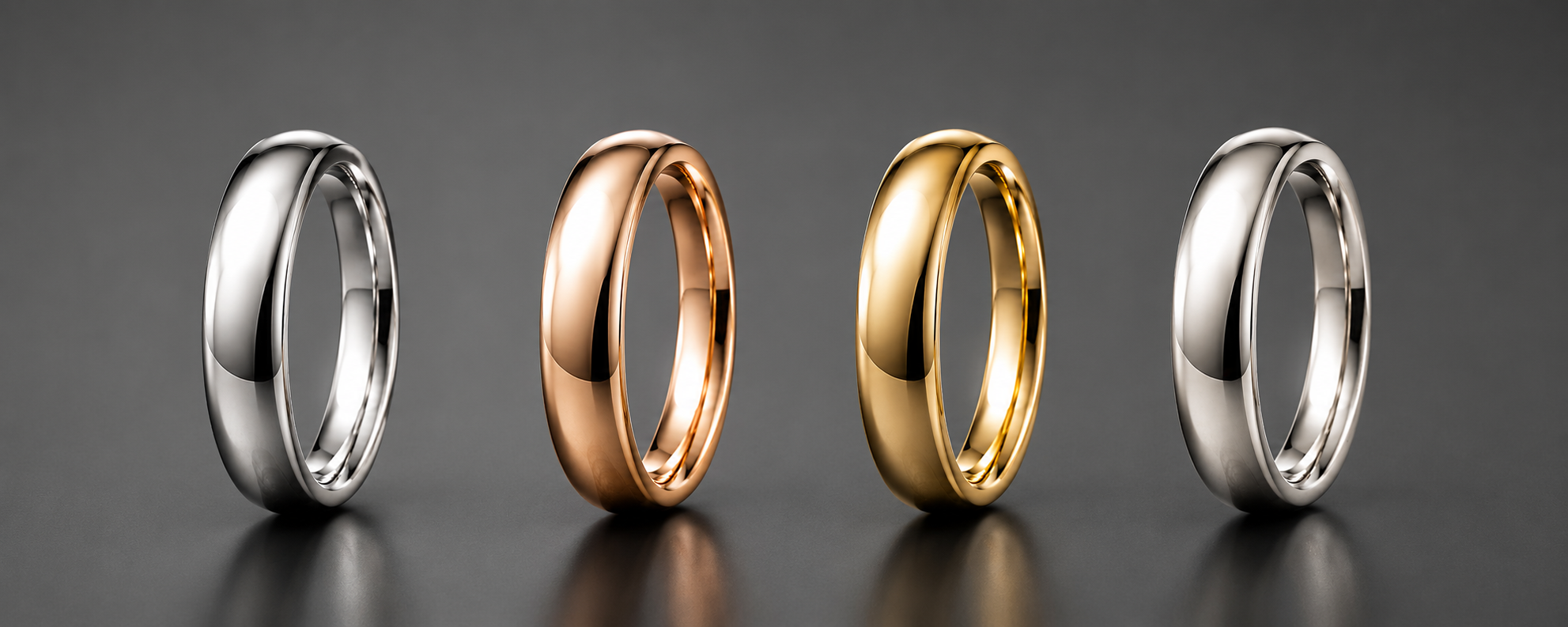
The best metal depends on your preferred colour, budget, lifestyle and the metal used in your engagement ring.
Platinum
Platinum is naturally white, dense and highly regarded for fine bridal jewellery. It does not require rhodium plating to maintain a white appearance and develops a soft surface patina with wear.
Its density gives platinum a reassuring weight. It is an excellent choice for people who appreciate a substantial, naturally white precious metal.
Yellow Gold
Yellow gold has a warm and timeless appearance. It complements both traditional and contemporary designs and is available in different purities.
Higher-carat gold contains a greater proportion of pure gold and generally has a richer colour. The correct choice will depend on the colour, strength and budget you prefer.
White Gold
White gold provides a bright, contemporary appearance and pairs naturally with many diamond engagement rings. It is commonly finished with rhodium plating to produce its crisp white surface.
Rhodium plating gradually wears and may need to be renewed periodically, particularly on rings worn every day.
Titanium and Black Zirconium
Titanium is lightweight, strong and well-suited to contemporary wedding-ring designs. Black zirconium provides a dark, modern appearance and offers a striking alternative to traditional precious metals.
Because alternative-metal rings cannot always be resized like gold or platinum rings, accurate sizing and careful design selection are especially important.
Rose Gold
Rose gold has a distinctive warm-pink tone created through its alloy composition. It can create a romantic look when paired with diamonds and also works beautifully as a contrasting metal beside white or yellow gold.
Should both rings be made from the same metal?
Using the same metal can create a coordinated appearance and similar wear characteristics, but mixed-metal bridal sets can also be beautiful.
You may pair a platinum engagement ring with a yellow-gold wedding band, for example, when the contrast is intentional. The most important consideration is that the colours and proportions work together and that the rings do not create unsuitable points of contact.
How wide should a wedding ring be?
Wedding-ring width affects both its appearance and how it feels on the hand.
Narrower rings tend to appear delicate and understated. Wider rings feel more substantial and provide greater space for textures, engraving, contrasting metals or diamonds.
As a general starting point:
- Delicate wedding bands often measure approximately 1.5–2.0 mm (weaker style)
- Classic medium-width bands are often approximately 2.0–4.0 mm (2.5mm is a good balance)
- Wider contemporary or men’s rings commonly begin around 5.0 mm
These are not fixed rules. Finger size, hand proportions, the width of an engagement ring and personal preference all affect the best choice.
Very fine bands require thoughtful construction. Reducing metal solely to achieve the thinnest possible appearance may affect long-term strength, particularly when the ring also contains diamonds.
Which wedding-ring profile is most comfortable?
The profile describes the ring’s shape when viewed from side to side.
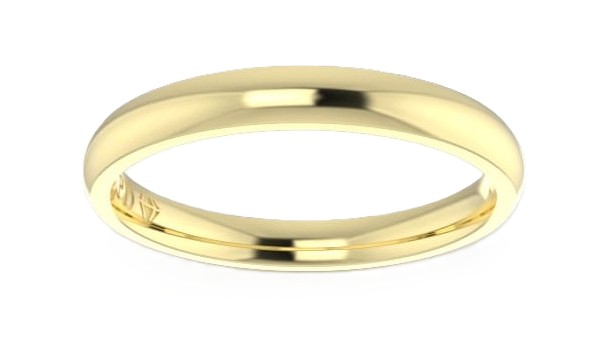
Ellipse Profile
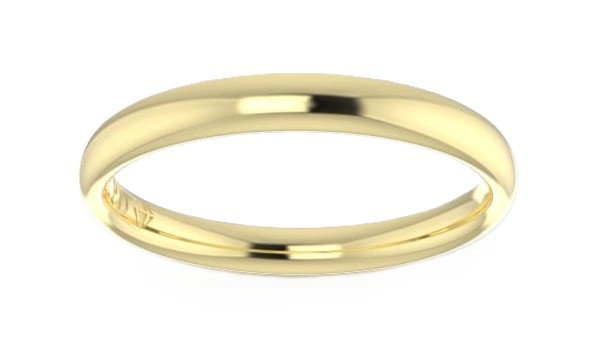
An ellipse-profile ring is softly rounded on both the inside and outside. Its curved interior can make it comfortable for everyday wear.
Quarter Round Profile
A quarter-round wedding ring has a slightly rounded outer surface and a flatter interior. It provides a traditional appearance while sitting relatively close to the finger.
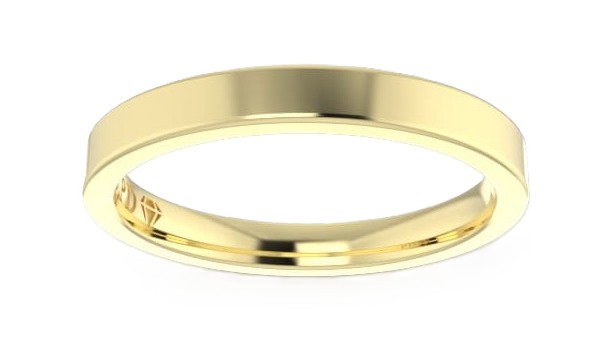
Flat Profile
A flat band has clean, contemporary lines. The edges can be softened to improve comfort and reduce the chance of the ring feeling sharp. This modern ring profile looks terrific.
Should couples choose matching wedding rings?
Wedding rings do not have to match.
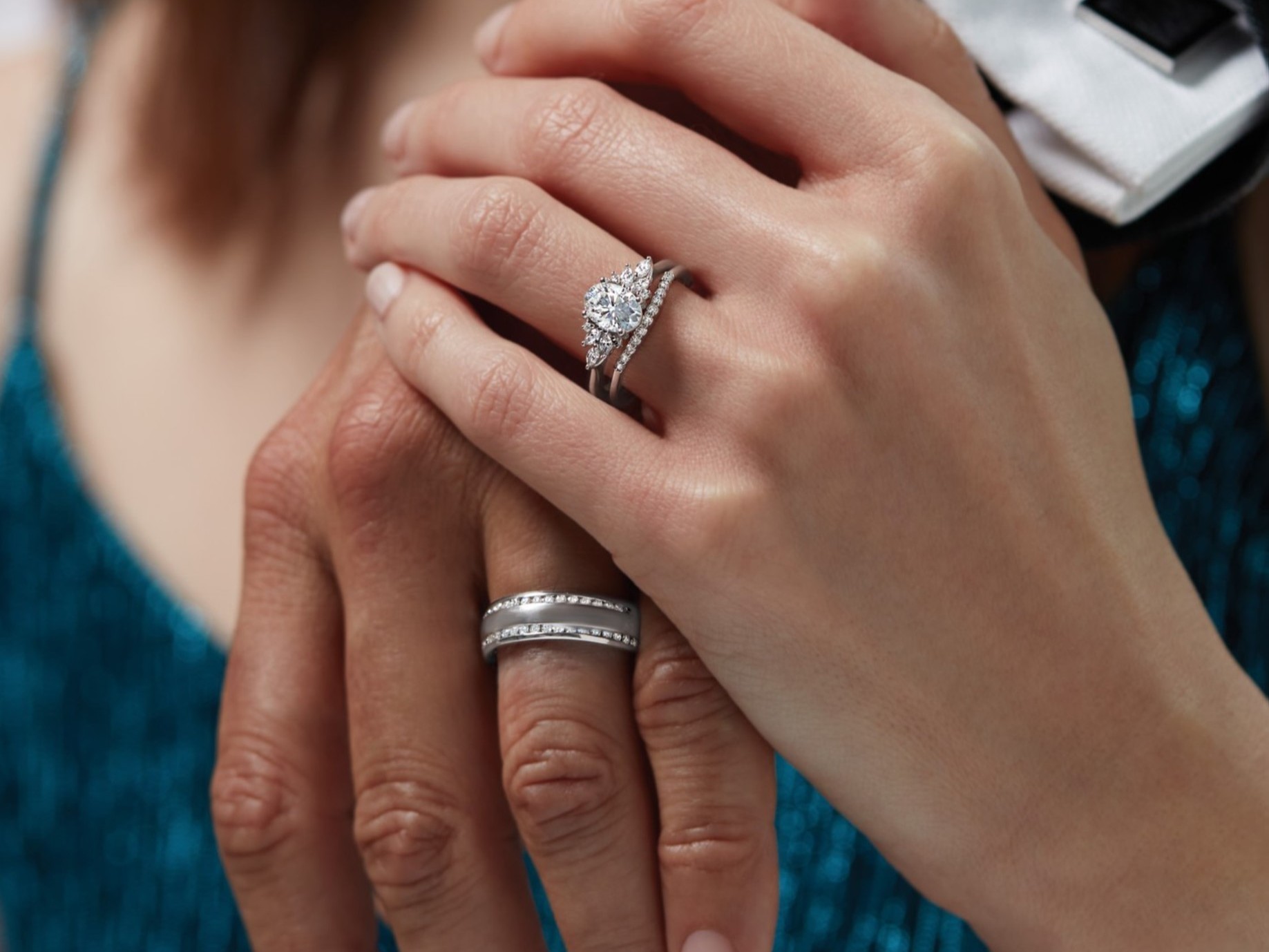
Some couples select identical metals or repeat a shared detail, such as an engraving, finish or edge profile. Others choose completely different designs suited to their individual tastes.
A subtle connection can be particularly elegant. One ring might use polished yellow gold while the other uses the same gold with a brushed centre. The rings remain personal while still sharing a design language.
What determines the price of a wedding ring?
Wedding-ring prices are influenced by:
- Metal type and purity
- Ring width and thickness
- Finger size and total metal weight
- Number and quality of diamonds or gemstones
- Setting style
- Design and manufacturing complexity
- Engraving or specialist finishes
A well-made ring should have suitable proportions and enough metal for its intended design. Rather than considering price alone, compare the construction, finish, materials and after-sales service included.
Questions to ask your jeweller
Before ordering, ask:
- Will this ring sit safely beside my engagement ring?
- Can it be resized later?
- How should the metal and finish be maintained?
- Are the diamonds protected for everyday wear?
- Can I review the design before production begins?
- Where and how will the ring be made?
- What workmanship guarantee and ongoing care are provided?
Clear answers will help you distinguish between a ring that merely looks appealing and one designed for lasting wear.
Create a wedding ring that belongs to you
The perfect wedding ring should feel natural on your hand and meaningful to you. It may be a beautifully made plain band, a precisely fitted diamond ring or a completely bespoke design created to reflect your relationship.
Polished Diamonds designs and creates wedding rings in New Zealand, combining advanced CAD technology with traditional hand craftsmanship. Our designers can help you compare metals, profiles, widths and settings, or create a wedding ring fitted precisely to your engagement ring.
Visit our Auckland, Wellington or Christchurch studio to explore wedding-ring designs and receive personal guidance from our jewellery team.
Frequently asked questions
Yes. A curved or contoured wedding band can be designed around the engagement ring’s setting so that the two sit together more naturally
Neither metal is universally better. Platinum is naturally white and dense, while white gold offers a bright appearance and is generally rhodium plated. The best choice depends on your preferences, lifestyle and engagement ring.
Full eternity rings can be difficult or sometimes impractical to resize because stones continue around the entire band. Half- and three-quarter-set rings normally provide greater flexibility.
Diamond-set rings should be inspected regularly and whenever you notice movement, catching or a change in the setting. Professional cleaning and inspection can identify wear that may not be visible at home.
They do not need to be purchased together, but choosing them as a couple can help coordinate metals, shared design details and budget. Each ring should still suit the individual wearer.
No. The rings should complement one another, but they can use different metals, textures or design details. Their proportions and physical fit are more important than making them identical.
HOW TO CHOOSE THE PERFECT WEDDING RING: KEY TAKEAWAYS
- Choosing a wedding ring involves considering factors like fit, metal type, and design; the right ring should suit your personal style and complement your engagement ring.
- Customization is key; a bespoke wedding ring can be crafted around the engagement ring for a perfect fit.
- Metal choices include platinum, yellow gold, white gold, titanium, and rose gold, each with distinct characteristics and care requirements.
- The width and profile of the wedding ring impact comfort and aesthetics; narrow rings offer delicacy while wider rings allow for more design features.
- Couples may choose matching rings or select designs that reflect their individuality, ensuring both rings complement each other in style and fit.