How CAD Creates a More Accurate Engagement Ring
Creating a beautiful engagement ring is not only about choosing the right diamond and design. The dimensions, proportions, symmetry and positioning of every component also influence how the finished ring looks, feels and performs.
Modern Computer-Aided Design (CAD) allows an engagement ring to be digitally engineered around the actual dimensions of the chosen diamond or gemstone and the wearer’s finger size before manufacture begins.
At Polished Diamonds, our jewellery designers use professional CAD software to develop each design in three dimensions, allowing individual components to be measured and refined before the ring enters production. We combine CAD jewellery design with skilled New Zealand craftsmanship to create custom engagement rings with carefully controlled proportions and precise detailing.
What Makes an Engagement Ring Accurate?
An accurately designed engagement ring is one where the centre stone, setting, claws, band and supporting structure have been proportioned to work together as a complete piece of jewellery.
Important measurements can include:
- the exact length, width and depth of the centre stone
- finger size
- band width and thickness
- setting height
- claw dimensions and positioning
- under-bezel dimensions
- spacing between accent diamonds
- symmetry of the overall design
- clearance for a future wedding ring
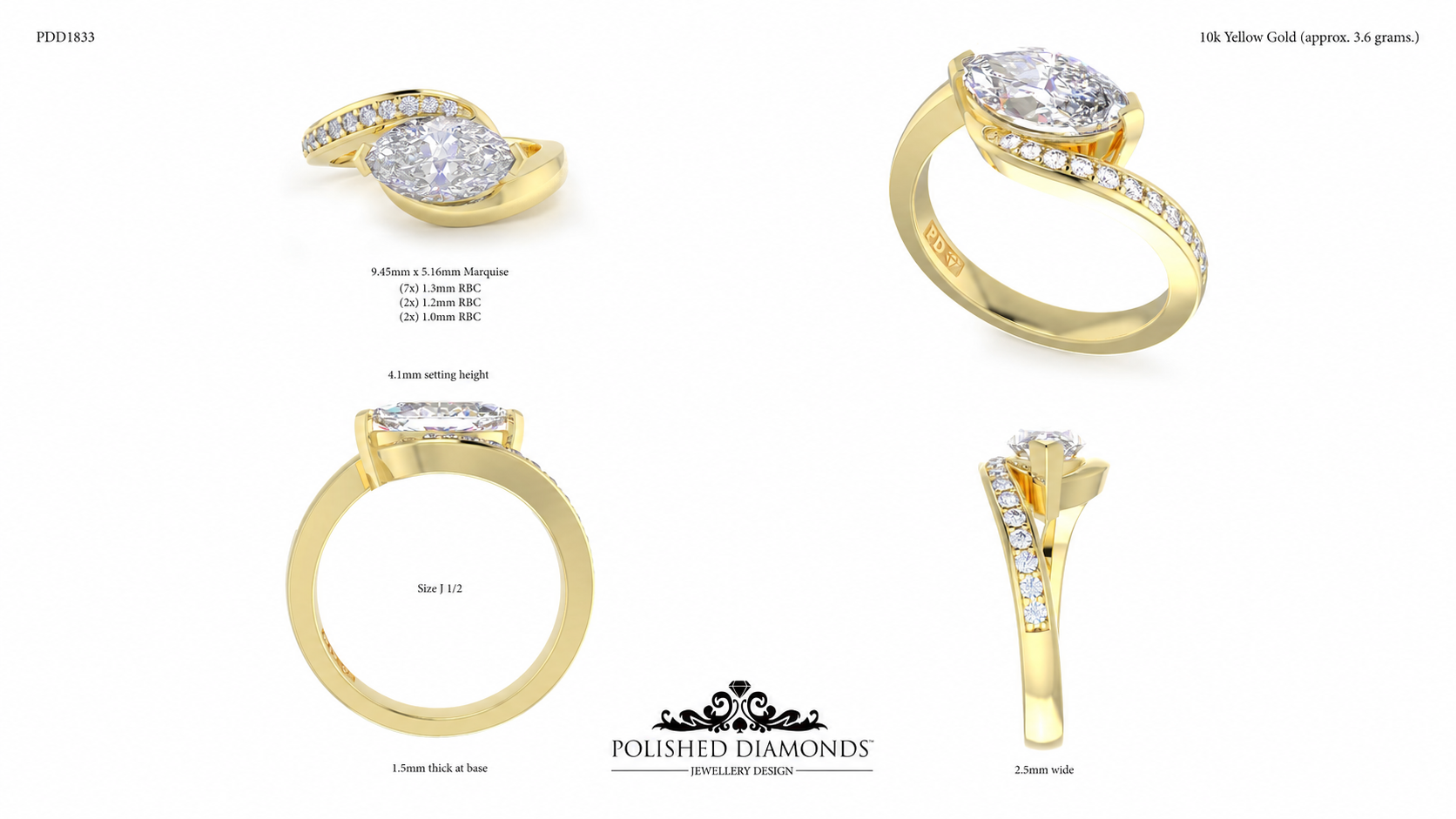
Rather than relying solely on sketches or approximate measurements, CAD allows these elements to be developed within a precise three-dimensional digital model.
Why the Exact Diamond Measurements Matter
Carat weight tells you how much a diamond weighs, but it does not tell you its exact physical dimensions.
For example, two 1.00 carat oval diamonds can have different lengths, widths and depths. The same principle applies to round, emerald, radiant, pear, cushion and other diamond shapes.
For a custom engagement ring, the setting should therefore be designed around the actual measurements of the selected diamond, rather than simply its stated carat weight.
This allows the claws, setting, halo and surrounding details to be proportioned specifically for that stone.
Both natural and lab-grown diamonds can be incorporated into this process.
How Does CAD Improve Engagement Ring Precision?
CAD stands for Computer-Aided Design. Jewellery CAD software allows a designer to construct the engagement ring as a detailed three-dimensional digital model before it is manufactured.
The designer can control elements such as:
- centre stone position
- setting height
- band proportions
- claw shape
- gemstone spacing
- symmetry
- structural thickness
- decorative details
The completed CAD model can then be viewed from multiple angles.
This is particularly useful for custom engagement rings because the proportions can be reviewed and refined before precious metal is used.
Precision Is Especially Important for Custom Engagement Rings
Small dimensional changes can significantly alter the appearance of an engagement ring.
A fractionally narrower band can make a centre diamond appear more prominent. Changing the setting height can alter the profile of the ring and influence how a wedding band sits beside it. Claw size and placement can change both the appearance and security of the gemstone.
CAD gives the jewellery designer greater control over these relationships.
This is particularly valuable when creating:
- solitaire engagement rings
- trilogy rings
- halo designs
- hidden halo rings
- diamond-set bands
- low-profile settings
- unusually shaped diamonds
- engagement rings designed to sit beside a straight wedding ring
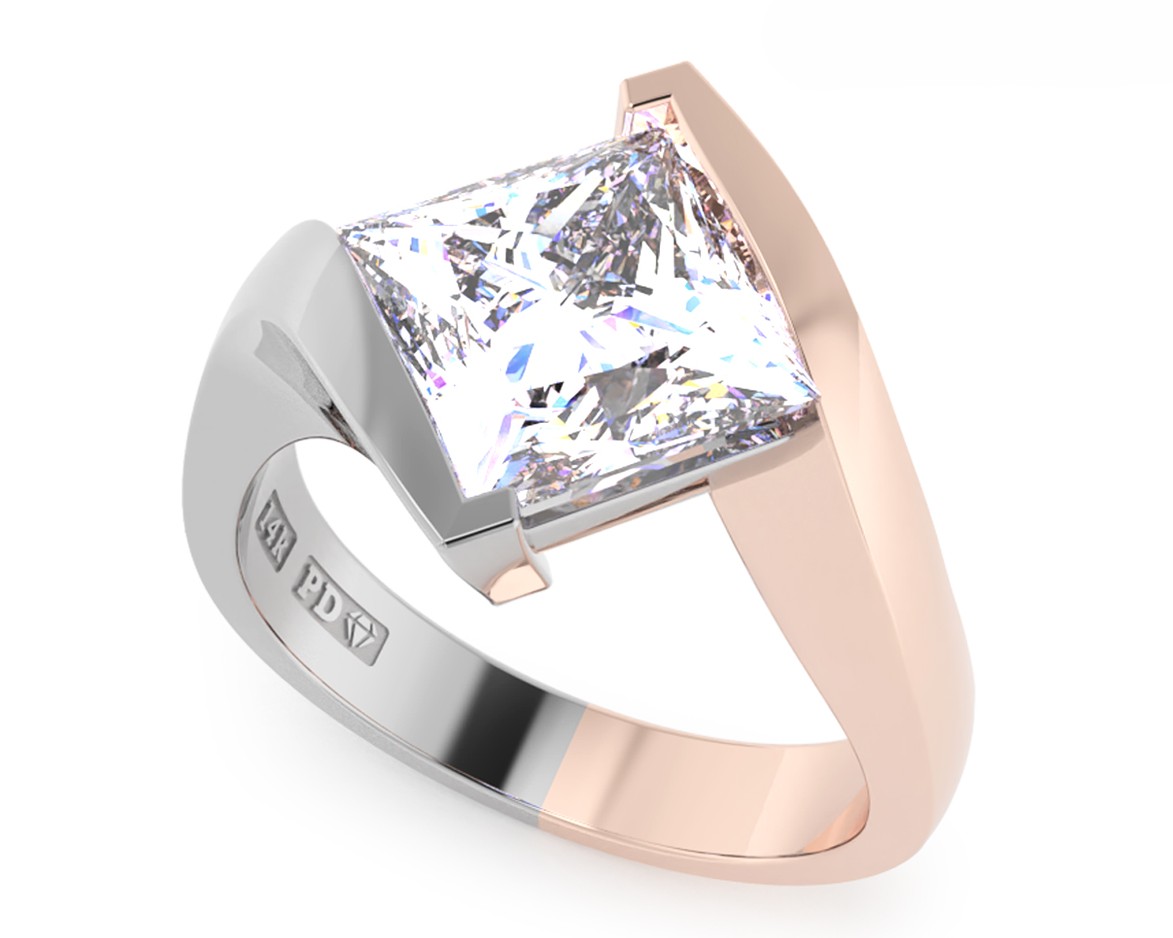
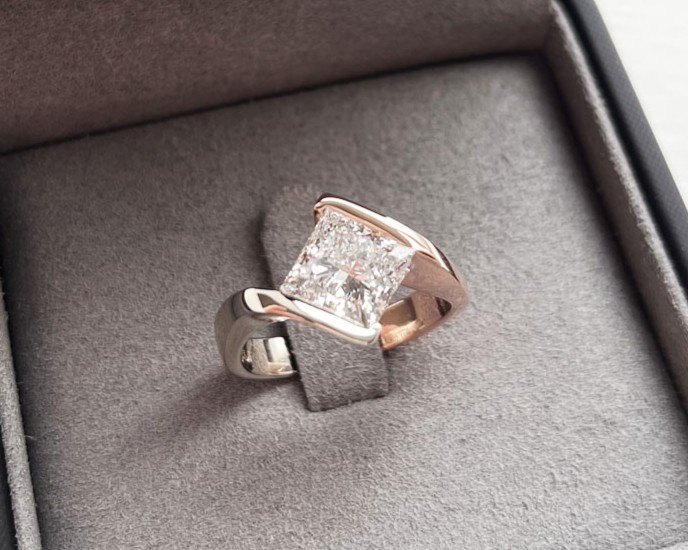
The objective is not simply mathematical precision. It is to use accurate measurements to create a ring with balanced proportions.
Can You See Your Engagement Ring Before It Is Made?
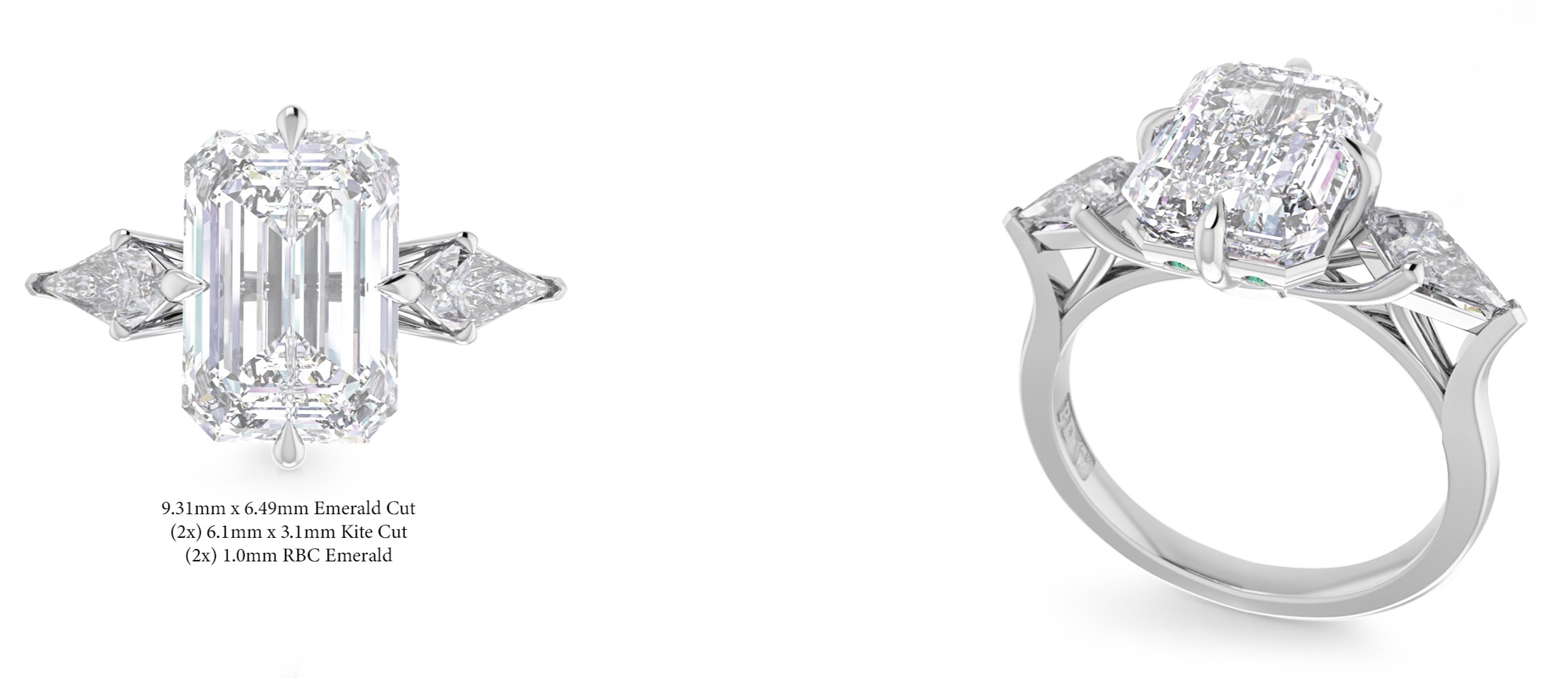
Yes. One of the major advantages of CAD engagement ring design is the ability to preview the ring before production.
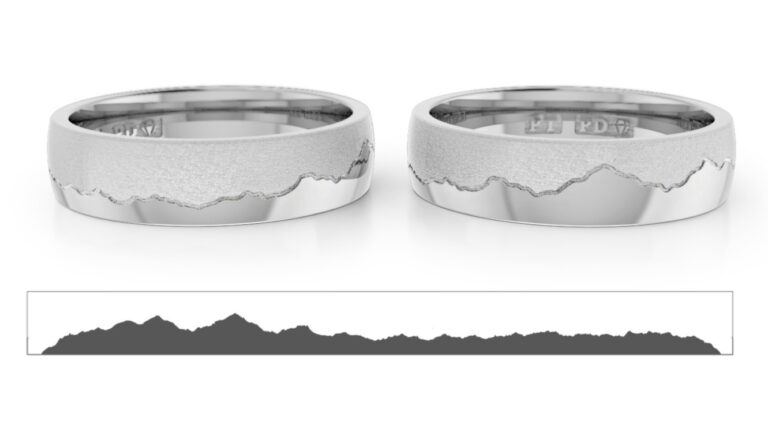
Digital renders can show the design from above, from the side and at different angles. This makes it easier to understand features that may not be obvious in a traditional two-dimensional sketch.
If something needs changing, details such as the band width, setting height, claws or stone positioning can be adjusted digitally before the design is approved.
Depending on the design, a physical 3D model can also be produced so that the proportions of the ring can be examined before the final piece is manufactured.
Does CAD Replace Traditional Jewellery Craftsmanship?
No. CAD is a design and engineering tool rather than a replacement for a skilled jeweller.
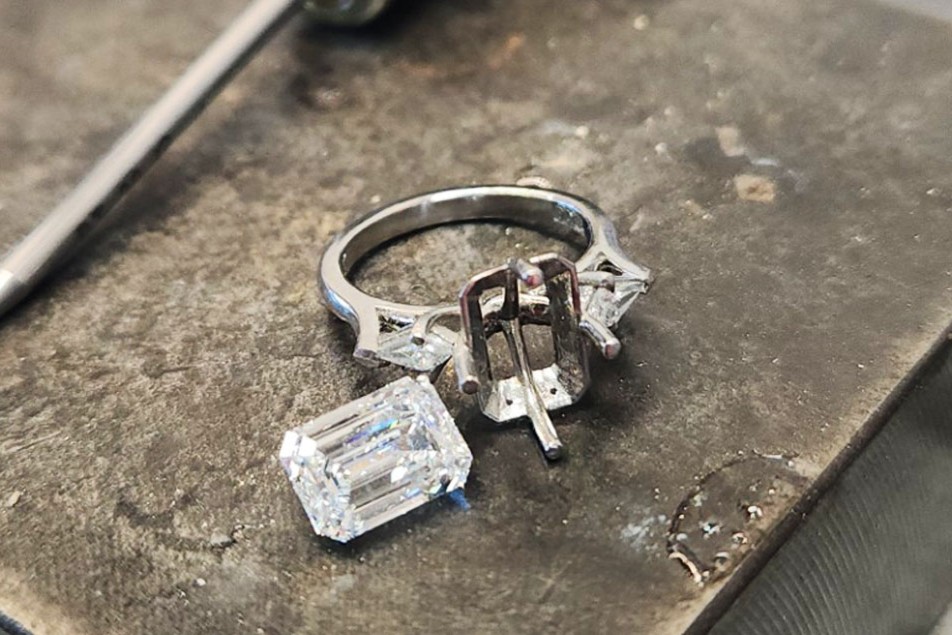
Once the design has been approved and transferred into production, traditional jewellery skills remain essential.
Depending on the design and manufacturing method, the ring must still be carefully finished, polished, assembled and stone-set. Diamonds and gemstones require precise setting, while surfaces and edges need to be finished by hand.
At Polished Diamonds, modern jewellery technology is combined with experienced jewellery craftsmanship in New Zealand.
This combination provides the control of digital design while retaining the hand-finishing required for fine jewellery.
Can CAD Be Used for Any Engagement Ring Design?
CAD is suitable for an extensive range of engagement ring designs, from understated solitaires to highly detailed custom rings.
A design can begin with an existing ring style, photographs, several different inspiration images or an entirely new idea.
The concept can then be developed around the selected gemstone, finger size, preferred precious metal and desired proportions.
Platinum, white gold, yellow gold and rose gold can all be incorporated into custom engagement ring designs.
Creating a Precise Custom Engagement Ring in New Zealand
A well-designed engagement ring should combine appearance, proportion, gemstone security, comfort and durability.
CAD gives jewellery designers the ability to examine these factors before manufacture rather than relying entirely on what can be determined once the ring has already been made.
At Polished Diamonds – Jewellery Design, we use CAD technology alongside skilled New Zealand jewellery manufacturing to create custom engagement rings around the individual diamond or gemstone and the person who will wear it.
Visit our jewellery design studios in Auckland, Wellington or Christchurch, or contact our team to discuss creating a custom engagement ring.
Frequently Asked Questions About CAD Design
CAD means Computer-Aided Design. It allows a jeweller to create a detailed three-dimensional digital model of a ring before it is manufactured.
For custom jewellery, it can be. Using the diamond’s actual length, width and depth allows the setting to be proportioned specifically around that gemstone.
Yes. One of the advantages of CAD is that dimensions and design details can be refined before the ring enters production.
No. CAD can actually make customisation easier because the dimensions, proportions and design features can be individually adjusted for each ring.
Yes. CAD is used to create the digital design, while skilled jewellers complete important manufacturing, stone-setting, polishing and finishing stages by hand.
CAD Engagement Ring Design: Key Takeaways
- CAD allows an engagement ring to be designed around the exact dimensions of the selected diamond or gemstone.
- Precise digital modelling helps control setting height, band proportions, claw placement, symmetry and gemstone positioning.
- CAD renders allow customers to review and refine their engagement ring before manufacturing begins.
- Skilled jewellery craftsmanship remains essential for stone setting, polishing and final finishing.
- Polished Diamonds combines CAD technology with New Zealand jewellery manufacturing to create custom engagement rings.